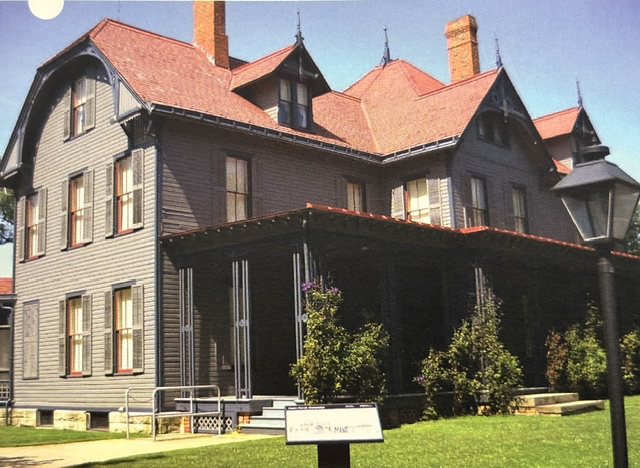
Rutherford B. Hayes Home
As we drove across Ohio on our cross-country trip, we stopped in Fremont to visit Spiegel Grove, the home of Rutherford B. Hayes, the nineteenth president of the United States. The house stood within a broad, wooded estate. It was easy to imagine why, after years of public service and four years in the White House, Hayes wanted to return here.
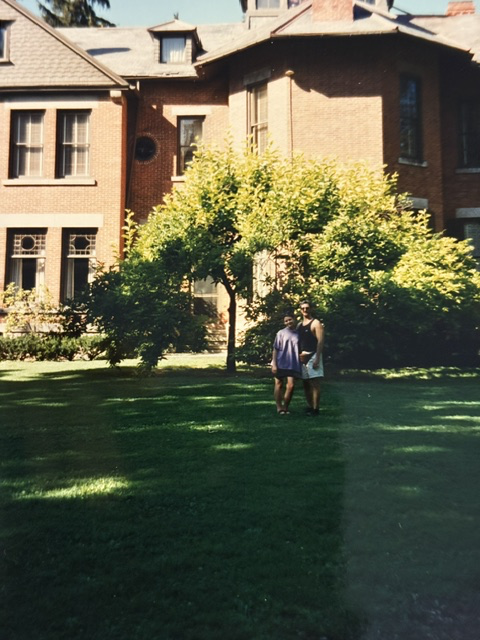
The story of the home began with Hayes’s uncle and guardian, Sardis Birchard. Birchard admired the trees on the property and began building a house there in 1859, intending to share it with his nephew’s family. The Civil War delayed construction, and Rutherford and Lucy Hayes did not make Spiegel Grove their permanent home until 1873. Hayes took a close interest in the grounds, recording the trees, flowers, vines, and other plantings in a notebook he called “Our Home.”
Spiegel Grove grew along with the family. The original brick house had a broad veranda that Hayes especially loved. While serving as president, he planned an expansion for his return to Fremont. The work added rooms for family and visitors, a library for his thousands of books, and a staircase rising to a rooftop view of the estate. Later additions made room for grandchildren and friends. The house eventually became the 31-room home we visited.
Rutherford and Lucy returned to Spiegel Grove when his presidency ended in 1881. Lucy died there in 1889, while another addition to the house was underway, and Rutherford died there in 1893. Their lives give the house a depth that goes beyond its connection to the presidency. It was a place they shaped over many years, raised their family in, welcomed others into, and called home.
Their son Webb later worked to preserve the estate and his father’s papers. The memorial library and museum opened on the grounds in 1916 and is recognized as the first presidential library in the United States. The estate also holds the burial place of Rutherford and Lucy Hayes. Our stop at Spiegel Grove gave us more than a glimpse of a former president’s house. As we stood on the grounds in the middle of our journey, we encountered a place shaped by several generations: an uncle who imagined a family retreat, a couple who made it their home, and a son who wanted its history to remain accessible. That sense of a lived-in history is what made the visit stay with me.