Reading Company No. 800 — Railroad Museum of Pennsylvania
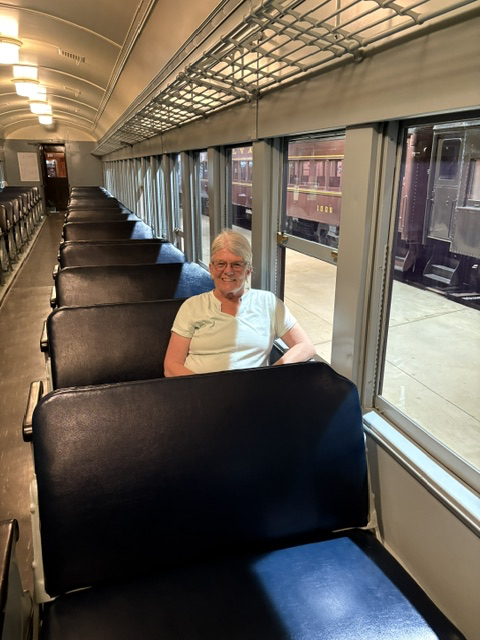
At the Railroad Museum of Pennsylvania, we stepped inside Reading Company No. 800 and found ourselves in a car built for an ordinary part of life: the daily commute. Rows of dark seats faced large windows, with overhead racks ready for the belongings passengers would bring aboard. Marty sat down for a moment, making it easy to imagine the car filled with people on their way to work, school, or home.
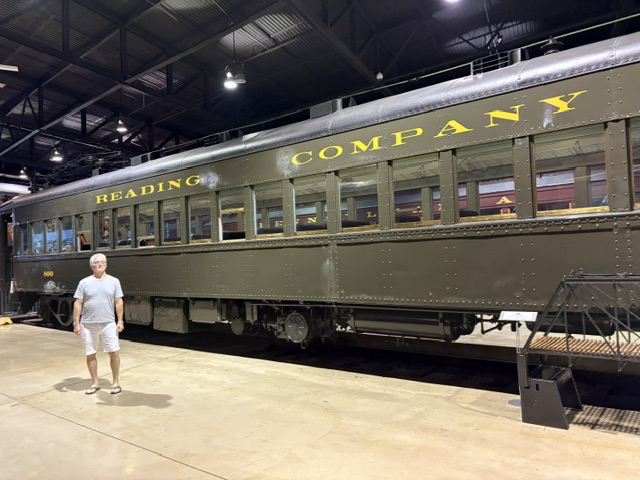
No. 800 was built in 1931, the year the Reading Company began regularly scheduled electric train service to communities outside Philadelphia. It was an electric multiple-unit car, meaning it carried its own motors and could operate with other cars as part of a train. The Reading introduced these cars to replace steam-powered commuter service. They accelerated more quickly, produced less noise and smoke, and offered electric heat for passengers.
Those changes mattered to people who rode the same route day after day. According to the museum, an electric train reduced the trip between Philadelphia and Chestnut Hill from roughly 40 to 44 minutes to 29 minutes. A saving of ten or fifteen minutes on a single journey could become a meaningful part of someone’s daily routine.
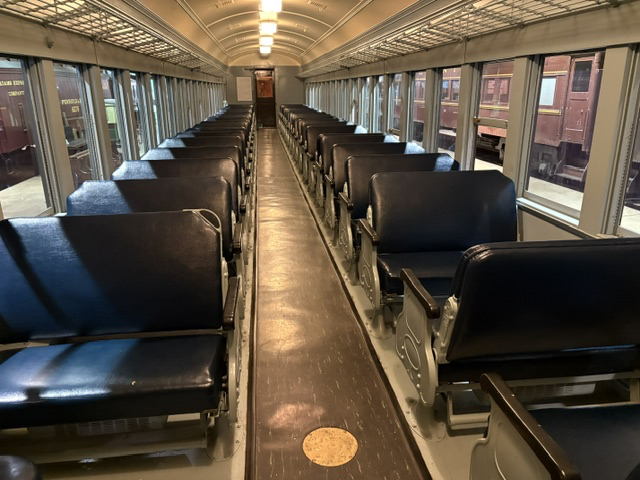
The car’s interior was practical rather than luxurious. Its long aisle, closely spaced seats, and many windows were designed to carry people efficiently between the city and its suburbs. Yet standing inside it gave us a connection to those passengers. They would have chosen a seat, looked out at familiar stops, and shared the space with strangers whose journeys briefly overlapped with their own.
From outside, the Reading Company lettering and No. 800 identified the car as a piece of railroad history. Inside, it felt more personal. It showed how a change in technology could alter the pace and comfort of everyday life. No. 800 represents an early chapter in electric commuter travel around Philadelphia, but what made it memorable for us was the chance to step aboard and see that history from a passenger’s point of view.
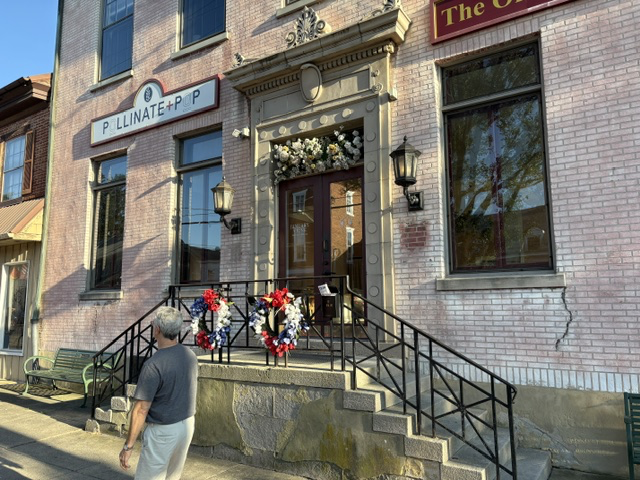
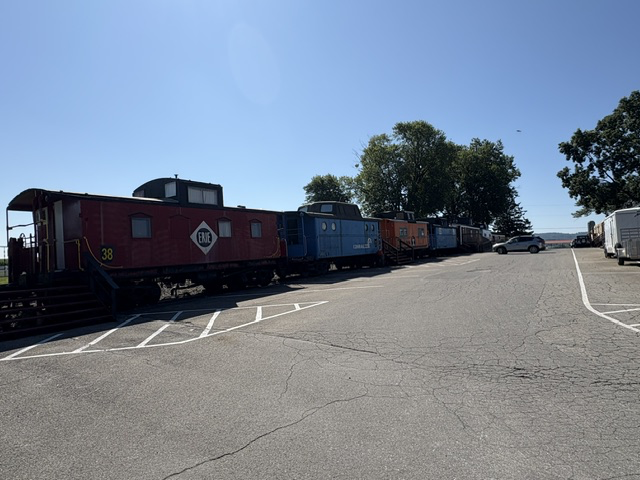
Read More From Nancy
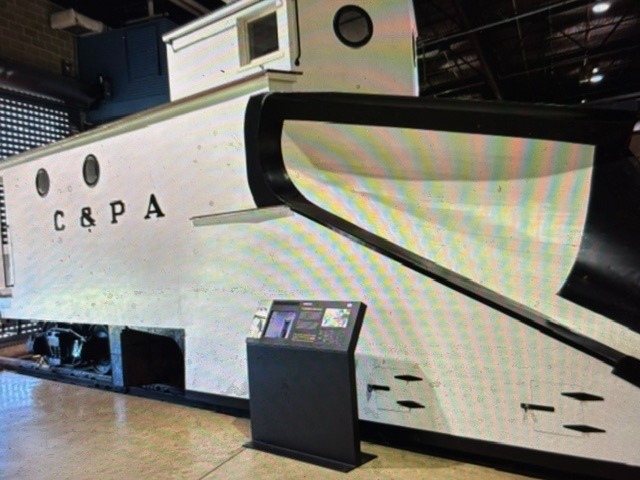
The Coudersport & Port Allegany Railroad Snowplow
Winter could stop a railroad as surely as a damaged bridge. Snow buried the rails, ice collected where train wheels needed to run, and a blocked line interrupted both passengers and freight. Railroads needed to clear the track before ordinary trains could pass. At the Railroad Museum of Pennsylvania in Strasburg, the Coudersport & Port […]
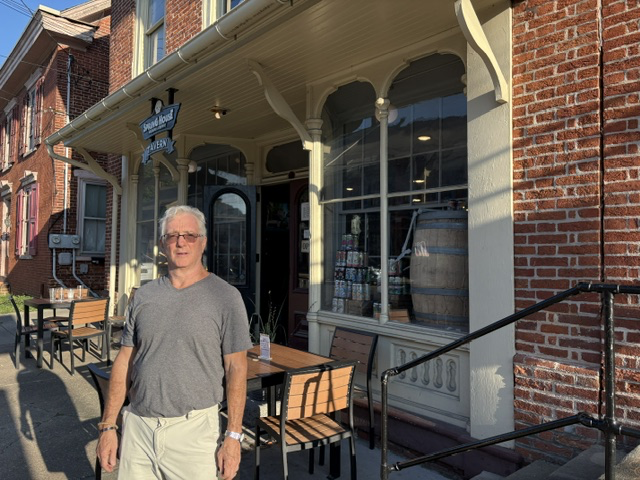
Spring House Tavern
Strasburg grew along the Old Conestoga Road, where travelers stopped and residents of the surrounding farmland came to trade. Taverns were part of that early town. They offered a place to eat and rest while serving the traffic that passed along Main Street. The brick building at 8–10 East Main Street has a connection to […]
Railroad Museum of Pennsylvania
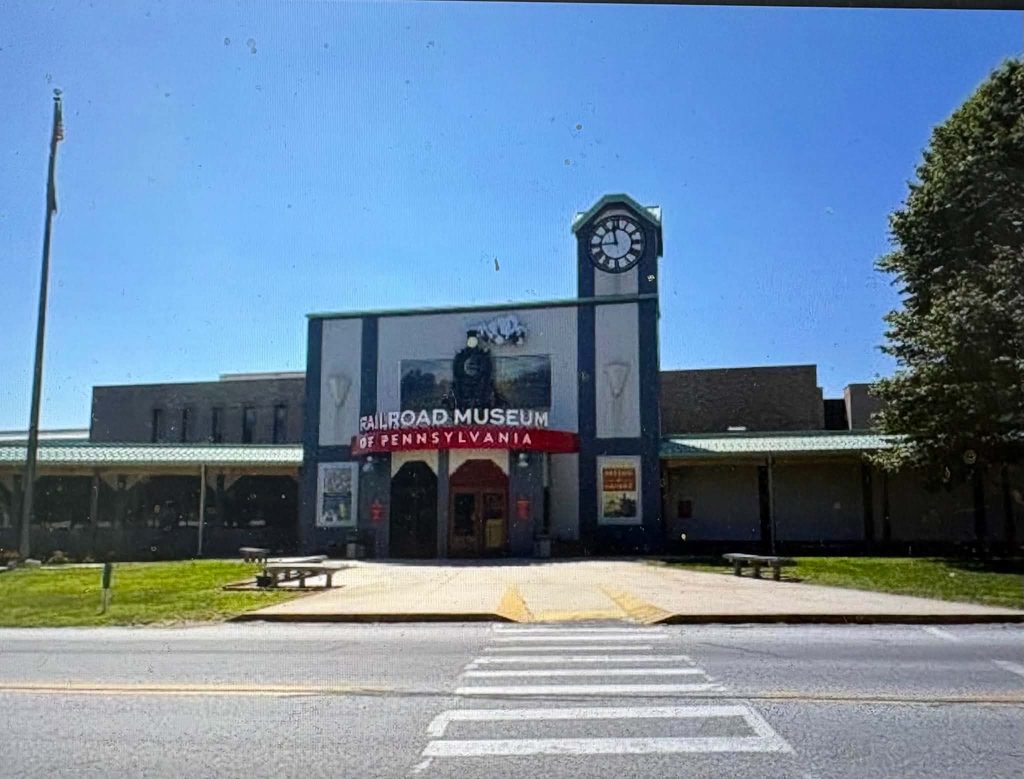
Last summer, Marty and I traveled through Lancaster County in our RV. One of our stops was the Railroad Museum of Pennsylvania in Strasburg, where an extensive collection of locomotives and railroad cars preserves the important role railroads played in the development of Pennsylvania and the nation. During the nineteenth and early twentieth centuries, rail […]

