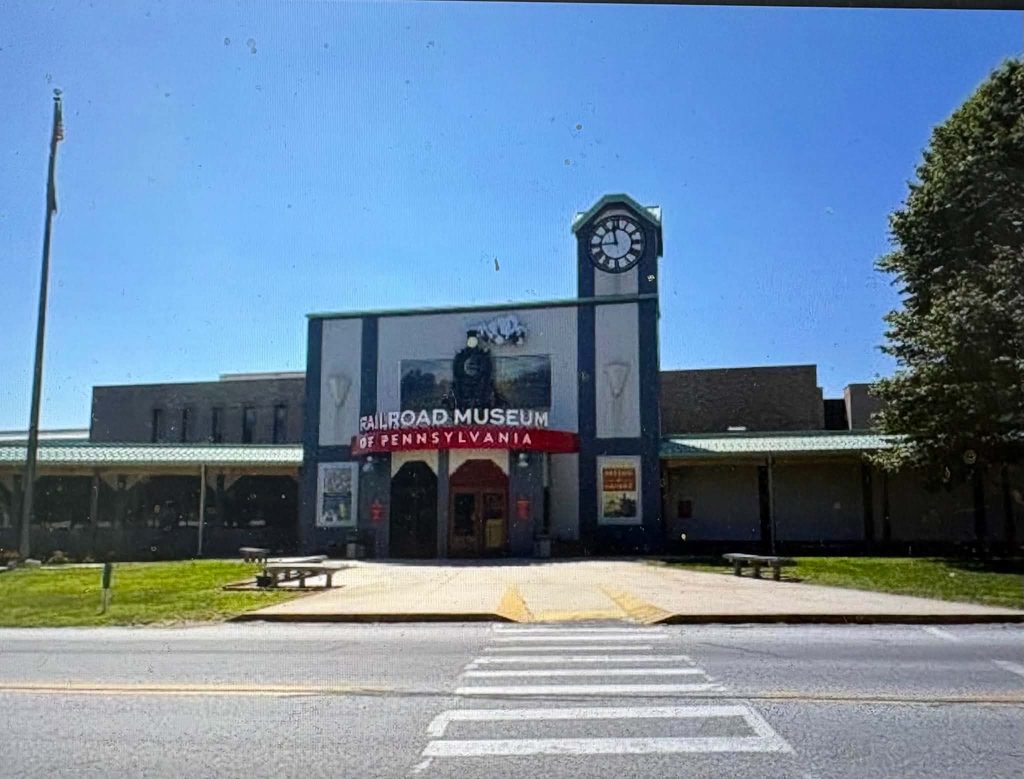
Railroad Museum of Pennsylvania
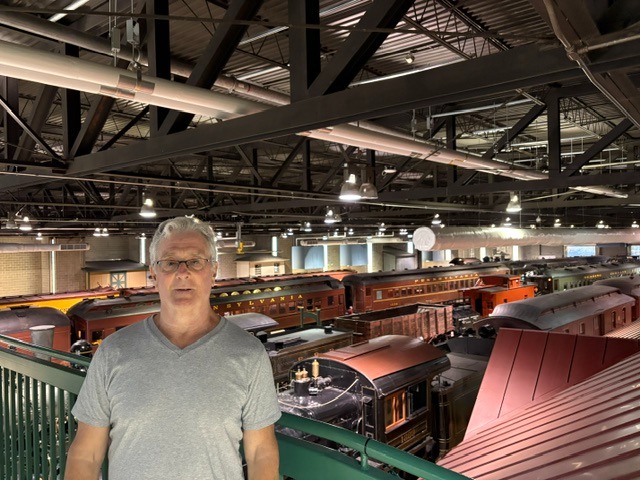
Last summer, Marty and I traveled through Lancaster County in our RV. One of our stops was the Railroad Museum of Pennsylvania in Strasburg, where an extensive collection of locomotives and railroad cars preserves the important role railroads played in the development of Pennsylvania and the nation.
During the nineteenth and early twentieth centuries, rail lines carried coal, iron, steel, agricultural products and manufactured goods across Pennsylvania. They connected small communities with expanding industrial cities and made long-distance travel possible for millions of passengers.
The Pennsylvania General Assembly authorized the creation of the Railroad Museum of Pennsylvania in 1963. The site in Strasburg was selected several years later, placing the museum beside one of the country’s oldest operating railroads. Construction began in 1972, and the museum opened to the public on April 1, 1975.
The foundation of the museum’s collection came from historic locomotives and railroad cars preserved by the Pennsylvania Railroad. Several had been displayed at the 1939–1940 New York World’s Fair and were later stored in a roundhouse in Northumberland, Pennsylvania. As changes within the railroad industry placed their future in question, the equipment was transferred to Strasburg for permanent preservation.
Today, the museum contains more than 100 locomotives and railroad cars representing different periods of railroad development. Steam, diesel and electric locomotives stand beside passenger coaches, freight cars and specialized equipment. Together, they document changes in engineering and transportation as well as the experiences of the workers and passengers whose lives were shaped by the railroad.
The Railroad Museum of Pennsylvania preserves a history that extends far beyond the trains themselves. Its collection explains how railroads helped build Pennsylvania’s industries, communities and economy while connecting the Commonwealth to the rest of the nation.