Now Located in New Guinea
World War IIDearest Reader,
Among my family’s papers is this small newspaper clipping from World War II. At first glance, it is easy to overlook. It is only a few inches long and contains just a brief paragraph about Private Harold V. Thompson. Yet documents like this remind us how closely communities followed the lives of the young men serving overseas.
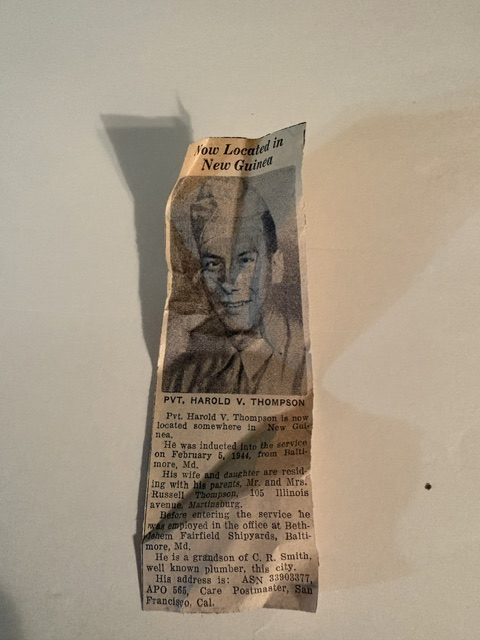
The article announces that Harold Thompson was “now located somewhere in New Guinea”. During World War II, newspapers often used this careful wording because military security prohibited publishing precise troop locations. Families wanted to know where their sons, husbands, brothers, and neighbors had been sent, while the military sought to protect operational information. Saying only that a serviceman was “somewhere in New Guinea” provided reassurance without revealing details that could aid the enemy.
The article also reflects the way local newspapers connected military service with community life. It tells readers that Harold had been inducted into the Army in February 1944, had worked at Bethlehem-Fairfield Shipyards in Baltimore before entering the service, was married with a young daughter, and was the grandson of a well-known local resident. In just a few sentences, the newspaper placed him within the fabric of the community, reminding readers that the war touched families they knew personally.
Today we recognize New Guinea as one of the most important campaigns in the Pacific. Between 1942 and 1945, American and Allied forces fought difficult battles across the island against entrenched Japanese troops. Soldiers faced not only combat but also dense jungles, rugged mountains, tropical diseases, relentless heat, and supply lines stretched across thousands of miles. For many Americans, New Guinea was one of the harshest assignments of the war.
What I find most meaningful is how this small clipping captures a moment of uncertainty. Harold had safely reached his destination, but no one reading the article could know what lay ahead. His family would have treasured any news, no matter how brief, simply because it confirmed that he was alive and serving.
As I look through old newspapers and family papers, I am reminded that history is often preserved in the smallest pieces of paper. This clipping is more than a report about one soldier’s assignment. It is a reminder of a time when entire communities followed the progress of their young men overseas, celebrated their safe arrivals, worried through long periods without news, and saved every newspaper mention as a tangible connection to someone far from home.
Dr. Nancy Watson
Washington
Read More From Nancy
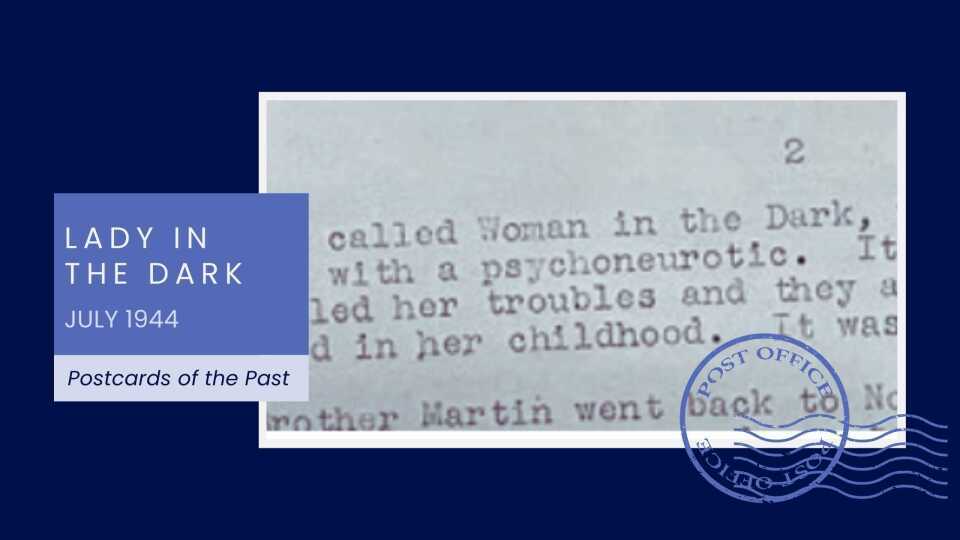
Lady in the Dark
The film my grandmother saw in 1944 was Lady in the Dark, starring Ginger Rogers. Although she remembered it as Woman in the Dark. Released in 1944, Lady in the Dark tells the story of Liza Elliott, a successful magazine editor suffering from anxiety, mood swings and troubling dreams. The movie explores her struggle with […]
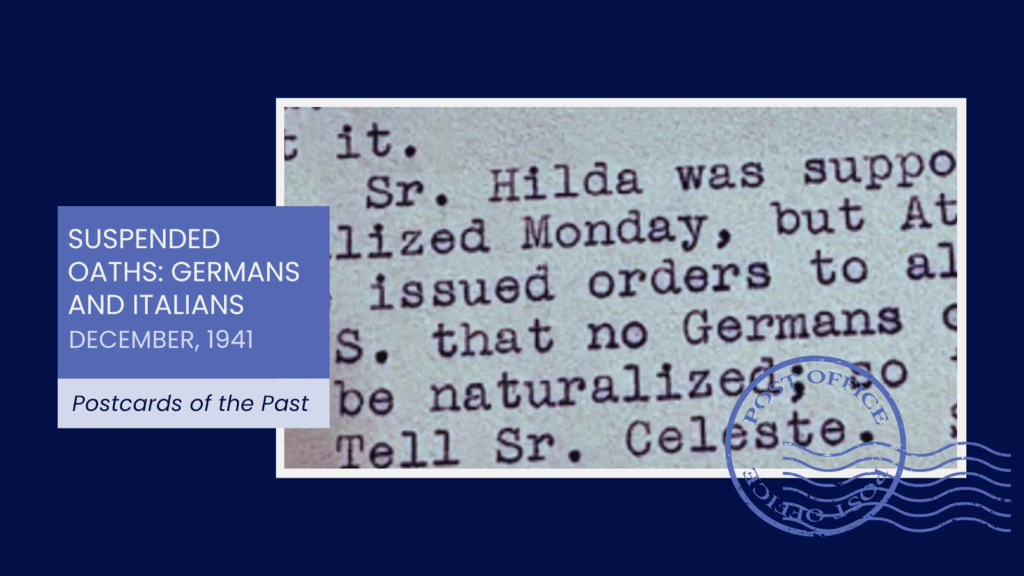
Suspended Oaths: Germans and Italians
In a letter dated December 13, 1941, just six days after the attack on Pearl Harbor, my grandmother recorded how quickly the war reached into ordinary lives. My father was living in Saginaw, Michigan at the time, having just turned twenty-one, and the country was still reeling from the shock of December 7. The United […]
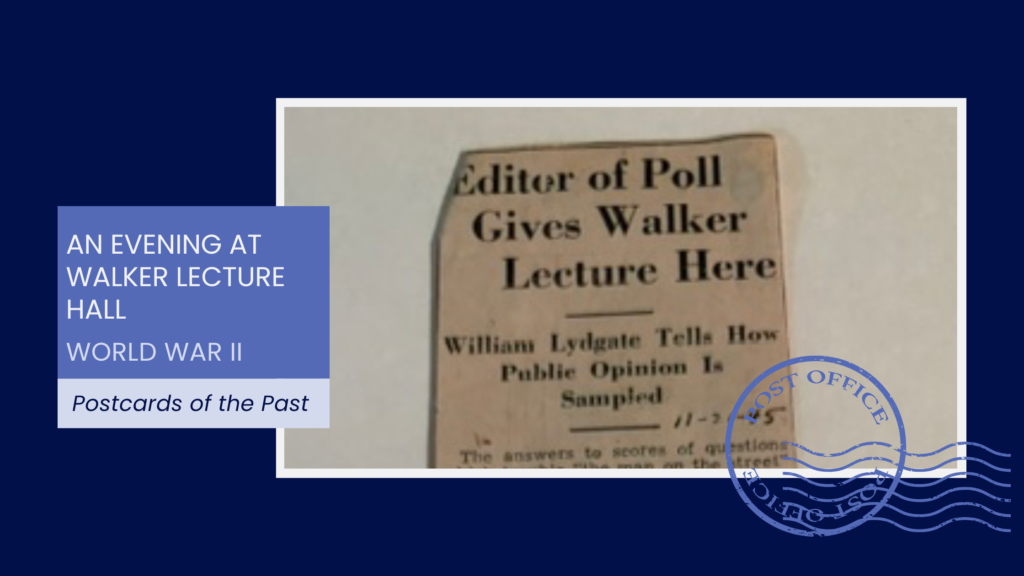
An Evening at Walker Lecture Hall
Several years ago, I wrote about Walker Lecture Hall in Concord and its long tradition of bringing nationally known speakers to New Hampshire. Finding this newspaper clipping brought that history to life. Rather than simply describing the hall, it preserves one evening when William Lydgate, an editor with the Gallup Poll, spoke about the emerging […]

