An Evening at Walker Lecture Hall
World War IIDearest Reader,
Several years ago, I wrote about Walker Lecture Hall in Concord and its long tradition of bringing nationally known speakers to New Hampshire. Finding this newspaper clipping brought that history to life. Rather than simply describing the hall, it preserves one evening when William Lydgate, an editor with the Gallup Poll, spoke about the emerging science of public opinion research.
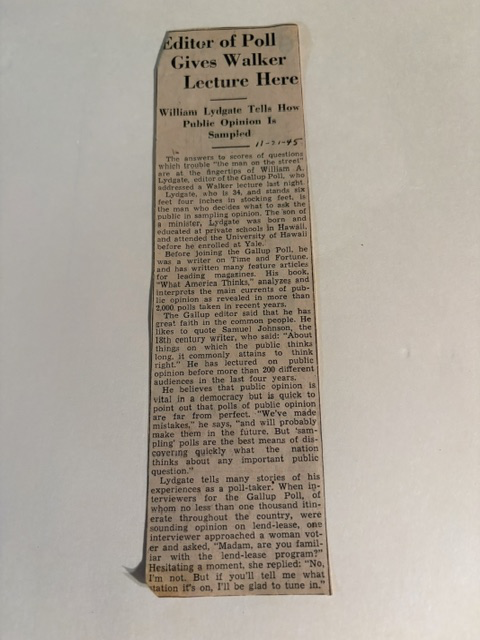
The lecture took place during the final months of World War II, when Americans were already thinking about the nation’s future. Scientific polling was still a relatively new idea, and audiences were eager to learn how organizations like Gallup could estimate what millions of Americans thought by interviewing only a carefully selected sample of people. Today we take political polling for granted, but in the mid-1940s it was an exciting and innovative subject.
What makes this clipping especially meaningful is that my mother saved it. I cannot say with certainty that she attended the lecture, but I cannot help wondering if she did. She lived in Concord during this period, and Walker Lecture Hall was one of the city’s important gathering places for educational and cultural events. If she was in the audience that evening, she would have been listening to ideas that were helping shape a new understanding of public opinion in America.
Even if she did not attend, the fact that she chose to preserve the article suggests it meant something to her. Perhaps she found the topic interesting. Perhaps she intended to go but could not. Or perhaps she simply appreciated the opportunity to hear nationally recognized speakers visit Concord. Whatever the reason, she thought it was worth saving.
The clipping reminds me that communities like Concord valued lifelong learning. Long before television, the internet, or podcasts, lectures like these offered residents an opportunity to hear directly from leading voices in politics, science, literature, and public affairs. They were evenings of education, conversation, and civic engagement, and Walker Lecture Hall became one of the places where those experiences unfolded.
Dr. Nancy Watson
Washington
Read More From Nancy
Fireside Industries
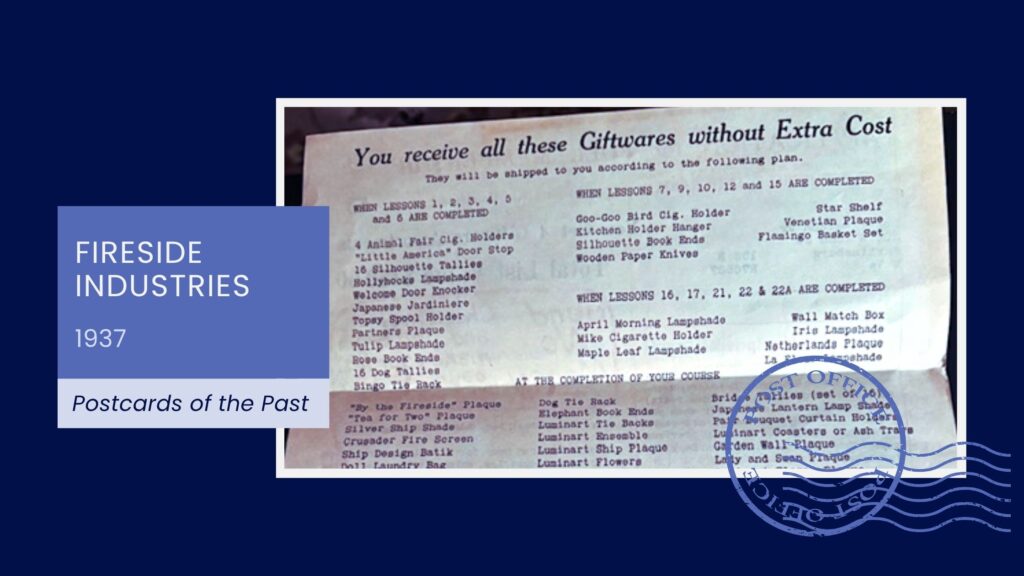
Another company that reached out to my father was Fireside Industries of Adrian, Michigan. They offered him a free rug hooking course, an invitation to learn a craft that could be done at home and perhaps turn into a source of income. But the offer did not stand alone. With membership, he would also receive […]
Costs of Groceries
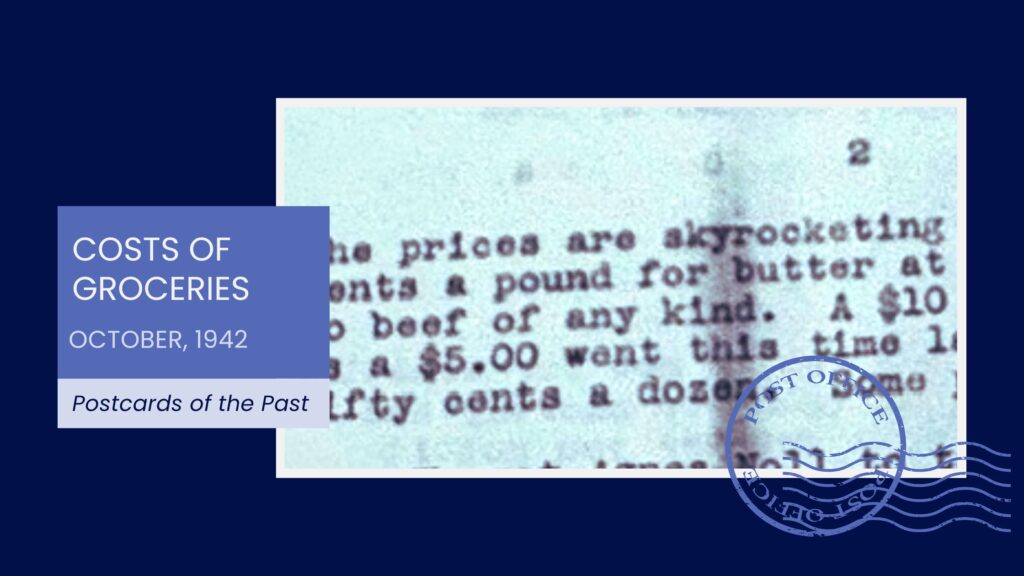
In October 1942, as my father was stationed in Washington State, my grandmother wrote to him describing how profoundly life on the home front had changed. Her letter reflects a nation fully mobilized for war, where shortage, rationing and rising prices had become part of everyday reality. What she shared was not abstract, but lived […]
Remembering Lieutenant Chester Ambrose
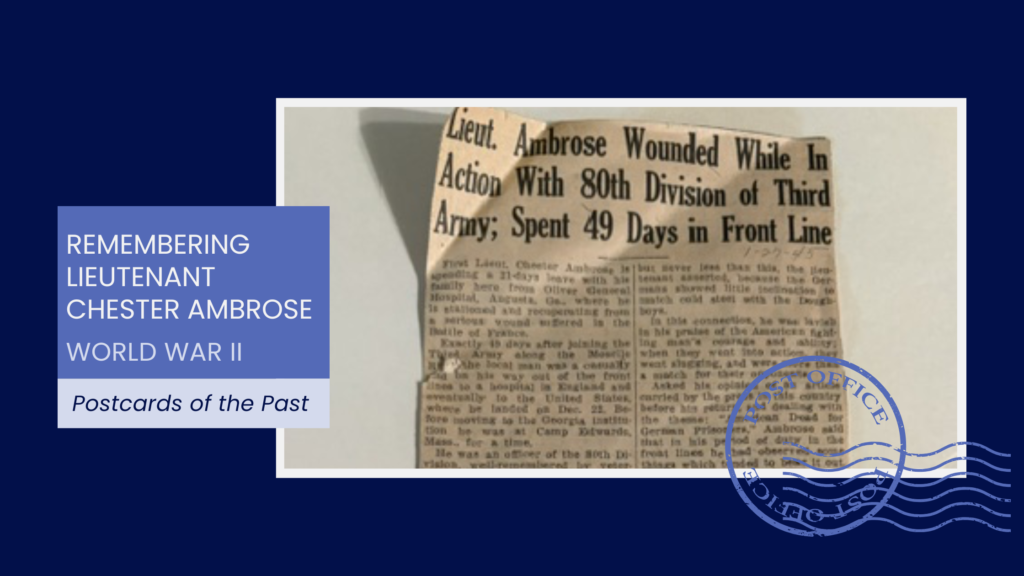
As I continue sorting through the papers my parents saved, I occasionally come across newspaper clippings that offer a glimpse into the community where my father grew up. This article tells the story of Lieutenant Chester Ambrose, a teacher and athletic coach at Martinsburg High School who served with the 80th Infantry Division under General […]

