Mount Auburn Cemetery
Marty and I journeyed to Mount Auburn Cemetery because on a beautiful fall day. Surrounded today by the communities of Cambridge and Watertown, it is difficult to imagine that when it was created in 1831, this was countryside outside Boston. Walking through it on a beautiful autumn day, we quickly understood why Mount Auburn became much more than a place to bury the dead.
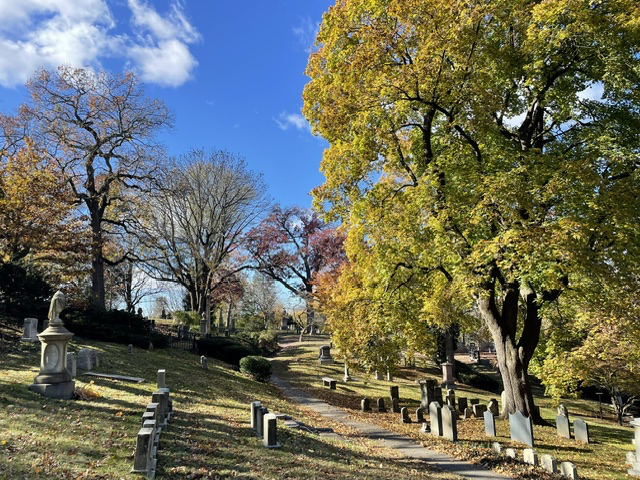
Mount Auburn was the first large-scale designed rural cemetery in the United States. Before its creation, most Americans were buried in churchyards, small family plots or increasingly crowded urban burial grounds. Members of the Massachusetts Horticultural Society envisioned something very different: a permanent cemetery set within a carefully designed natural landscape of hills, valleys, ponds, trees and winding paths. It would be a place for mourning and remembrance, but also somewhere the living could walk, contemplate and find comfort in nature. More than 2,000 people attended its consecration on September 24, 1831, demonstrating how much interest this new idea generated.
Mount Auburn quickly became a destination in its own right. At a time when American cities had few public parks or museums, people came here to stroll through the grounds, admire the plantings and monuments and enjoy the landscape. The cemetery itself describes this early role as a kind of “museum without walls”. Its success helped inspire the rural cemetery movement across America and contributed to the growing idea that cities needed beautiful public green spaces.
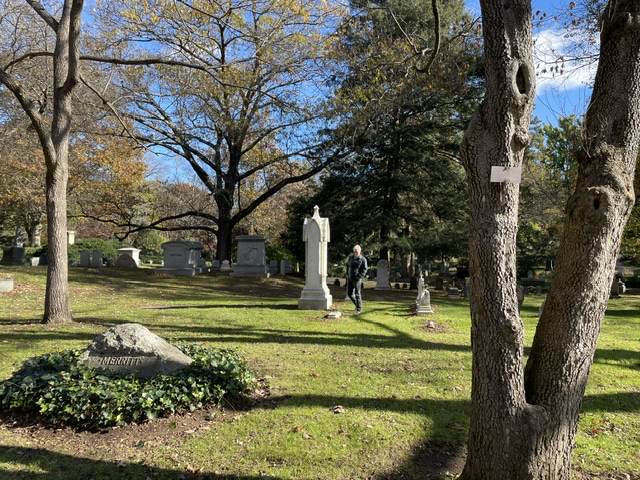
There was also considerable prestige attached to being buried at Mount Auburn. From its beginning, the founders envisioned it as a place where Boston’s “great and good” could be permanently remembered in a landscape worthy of their accomplishments. Permanent family lots allowed prominent Boston and New England families to create lasting memorials, and over the generations Mount Auburn became the final resting place of many of the region’s most influential writers, politicians, reformers, artists, educators, scientists and business leaders.
Walking among the monuments is almost like walking through chapters of New England history. Henry Wadsworth Longfellow is buried here with members of his family; hundreds attended his funeral procession into Mount Auburn in 1882. Nearby rests his friend and fellow poet James Russell Lowell. Oliver Wendell Holmes Sr., physician, professor and writer, is here, as is Julia Ward Howe, author of the “Battle Hymn of the Republic” and an important social reformer.
The cemetery also became the resting place of Isabella Stewart Gardner, whose extraordinary art collection became the Isabella Stewart Gardner Museum; Charles Sumner, the powerful abolitionist and United States senator; and generations of other men and women whose lives helped shape Boston and the nation. Today more than 100,000 people are buried or commemorated within Mount Auburn’s grounds.
But what struck me most was that despite all those important names, Mount Auburn never feels like simply a collection of famous graves. The landscape is the experience. Mature trees tower over the paths, monuments appear unexpectedly among the foliage, and the roads curve naturally through hills and valleys. In autumn, when we visited, the brilliant foliage made it especially easy to understand the original vision of creating a place where nature and remembrance would exist together.
The monuments themselves also tell a story. Simple stones stand alongside elaborate sculptures, family monuments and mausoleums, reflecting changing attitudes toward death and commemoration over nearly two centuries. Some families wanted modest markers; others commissioned substantial works of architecture and sculpture intended to preserve a family name for generations.
Mount Auburn eventually became recognized not only for the people buried there but for the importance of the cemetery itself. It was placed on the National Register of Historic Places in 1975 and designated a National Historic Landmark in 2003. Its 175 acres continue to function as an active cemetery as well as an arboretum, wildlife habitat and historic landscape.
Our visit helped me understand why Mount Auburn was considered such an extraordinary place from the moment it opened. People wanted their families remembered here, surrounded by beauty and permanence, and visitors came simply to experience the grounds. Nearly two centuries later, we were doing much the same thing, walking beneath the trees, stopping at monuments and discovering stories while enjoying one of the most beautiful historic landscapes in the Boston area.
Read More From Nancy

Marconi-RCA Wireless Museum
Long before messages could be sent instantly by telephone, satellite or the internet, Chatham served as an important link between ships at sea and the rest of the world. The Marconi-RCA Wireless Museum preserves the story of the people and technology that made those connections possible. Italian inventor Guglielmo Marconi helped transform communication through his […]
Thayer Library
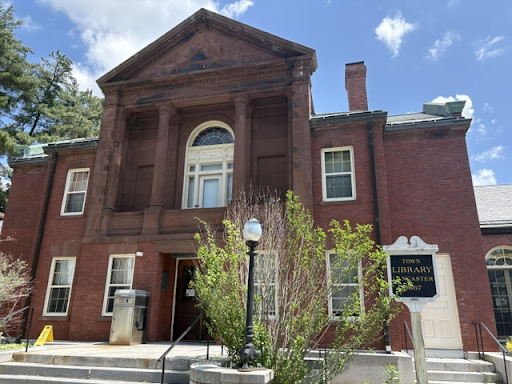
Another impressive building in the center of Lancaster is the Thayer Memorial Library. During our tour, we learned that the institution’s roots extend far beyond the beautiful structure that stands today. The town’s first library organization, known as the Lancaster Library and later the Lancaster Social Library, was established in 1790. In 1862, residents voted […]
Three Sisters Sanctuary
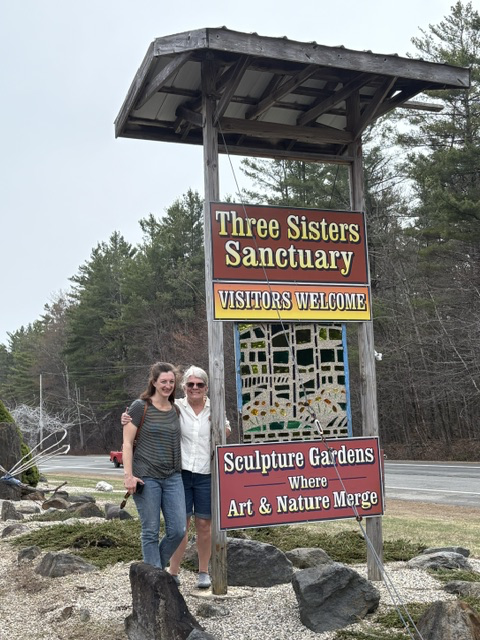
While visiting Erin in western Massachusetts, we had an afternoon with no particular plans and decided to do what we often enjoy and head out and see what we might discover. That afternoon led us to Three Sisters Sanctuary in the small town of Goshen, a place unlike almost anywhere else we had visited. Three […]

