Lions on Szechenyi Chain Bridge – Budapest
Walking across the Szechenyi Chain Bridge in Budapest, feels more than just a river crossing. The bridge stretches across the Danube, linking Buda and Pest, two historic cities that once separated and later unified into modern Budapest. The bridge is both functional and symbolic.
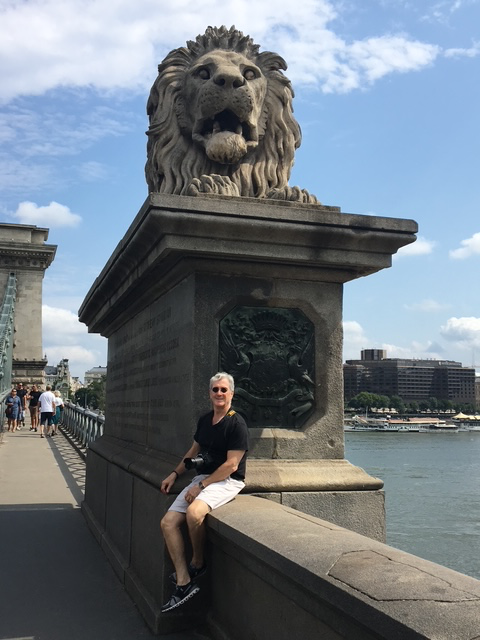
The Chain Bridge opened in 1849, becoming the first permanent bridge across the Danube in Hungary. Prior to its construction, crossing the river depended on ferries that were unreliable during winter or floods. The project was championed by Count Szechenyl, a reformer who believed that building a permanent bridge would modernize Hungary and strengthen unity.
The structure was engineered by William Tierney Clark and represented a major feat of 19th century engineering. Its suspension design, anchored by massive stone towers, signaled progress and ambition.
As we walked across, we stopped beside one of the great stone lions guarding the entrance. These lions were sculpted by Hungarian artist Janos Marschalko and installed in 1852. They sit calmly at both ends of the bridge. The lions symbolize protection and permanence. They serve as guardians of the crossing, and as symbols of national pride. They have become one of the defining visual elements of Budapest.
Stopping to photograph the lion was not simply about capturing a well-known landmark. Sculptures like those are never accidental. They are placed deliberately, designed with intention, and meant to convey meaning. Public art in European cities often carries layers of symbolism. It is worth pausing to notice them.
Read More From Nancy
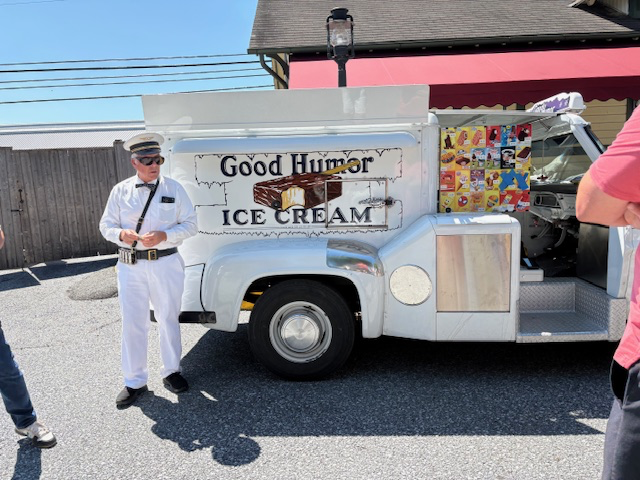
The Good Humor Truck
During our trip to Lancaster County Pennsylvania this summer, we rode the historic train in Strasburg. As part of their railroad grounds exhibition, was a Good Humor ice cream truck. It stood there as if it had rolled out of our 1950s neighborhood. The story of the Good Humor truck begins in Youngstown, Ohio […]
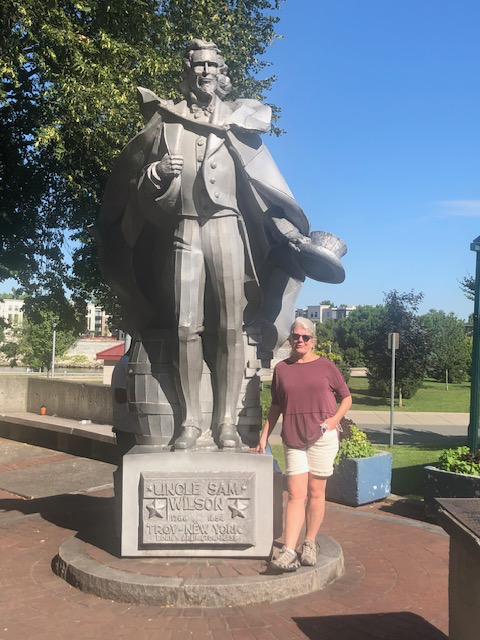
Sam Wilson Statue – Troy, NY
Stopping for breakfast in Troy, N.Y. and wandering its historic streets is exactly the kind of detour that leads to unexpected discoveries. Here we found this intriguing statue of Sam Wilson, the man widely believed to be the real-life inspiration of “Uncle Sam” The monument stands in Riverfront Park overlooking the Hudson, portraying Wilson as a working […]
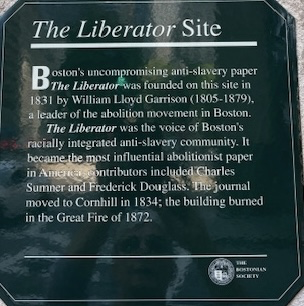
The Liberator Site
I had just stepped away from the busy Freedom Trail, when I came across the bronze plaque on a quiet Boston street. It read: “The Liberator Site – Boston uncompromising anti-slavery paper. The Liberator was founded on this site in 1831 by William Lloyd Garrison…..” Standing at this spot, I realized that this was the birthplace […]

