Johnny Appleseed’s Birthplace
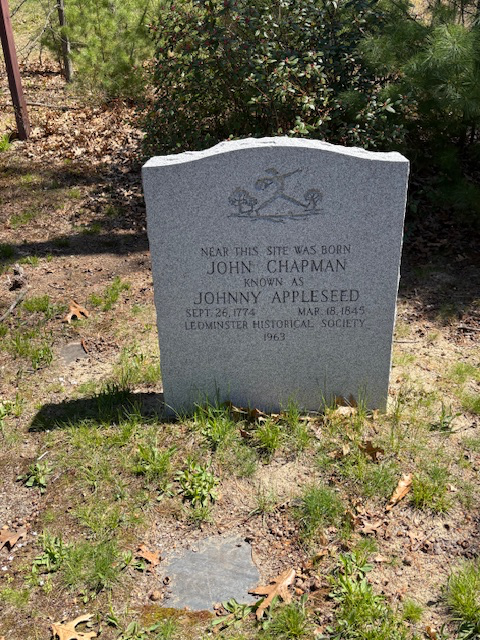
Every town holds onto something that tells you who they are and in Leominster, that story includes John Chapman.
This marker places you near where he was born in 1774, but the story starts with his family. His father, Nathaniel Chapman, was a Minuteman who answered the call on April 19, 177, marching to Concord as the Revolution began.
As a young man, John left New England and began his journey west, first into Pennsylvania and then into Ohio and beyond. What sets his story apart is how intentionally he moved ahead of settlement. He planted nurseries, not just seeds, establishing orchards that would later support incoming families. Apples were essential, used for food, trade and cider, and his work helped shape the early infrastructure of frontier life.
Chapman was deeply spiritual, influenced by the teachings of the New Church (Swedenborgianism). He traveled simply, often barefoot, carrying his beliefs as much as his seeds. He built relationships with Native American communities, learned from the land, and became known as much for his character as for his work.
He never returned to live in Leominster, and he died in Indiana in 1845. Yet Leominster holds the beginning of that story, the place where a child, shaped by family, and a country in transition, would grow into a figure whose life stretched for beyond New England.
Here is the starting point and from here, the story moved westward.
Read More From Nancy
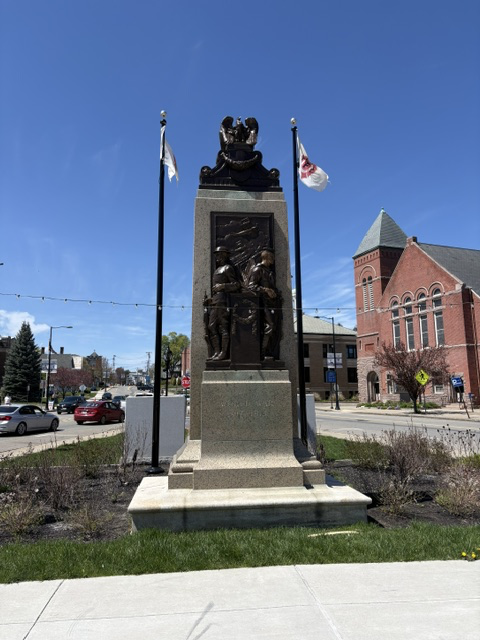
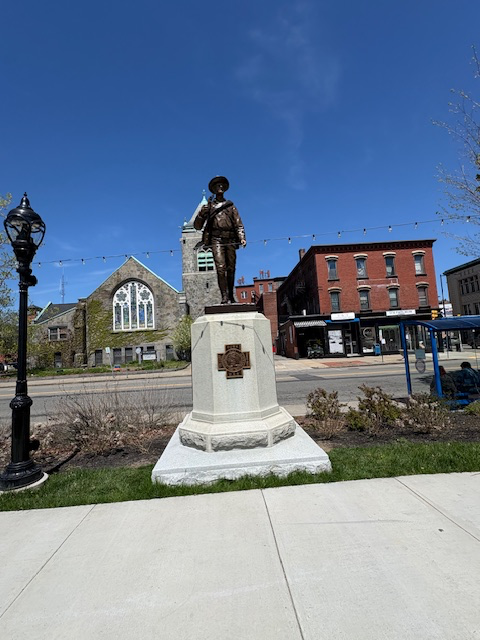
World War I Memorial
Standing on Leominster Common, this monument honors the men and women of the city who served during the First World War. Dedicated in 1921, only a few years after the war ended, it stands as Leominster’s tribute to a generation whose lives were forever changed by the conflict. The front of the memorial bears the […]
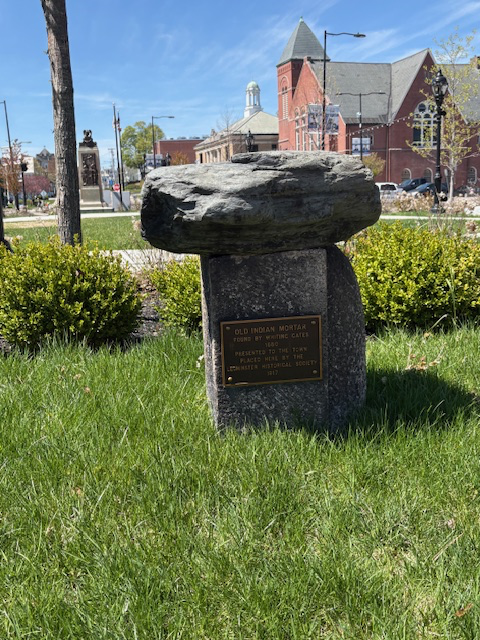
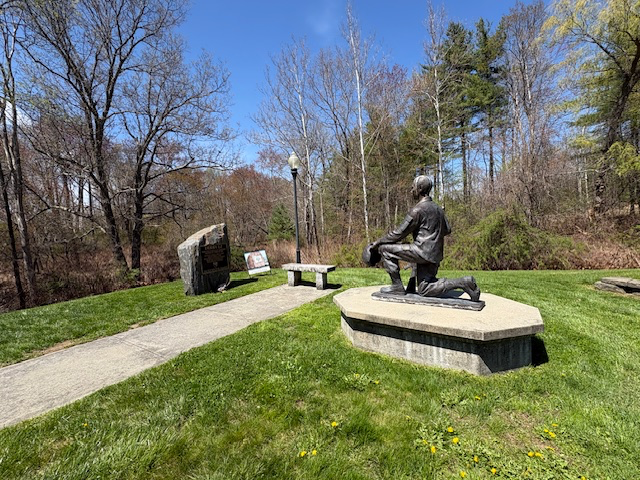
Old Indian Mortar
This stone monument on the common in Leominster preserves a small but important connection to the area’s Native American history. The plaque identifies the artifact as an “Old Indian Mortar”, which was found near White Gates and presented to the city by the historical society in 1917. Mortars like this were used by Native peoples to […]
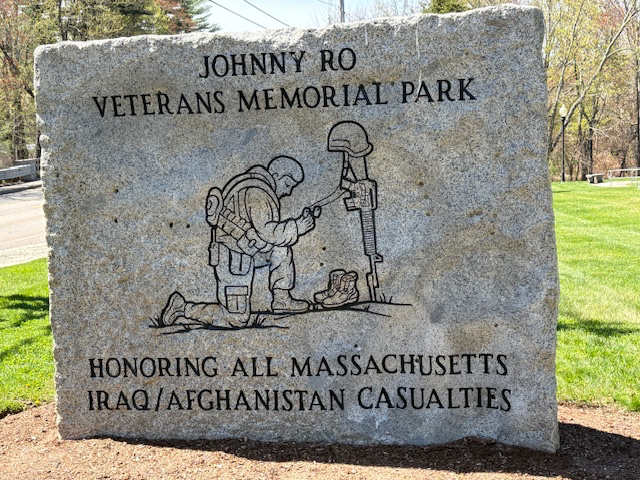
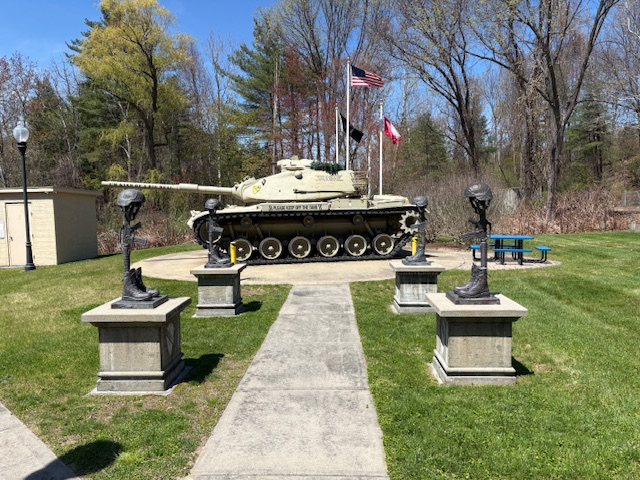
Johnny Ro Veterans Memorial Park
Sometimes the most meaningful memorials are the ones you discover unexpectedly. Driving through Leominster, we noticed a military tank beside the road and decided to stop and explore what turned out to be the deeply moving Johnny Ro Veterans Memorial Park. While the park contains several powerful tributes to military service and sacrifice, this granite memorial stone […]

