In Flanders Field
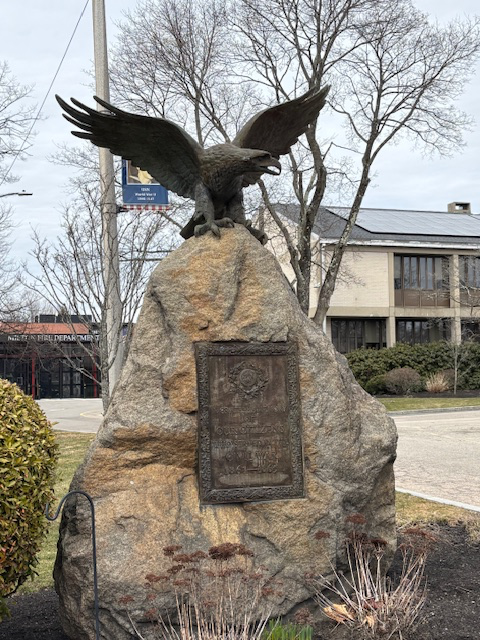
Standing beside Milton Town Hall is one of the town’s most significant war memorials. The bronze sculpture, known as In Flanders Fields, was created by renowned American sculptor Daniel Chester French and dedicated in 1925 to the men of Milton who served and died during World War I.
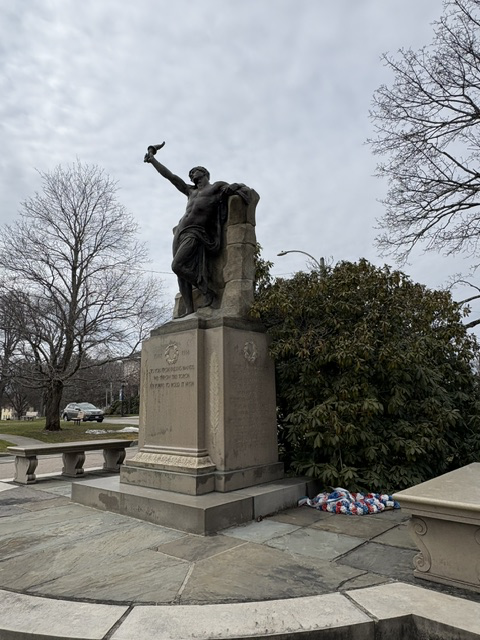
French is best known today for creating the monumental, seated figure of Abraham Lincoln in the Lincoln Memorial in Washington, D.C. He was also a Massachusetts artist with deep New England roots, and his work can be found in public spaces throughout the country.
The Milton memorial is quite different from the triumphant military statues commonly erected after wars. A male figure stands beside a broken architectural form, one arm raised high as he holds what appears to be a small bird. The sculpture was inspired by the enormous human loss of the First World War and takes its name from the famous wartime poem “In Flanders Fields,” written in 1915 by Canadian physician and soldier John McCrae.
French deliberately avoided creating a monument that celebrated warfare. His daughter, Margaret French Cresson, later wrote that her father could not create a war memorial that spoke only of victory. To him, war represented tragedy and loss. That makes the figure especially meaningful. Rather than presenting a soldier charging into battle, French created an allegorical image that asks us to think about sacrifice, remembrance and what remains after war.
Milton had been deeply affected by World War I. Local men entered military service while those who remained at home participated in Liberty Bond drives, Red Cross activities, food conservation and other efforts supporting the war. The memorial was created to ensure that those sacrifices would remain part of the town’s landscape after the war had ended.
Knowing that this was created by Daniel Chester French makes me look at it differently. The same sculptor who gave us the enormous figure of Lincoln in Washington created this much more intimate memorial for a Massachusetts town. In Flanders Fields was not intended simply to record that Milton’s citizens went to war. It was created to remind future generations of what that service cost—and why those who sacrificed should continue to be remembered.