American Legion Memorial Park
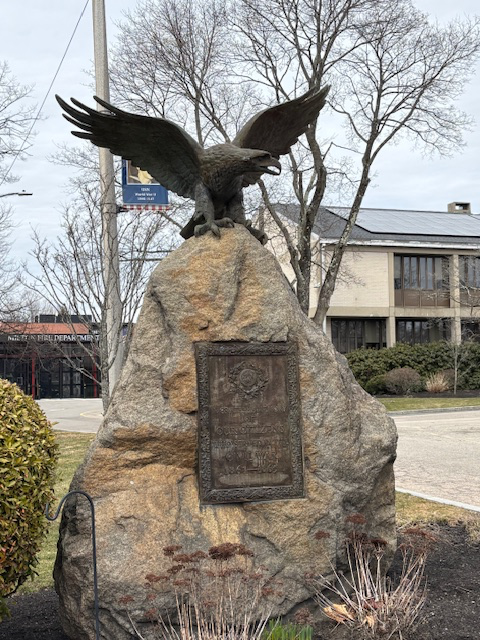
Tucked quietly into the landscape in Milton is a memorial that many people drive past without noticing. Unlike large monuments that commemorate a particular war, this granite boulder honors the service and dedication of the members of American Legion Post 114 and the veterans who have strengthened the Milton community through their continued commitment after returning home.
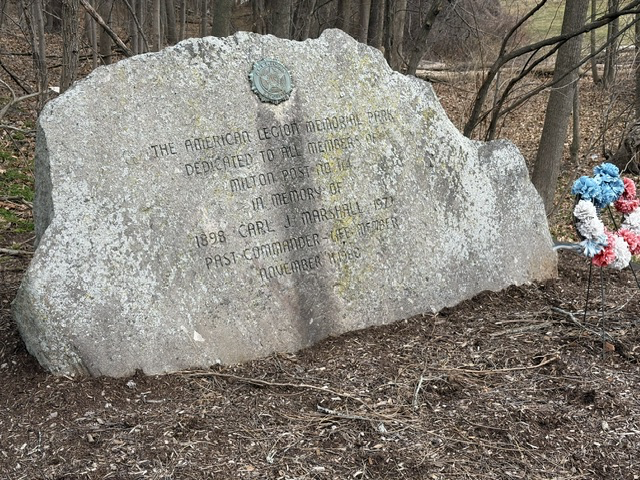
The inscription dedicates the park to the members of Milton Post 114 and memorializes Carl Marshall (1898–1971), a past commander whose years of leadership left a lasting impression on the post. Rather than recognizing a single act of heroism, the monument honors a lifetime of service, both in uniform and in the community.
The American Legion was founded in 1919 by veterans returning from World War I who believed their service to the nation should continue after they came home. Across the country, local posts became gathering places where veterans could support one another, advocate for improved medical care and benefits, assist families in need, and continue serving their communities. The Legion was also instrumental in establishing many of the veterans’ programs we take for granted today, including efforts that eventually contributed to the creation of the GI Bill, one of the most significant pieces of legislation supporting veterans’ education and home ownership after World War II. In towns like Milton, Legion posts sponsored youth baseball teams, Boy Scout troops, scholarship programs, patriotic ceremonies, and Memorial Day observances, becoming an important part of community life as well as veterans’ life.
Milton Post 114 has carried on that tradition for generations, preserving the memory of those who served while providing fellowship and support for veterans returning from war. The park itself reflects those ideals—a peaceful place dedicated not only to remembrance but also to the enduring values of service, citizenship, and community.
The choice of a natural granite boulder is fitting. Its simplicity reflects the quiet strength and enduring values of the organization it represents. Rather than an elaborate sculpture, the monument invites visitors to pause and remember that military service does not always end when a soldier returns home. For many veterans, a lifetime of service continues through leadership, volunteerism, and dedication to their community.
One of the things I appreciate most about memorials like this is that they remind us history is not made only by famous generals or national heroes. It is also shaped by local men and women who devote themselves to their neighbors long after their military service has ended. This simple stone stands as a lasting tribute to that spirit of service and to the veterans of Milton whose commitment to their community continued for generations.