Hezekiah Alexander Homesite
While visiting the Charlotte Museum of History, we walked the grounds and came across the Hezekiah Alexander House, a remarkable survivor from Charlotte’s earliest years.
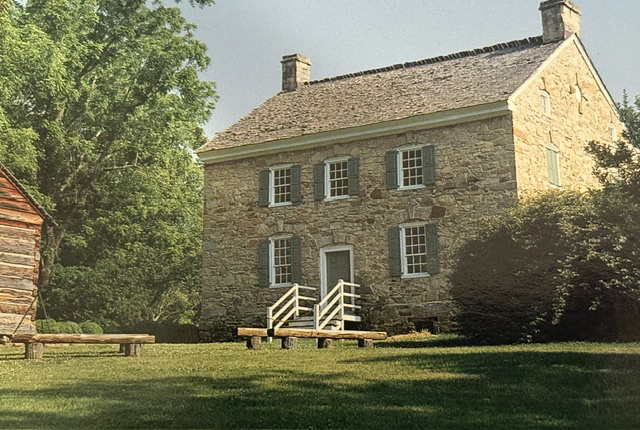
The stone house was built around 1774 by Hezekiah Alexander and is the oldest surviving house in Mecklenburg County. Alexander, born in Pennsylvania in 1722, eventually settled in North Carolina, where he became a farmer, blacksmith, landowner, and active participant in the political life of the community. The substantial two-story stone house he constructed for his family reflected his relative prosperity and was unusual in a region where many homes were still being built of wood.
What makes the house particularly interesting is its timing. Alexander completed his home around 1774, just as tensions between Great Britain and the American colonies were moving toward revolution. Within a year, Alexander was participating in Mecklenburg County’s Committee of Safety and was among the local leaders involved in the Mecklenburg Resolves of May 31, 1775. Adopted only weeks after Lexington and Concord, the Resolves rejected the authority of British officials and established local governing authority in their place.
Alexander’s name is also traditionally associated with the Mecklenburg Declaration of Independence, purportedly adopted on May 20, 1775. Whether that earlier declaration actually existed in the form later claimed has been debated by historians for generations. The Mecklenburg Resolves, however, are documented and demonstrate just how quickly people in this part of North Carolina were moving away from British authority.
That means this house was almost new as those events unfolded. Its walls stood through the American Revolution and have remained for more than 250 years, making the house one of the few surviving physical connections to the Charlotte that Alexander and his neighbors would have known.
The grounds include a reconstructed log kitchen and springhouse that help visitors picture how an eighteenth-century farm functioned. The countryside that once surrounded the house has long since been absorbed by the growing city, making the survival of this early stone home even more interesting.
Today, the Hezekiah Alexander Homesite is preserved and interpreted by the Charlotte Museum of History.