Harmony Grove Anti-Slavery Plaque – Framingham
I went searching for the Harmony Grove Anti-Slavery plague. The marker was nearly covered with snow, and I brushed it off so I could read it clearly. It is a small plague, easy to miss, but it marks ground that once held powerful voices.
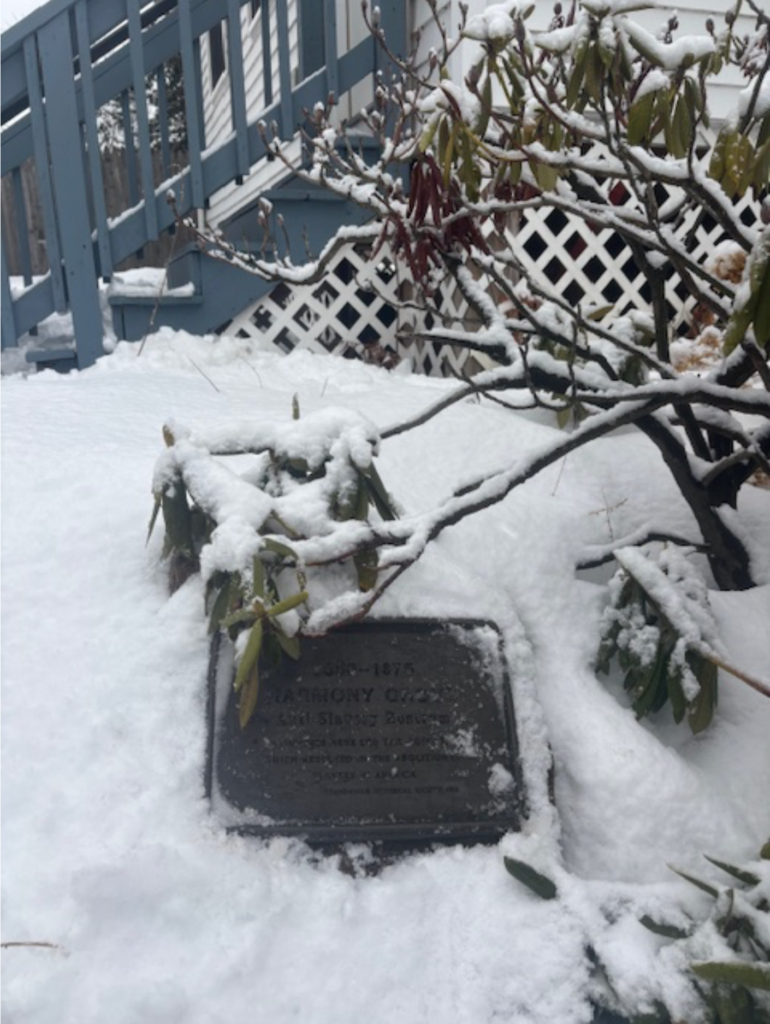
In the mid-1800s, Harmony Grove was an outdoor meeting site where abolitionists gathered to protest slavery and the Fugitive Slave Act of 1850. These rallies drew reformers from across Massachusetts and beyond. Open-air meetings were common at the time, allowing large crowds to assemble and hear speeches advocating for emancipation and resistance to federal enforcement of slave laws.
These gatherings drew many leaders of the abolitionist movement, including John Brown, William Lloyd Garrison, Henry David Thoreau, Wendell Phillips, Lucy Stone, Frederick Douglas and Sojourner Truth.
Framingham became known as a place willing to host bold voices. In 1854, at a large Independence Day rally, abolitionists publicly denounced the Fugitive Slave Law. The gathering symbolized Massachusetts’ growing resistance to federal enforcement of slavery.
Today the grove is quiet. Snow falls were crowds once gathered. The plaque is modest, but it anchors the memory of a time when ordinary towns became states for national debate.
Standing there today, it is hard to imagine the crowds that once assembled here. This small plaque marks the place, but the ideas spoken there helped shape the course of the nation.
The plaque reads:
1850-1875
Harmony Grove
Anti-Slavery Rostrum
Gatherings here led the agitation
Which resulted in the abolition of
Slavery in America