Fortress of Louisbourg National Historic Site
On our family vacation to Nova Scotia, we visited the Fortress of Louisbourg, one of Canada’s most important National Historic Sites. Having spent so much time exploring the history of New England, it was interesting to learn about the French side of North American history and their determined efforts to maintain control of their colonial possessions.

During the seventeenth and early eighteenth centuries, France established the colony of Acadia, a vast region that included most of present-day Nova Scotia, New Brunswick, Prince Edward Island, parts of eastern Maine, and portions of Québec. Acadia became home to French settlers, known as Acadians, who developed thriving farming and fishing communities along the Atlantic coast. For decades, France and Great Britain competed for control of this strategically important region.
The struggle changed dramatically with the Treaty of Utrecht in 1713, when France surrendered mainland Acadia to Great Britain but retained Cape Breton Island, then known as Île Royale, and nearby Prince Edward Island. Determined to protect its remaining territory and maintain access to the rich fishing grounds of the North Atlantic, France selected the excellent harbor at Louisbourg as the site for a massive new fortress. Construction began in 1719, and over the following decades Louisbourg grew into one of the largest fortified towns in North America. Protected by imposing stone walls, bastions, and dozens of cannons, it served as both a military stronghold and the center of France’s Atlantic fishing industry.
Its importance made Louisbourg a prime military target. In 1745, New England colonial troops, supported by the British Navy, captured the fortress after a lengthy siege. Three years later, the Treaty of Aix-la-Chapelle returned it to France in exchange for territory in Europe. The fortress was rebuilt and strengthened, but in 1758 British forces again besieged Louisbourg. This time the capture was permanent, opening the route to the St. Lawrence River and paving the way for the British conquest of Québec the following year. To ensure the French could never reoccupy the fortress, much of it was deliberately dismantled.
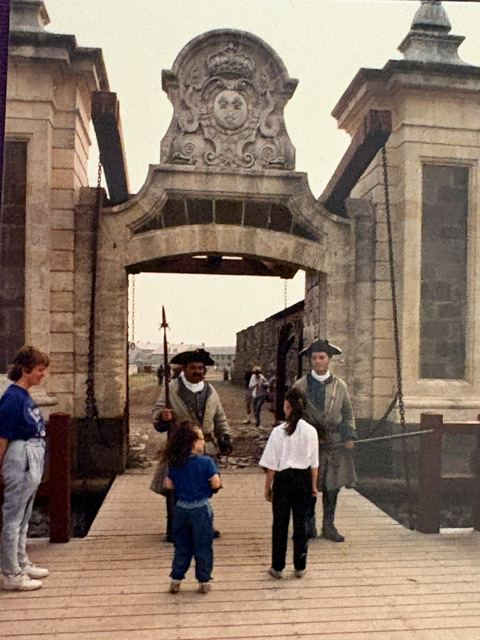
For nearly two centuries, Louisbourg remained in ruins. Then, beginning in the 1960s, Parks Canada undertook one of the most ambitious historical reconstruction projects in North America. Using archaeological excavations, original French engineering plans, maps, and written records, approximately one-quarter of the eighteenth-century town was faithfully rebuilt. Today, visitors can walk through homes, military barracks, workshops, gardens, and public buildings while costumed interpreters demonstrate the daily lives of soldiers, merchants, fishermen, and their families.
Walking through the fortress gave me a greater appreciation for how the struggle between France and Great Britain shaped not only the history of Canada but also the future of North America. It was a reminder that the colonial story extends far beyond the thirteen American colonies and includes the competing ambitions of European powers along the Atlantic coast.
Read More From Nancy
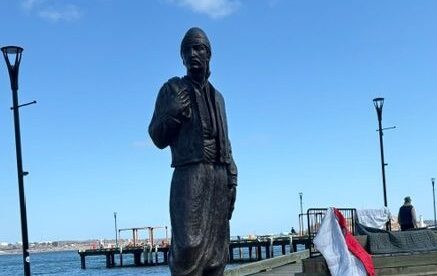
The Lebanese Emigrant Statue
On Halifax’s waterfront, a bronze figure honours the Lebanese emigrants who crossed the ocean to establish new lives in Nova Scotia. Installed in September 2018, the Lebanese Emigrant Statue recognizes their pioneering spirit and the contributions of generations of Lebanese Canadians to the province’s communities, businesses and professions. Lebanese migration to Nova Scotia began in […]
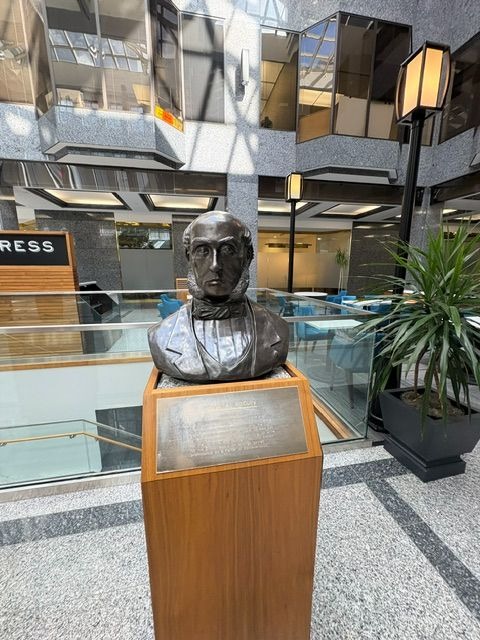
Jonathan McCully
A portrait bust in Halifax’s Founders Square commemorates Jonathan McCully, a lawyer, newspaper editor and political leader remembered as one of Canada’s Fathers of Confederation. Born in Cumberland County, Nova Scotia, in 1809, McCully practised law in Amherst before entering provincial politics. Appointed to the Legislative Council in 1848, he later served as solicitor general […]
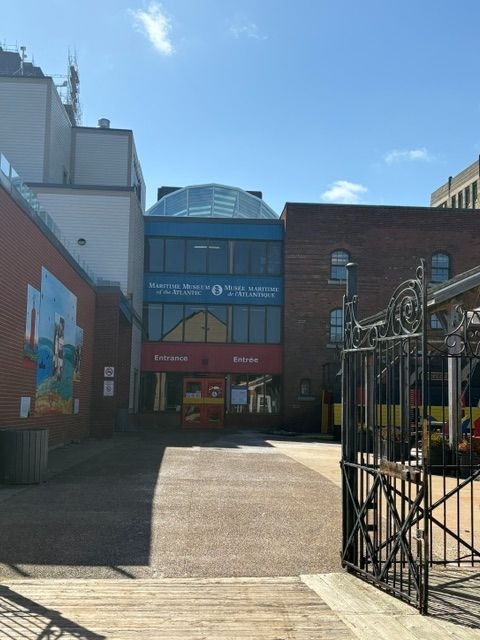
Maritime Museum of the Atlantic
On Lower Water Street beside Halifax Harbour, the Maritime Museum of the Atlantic preserves the history of a province whose communities and livelihoods have long been connected to the sea. Its collections explore shipbuilding, fishing, coastal travel, ocean commerce and naval service, bringing together the vessels, tools and personal belongings through which that history can […]

