Wiring Splicing Champs
1945Dearest Reader,
Sometimes the small clippings among my parents’ papers raise more questions than they answer. This is one of them.
This small newspaper photograph of a sailor, James A. Morrow, has my mother’s handwritten date: March 23, 1943.
The article itself is short and simple. It reports that a wire-splicing champion at an amphibious base in the Mediterranean had held a contest between base personnel and sailors serving aboard ships. Among the members of the winning team was James A. Morrow, identified as a Boatswain’s Mate First Class in the United States Naval Reserve.
Although the clipping tells us very little about the man himself, a few details help place him within the larger story of the war. As a Boatswain’s Mate, Morrow would have been responsible for many of the essential seamanship skills aboard naval vessels: handling lines and rigging, maintaining deck equipment, and working with ropes and cables used for mooring ships and operating landing craft. Wire-splicing, the skill highlighted in the contest, was an important part of that work. Properly joining wire rope required strength, precision and experience, and it was a task critical to naval operations.
The mention of an amphibious base in the Mediterranean places Morrow in a theatre of the war that supported Allied operations in southern Europe. By March of 1945 the war in Europe was nearing its final months, but naval bases in the Mediterranean were still busy supplying fleets, supporting landing craft and maintaining the ships that carried troops and equipment across the region.
Beyond these few facts, I do not know why my mother saved this clipping. What remains is a small glimpse into the life of a sailor far from home in 1944, one of the thousands of young men serving across the world, whose skills, work and daily routines quietly supported the vast effort of the war.
Dr. Nancy Watson
Washington
Read More From Nancy

Obtains New Rating Now in Pacific
Among the newspaper clippings saved by my parents is this small wartime article about Navy serviceman Donald R. Edmonds. I have not discovered a connection between the Edmonds and my own, yet for some reason, this clipping was preserved through the years. The article, published during the final months of World War II, reports that Edmonds had […]
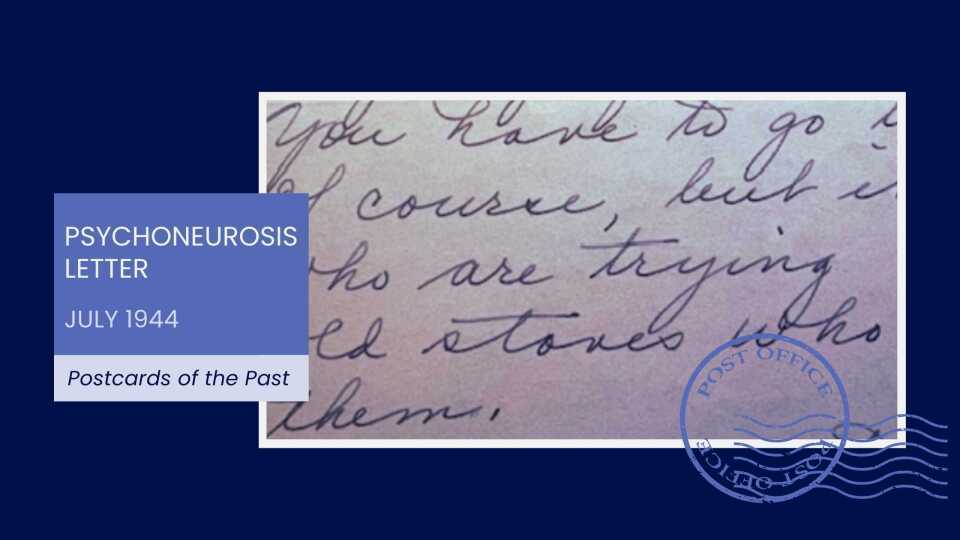
Psychoneurosis Letter
Reading my grandmother’s words, it is clear how complicated and emotionally charged the term psychoneurosis was in 1944, She writes: “You will note that Dr. Link, a noted psychologist, does not believe in the use of that term, that to call a man a ‘psychoneurotic’ is to go a long way towards making him one. […]
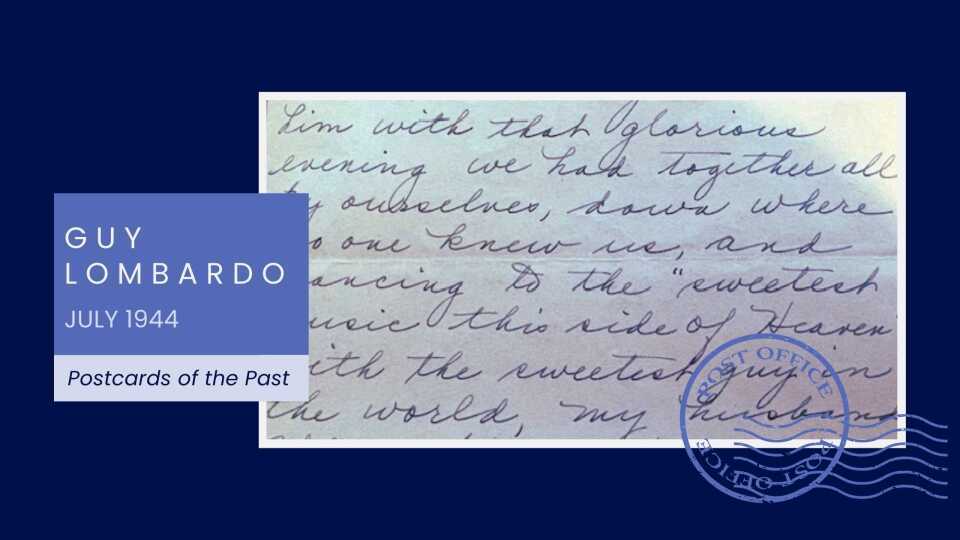
Guy Lombardo
By 1944, Guy Lombardo and His Royal Canadians, were more than a popular band, he was institutional. He was the soundtrack for weddings. honeymoons and dances. Even people who didn’t follow big-band music knew who Guy Lombardo was. In a world unsettled by war, Lombardo’s music offered something romantic and familiar. He was widely known for […]

