Dedham Pottery
In Dedham, history is told in many ways, it stands in grand buildings and monuments, visible reminders of the town’s long and important past. But just as much of its story is found in objects created here, shaped by hand, and carried into everyday life. Dedham Pottery is one of those stories.
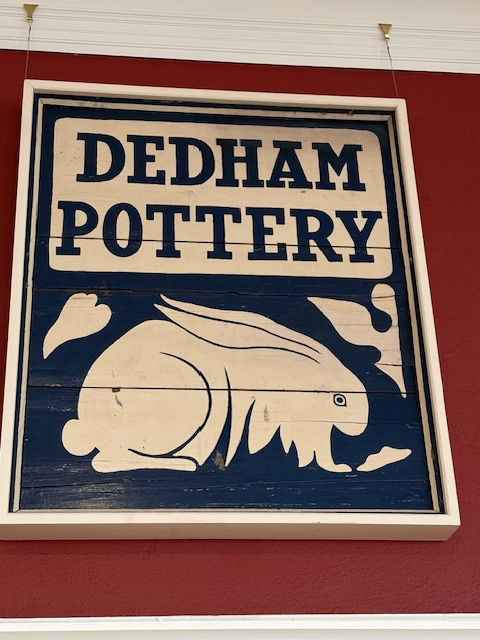
Founded in 1896 by ceramic artist Hugh C. Robertson, Dedham Pottery did not begin as a large industrial venture, but rather as an expression of a growing movement, one that valued simplicity, beauty and craftsmanship over mass production. At a time when factories were beginning to dominate the American landscape, this small Massachusetts town became home to a different kind of industry.
The pieces that came out of Dedham Pottery are instantly recognizable. A soft, creamy glaze delicately crackled across the surface, gives each plate or vase a sense of age and texture. Around the edges, a procession of small animals, most famously te rabies, march in quiet repetition.
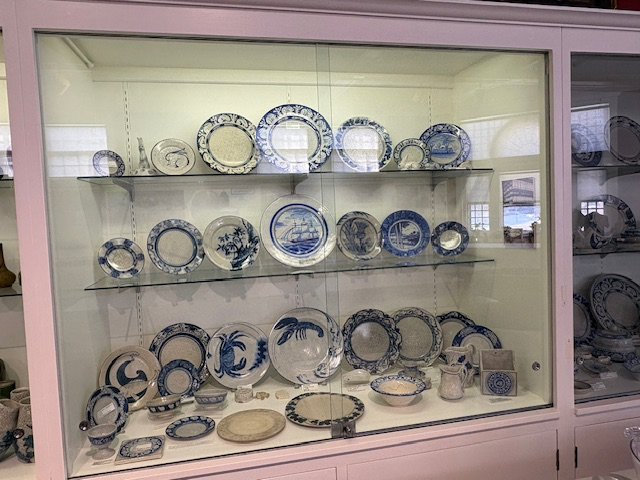
Dedham Pottery was part of the American Arts and Crafts movement, which believed everyday objects should be both functional and beautiful. These were pieces meant to be used at the table, to be part of daily life.
The pottery continued through the early decades of the 29th century but like many small-handcrafted industries, it could not withstand the economic pressures of the Great Depression and the changes brought on by World War II. By 1943, production had come to an end.
Today, when you come across a Dedham Pottery place, you are holding a piece of the town’s identity.

Read More From Nancy
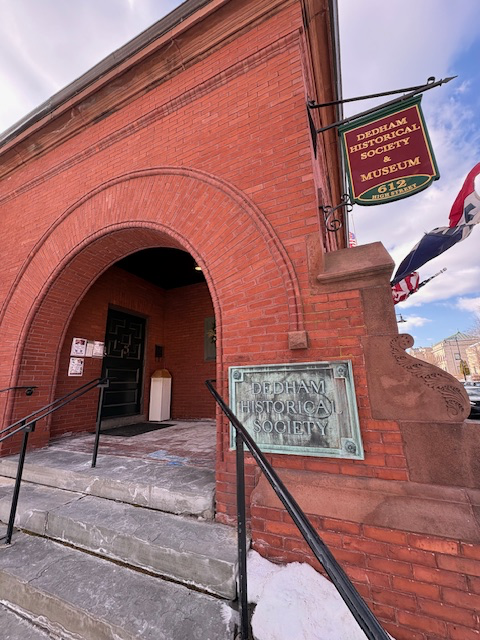
Dedham Historical Museum
I went to visit the town green in Dedham, Massachusetts for its colonial markers and instead found myself stepping into the Dedham Historical Society and Museum. Almost immediately, I felt I had encountered a kindred spirit in the woman who greeted me at the door. Here was a whole museum designed and dedicated to the […]
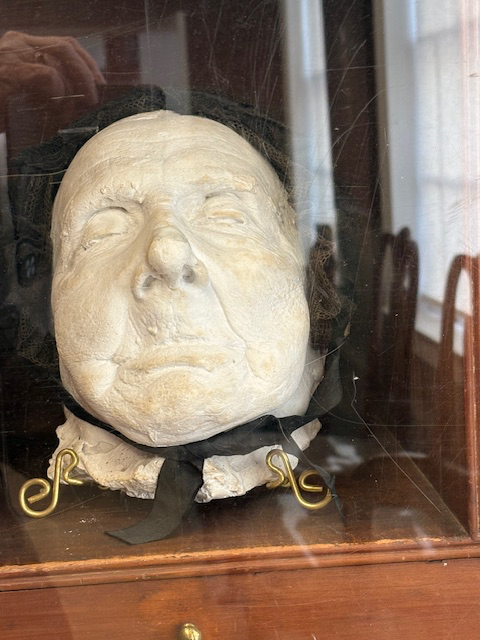
Death Mask
In the Dedham History Museum, is this death mask. An intimate impression of a person’s face taken shortly after death. The practice of creating death masks has a long history. In ancient Egypt, masks were place with the dead, though they were often idealized. In ancient Rome, families preserved wax masks of ancestors as a way to honor lineage […]
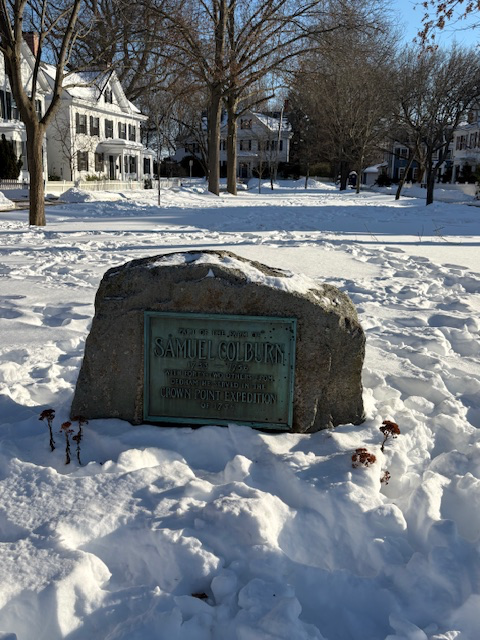
Samuel Colburn
As I was walking through downtown Dedham, I came across a simple rock monument honoring Samuel Colburn. I must admit I was not aware of the Crown Point Expedition. That unfamiliar name immediately caught my attention. I was excited to take a photo and look up more information later. There is something satisfying about discovering a small marker and realizing it opens […]

