Pillars of Liberty Monument
While walking across the Dedham common, I paused at this modest stone monument with a bronze plaque. The marker preserves the memory of one of the earliest political monuments erected in colonial Massachusetts: The Pillar of Liberty.
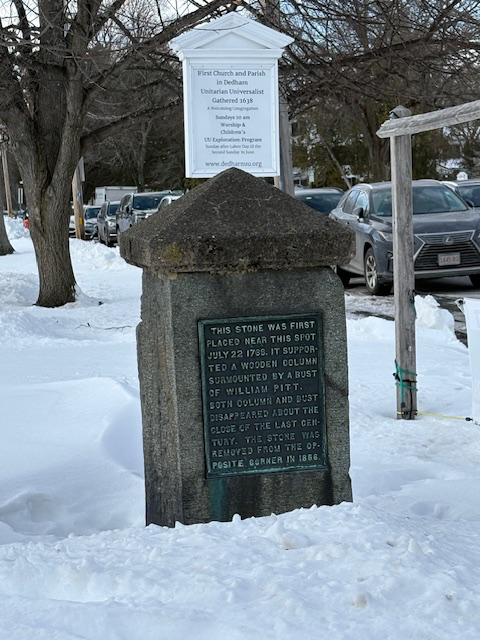
The original monument was erected on July 22, 1766, nearly a decade before the American Revolution began, and a full decade before the Declaration of Independence. At that time, tensions between the American colonies and Great Britain were already rising. The immediate issue was the Stamp Act of 1765, which imposed taxes on printed materials throughout the colonies and provoked widespread protests.
When the Stamp Act was repealed in 1766, colonists celebrated what they saw as a victory for their rights as English subjects. In Dedham, citizens marked the occasion by erecting a monument honoring the British statesman William Pitt the Elder, who had spoken in Parliament against taxing the colonies without representation.
The original monument consisted of this stone base and topped with a bust of Pitt. The monument symbolizes gratitude toward Pitt. But the bust did not stand for long. In 1769, during renewed tensions with Britain, the bust was destroyed.
In the late 19th century, Massachusetts towns grew interested in preserving Revolutionary era history. Dedham chose to protect what remained of the monument. In 1888. the bronze plaque was added to the stone base.
I am grateful that I paused at this monument because before seeing it I was not aware of these Pillars of Liberty that appeared in colonial towns. This one stands as a reminder that the struggle for independence did not suddenly begin in 1775. The political ideas and protests were already taking shape years earlier.
Read More
Read More From Nancy
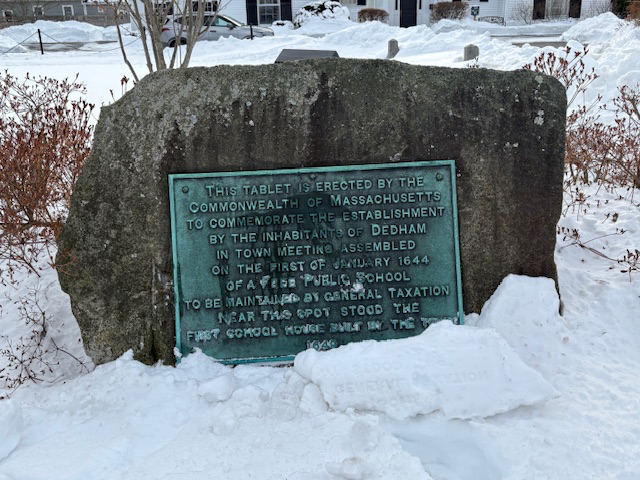
First Tax-Supported Public School Site
In Dedham, there are many stone monuments with bronze plaques marking the people, places, and events that have shaped this historic community. Dedham is a town that has witnessed much of our nation’s early history, and this simple marker commemorates another important milestone in that story. Here, on January 1, 1644, the inhabitants of Dedham, […]
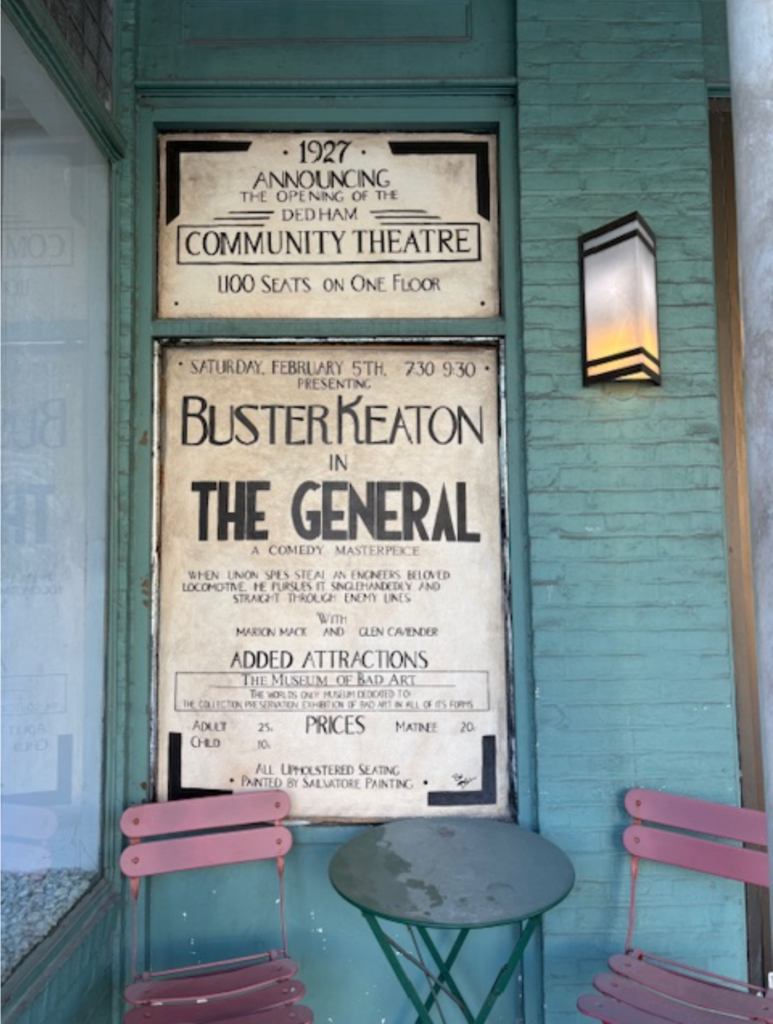
Dedham Community Theatre
In the heart of Dedham Square stands an enduring landmark of community life: The Dedham Community Theatre, which first opened its doors in 1927. At a time when silent films were giving way to “talkies”, and going to the movies was an event, this theatre brought magic to the silver screen to a growing suburban […]
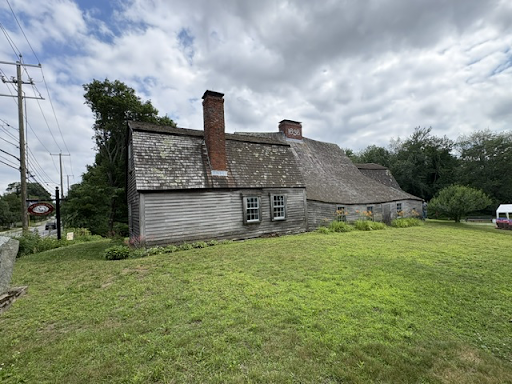
The Fairbanks House
While exploring Dedham, I stopped at the Fairbanks House, a remarkable reminder of New England’s earliest colonial history. At first glance, it appears to be a simple wooden farmhouse, but it is recognized as the oldest surviving timber-frame house in North America. Construction of the original section of the house began around 1637 for Jonathan […]

