Covehead Harbour Lighthouse
While exploring the north shore of Prince Edward Island, we stopped at Covehead Harbour Lighthouse in the community of Stanhope. It sits among the sand dunes of Prince Edward Island National Park, overlooking the entrance to Covehead Bay and the Gulf of St. Lawrence.
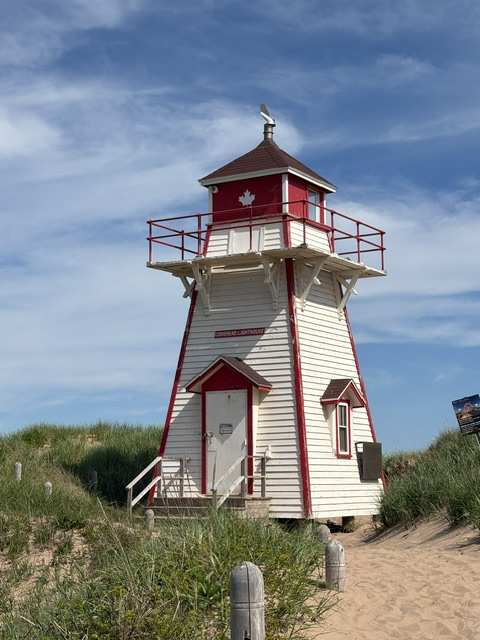
At first, it was exactly the kind of scene I associate with Prince Edward Island—a small red-and-white lighthouse surrounded by beach grass, sand and an enormous blue sky. But the plaque attached to the lighthouse told a much darker story about these waters. The name “Yankee Gale” reflects the fact that many of the fishermen caught in the storm were Americans. Fishing vessels from New England regularly worked the rich waters of the Gulf of St. Lawrence, and when the storm struck, many were operating off Prince Edward Island’s north shore. It commemorates the Gale of 1851, remembered on Prince Edward Island as the Yankee Gale.
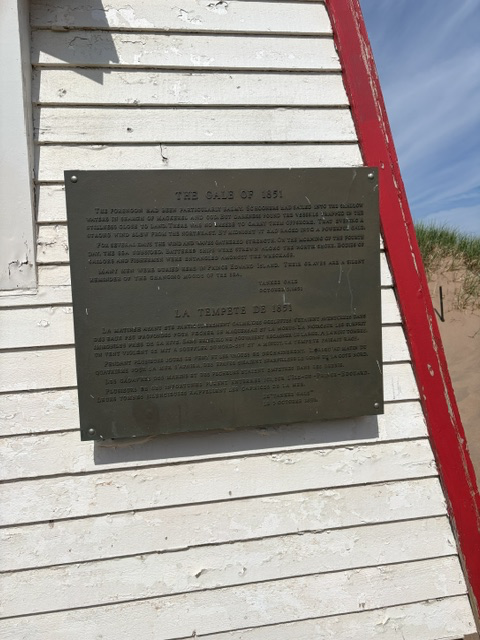
On October 3 and 4, 1851, a devastating storm swept along the eastern seaboard and struck the waters surrounding Prince Edward Island. The plaque records the loss of 74 ships and approximately 150 lives. Parks Canada describes it as the worst storm in Island history. The name “Yankee Gale” reflects the fact that many of the fishermen caught in the storm were Americans. Fishing vessels from New England regularly worked the rich waters of the Gulf of St. Lawrence, and when the storm struck, many were operating off Prince Edward Island’s north shore.
For the people living along this coast, the aftermath must have been overwhelming. Wrecked vessels and bodies came ashore along the Island. Some of the American sailors who died during the gale were buried nearby in the Stanhope Pioneer Cemetery, where their graves remain part of the cultural history protected within Prince Edward Island National Park.
The lighthouse we photographed was not standing here when the tragedy occurred. In fact, navigational range lights were not established at Covehead Harbour until 1879. Those first lights were lanterns mounted on movable masts, an ingenious solution because shifting sands continually changed the harbour entrance. Eventually permanent structures replaced them. The present lighthouse was constructed in 1975, replacing a 1967 tower.
Although relatively modern, the little lighthouse preserves a much older maritime tradition. Its lantern contains a revolving bull’s-eye Fresnel lens reported to be more than a century old, and in 2015 the lighthouse received formal heritage recognition. The waters beyond these dunes were once the scene of one of the greatest maritime disasters in Prince Edward Island’s history. The lighthouse that stands here today came much later, but its purpose—helping mariners find their way safely through these waters—connects directly with the dangers that generations of fishermen and sailors faced along this coast.
Read More From Nancy
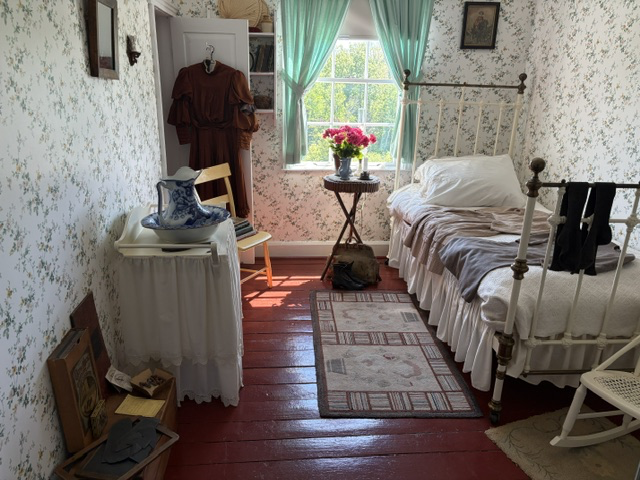
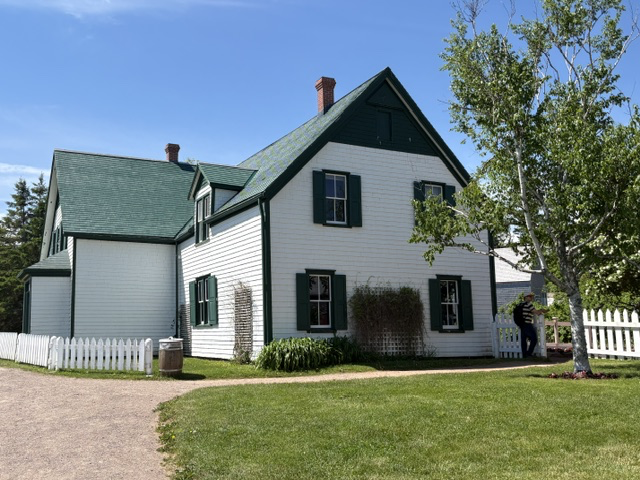
Anne’s East-Gable Bedroom
This small bedroom at Green Gables did not belong to Lucy Maud Montgomery, nor did a real girl named Anne Shirley ever sleep here. Instead, it has been arranged according to Montgomery’s descriptions of the east-gable room that became Anne’s first true bedroom in Anne of Green Gables. It is one of the places where […]
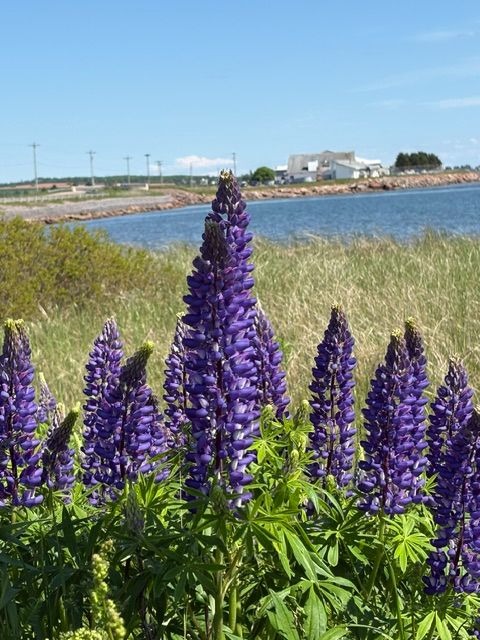
Lupines by the Shore
For a few weeks each summer, lupines bring bands of purple, pink, and white to Prince Edward Island’s roadsides and open spaces. Their tall flower spikes rise above the grasses, turning otherwise ordinary stretches of ground into memorable parts of the landscape. June is especially associated with their arrival, although flowering times vary with weather […]
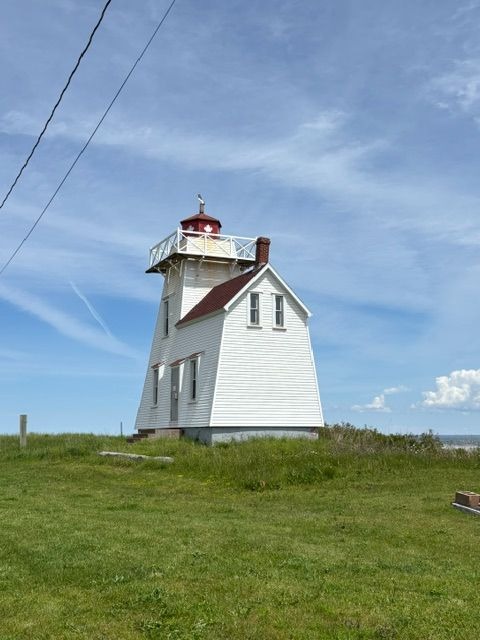
The Lighthouse That Rustico Saved
The North Rustico Lighthouse was built to help mariners reach shore, but more than once, people on shore had to save the lighthouse itself. Storms threatened its foundation, and a replacement tower later threatened its future. Its survival owes as much to the community’s determination as to the strength of its construction. Built in 1876, […]

