Alaska
Alaska joined the Union on January 3, 1959, becoming the nation’s forty-ninth state. Known as the Last Frontier, it is the largest state by area, with Juneau as its capital and Anchorage as its largest city. Its history begins with the many Alaska Native peoples whose cultures continue to shape the state. Russian colonization, the United States’ purchase of Alaska in 1867, commercial fishing, and the gold rushes brought further changes to its communities.
Across Alaska, coastal towns and inland communities preserve different parts of that history. Sitka offers a look at Tlingit and Russian colonial history, Juneau grew from a mining town into the state capital, and Fairbanks traces its beginnings to the Interior gold rush. My Hometown Stories provide an opportunity to explore these communities and discover the places that give Alaska its distinctive character.

Hometowns

Fairbanks, AK
Fairbanks grew along the Chena River in Alaska’s Interior, in a region Athabascan peoples had traveled and used for thousands of years. The town’s beginnings came almost by accident in 1901, when trader E. T. Barnette’s steamboat could travel no farther upriver. He unloaded his supplies and established a trading post. Felix Pedro’s nearby gold discovery in 1902 brought prospectors and business, turning the riverbank settlement into a growing community. Incorporated in 1903, Fairbanks was named for Indiana Senator Charles W. Fairbanks, who later became vice president. Its development depended on finding ways to move people and supplies across difficult terrain. Riverboats, the Tanana Valley Railroad, and early automobiles each played a part. That history survives at places such as Pioneer Park and the Fountainhead Antique Auto Museum, where machinery and personal stories reveal the ingenuity required to build a community in the Interior. Fairbanks is also a place of striking seasonal contrasts, with long summer evenings and dark winter skies that offer opportunities to see the northern lights. Known as Alaska’s “Golden Heart,” it brings together gold-rush history, living Alaska Native cultures, and a close connection to the rivers and forests surrounding it.
Sitka, AK
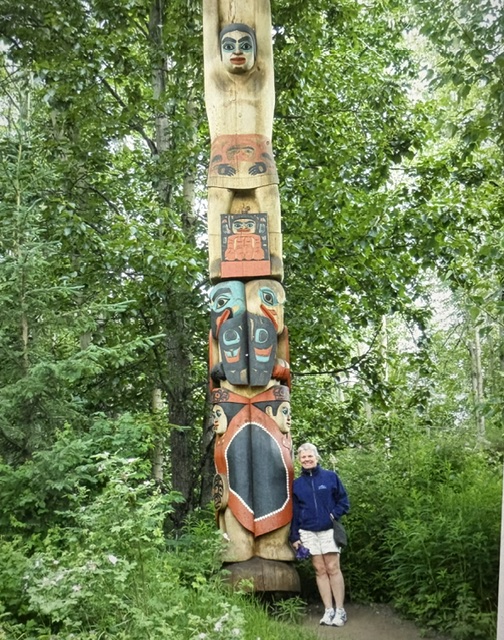
Sitka lies on the western shore of Baranof Island in Southeast Alaska, surrounded by forested mountains and the waters of Sitka Sound. Long before Russian traders arrived, this was Tlingit homeland. That heritage remains visible in the community’s art and traditions, including the Tlingit and Haida totem poles displayed along the wooded trails of Sitka National Historical Park. Known as New Archangel during Russian rule, Sitka became the capital of Russian America. On October 18, 1867, Castle Hill was the setting for Alaska’s formal transfer from Russia to the United States. Sitka remained the seat of government until the capital moved to Juneau in 1906. Its totem poles, Russian Bishop’s House, and historic waterfront offer different ways to explore the town’s past.

