Calvin and Luther Blanchard Farm
Along Prospect Street in Acton stands this granite marker remembering two brothers, Calvin and Luther Blanchard. The stone marks the farm from which they left to serve their community and, ultimately, become part of the story of the American Revolution. The brothers were the sons of Simon Blanchard, whose own military service had ended tragically a generation earlier. Simon was killed during the British campaign at Quebec in 1759 during the French and Indian War. Less than sixteen years later, his sons would march to confront British soldiers at Concord.
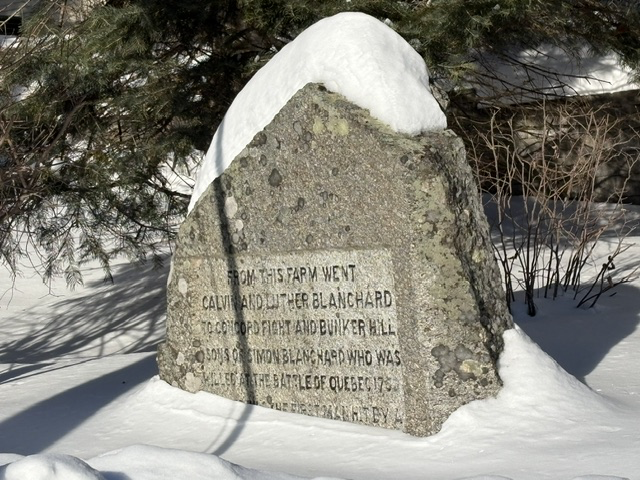
By 1775, Calvin and Luther were living on this Acton farm and learning the mason’s trade from Deacon Jonathan Hosmer. Both belonged to Captain Isaac Davis’s company of Acton Minutemen. Luther, only eighteen years old, served as the company’s fifer. On the morning of April 19, 1775, word reached Acton that British regulars were marching toward Concord. Captain Davis assembled his company, and the Acton men began their approximately seven-mile march toward Concord. At the North Bridge, Davis’s company was placed at the front of the colonial column preparing to advance toward the British troops. According to tradition, when Davis was asked whether his men were prepared to lead, he replied, “I haven’t a man that is afraid to go.”
The Acton company advanced toward the bridge.
British soldiers opened fire. Captain Isaac Davis and Private Abner Hosmer were killed, becoming among the first Americans to die in the fighting at Concord. Luther Blanchard was wounded by a British musket ball. His wound was not immediately fatal, and he recovered sufficiently to continue serving. He was present at the Battle of Bunker Hill only two months later, but his health subsequently deteriorated, and he died later in 1775.
Calvin Blanchard survived April 19 and served at Bunker Hill. He continued his Revolutionary service afterward, including participation in the American expedition toward Quebec. The family story contains a remarkable historical reversal. Their father, Simon Blanchard, had died in 1759 while serving during Britain’s war against France in North America. Sixteen years later, his sons marched from this farm to fight against British troops as the American colonies began their struggle for independence.
The monument was erected much later, in 1895, by Calvin Blanchard’s grandson Luke Blanchard. It was dedicated on Patriots’ Day, April 19, 1895, exactly 120 years after the events it commemorates.
The simple opening words carved into the stone are what make this marker especially meaningful:
“From this farm went Calvin and Luther Blanchard.”
We usually encounter the events of April 19, 1775, at Lexington Green and Concord’s North Bridge. But the men who gathered at those places had to come from somewhere. They left farms, workshops, families, and ordinary lives in towns throughout the Massachusetts countryside.
This stone preserves one of those starting points. From this farm, Calvin and Luther Blanchard set out with their neighbors on an April morning in 1775, not knowing that the road they were taking toward Concord would lead them directly into the opening day of the American Revolution.
Read More From Nancy
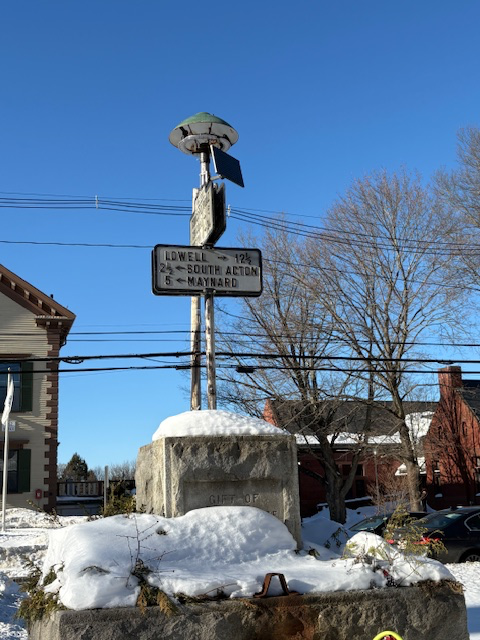
Acton
The town of Acton was incorporated in 1735, at a time when many Massachusetts communities were being formally established as they grew beyond their original settlements. Like many New England towns of that era, Acton was named after a place in England: Acton. This practice was common among colonial settlers, who often carried familiar names from […]
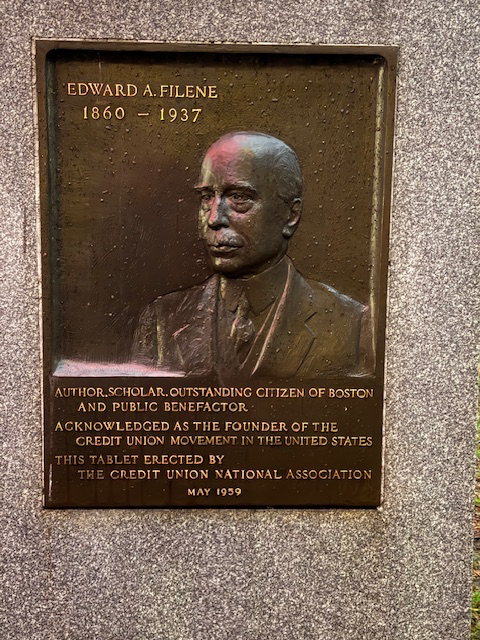
Edward A. Filene Plague
Walking along the fence surrounding the Boston Common, I came across this bronze plaque honoring Edward A. Filene. While many people recognize the Filene name from the famous Boston department store, few realize the tremendous influence he had beyond retail. Filene believed that ordinary working families deserved access to affordable credit and financial opportunity. His […]
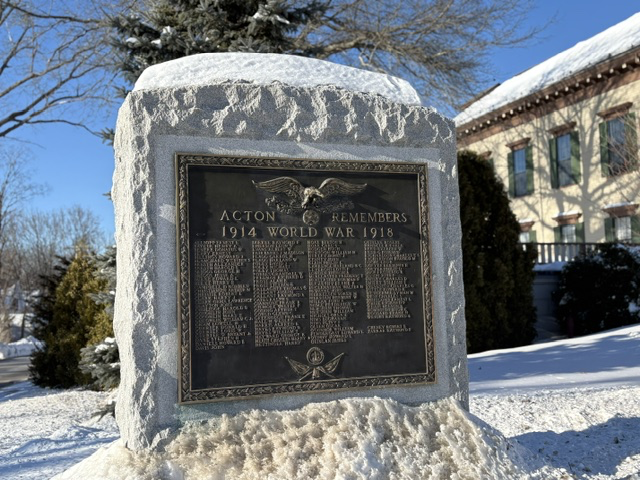
Tribute to the Great War
Standing quietly on the Town Common, this granite memorial is one of the many places where Acton’s history is preserved in plain sight. Unlike the famous Revolutionary War landmarks that draw visitors from around the world, this monument speaks of another generation and another conflict. One that took the sons of this small Massachusetts town […]

