“Blindfolded Eros” Sculpture
This striking sculpture is the Eros Bendato by Polish artist Igor Mitoraj, located in Krakow near the historic Market Square and Town Hall Tower. The sculpture was created in 1999 and has become one of the city’s recognizable modern artistic landmarks.
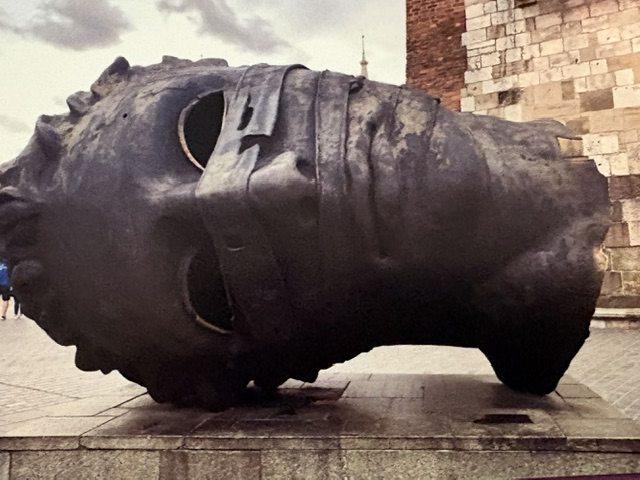
The massive bronze head lies broken and bandaged, with hollow eyes and damaged features. Like much of Mitoraj’s work, it resembles an ancient classical sculpture that has survived ruin, war and time itself.
Mitoraj became internationally known for creating sculptures inspired by classical Greek and Roman art while intentionally presenting them as fractured, incomplete or wounded. His work explores themes of beauty, fragility, suffering and the imperfection of humanity.
The title “Eros Bendato” translates to “Blindfolded Eros”, referring to the Greek god of love. Rather than presenting an idealized figure, the sculpture appears wounded and partially destroyed.
Looking at this photograph now, I am reminded how cities like Krakow constantly surprise us with unexpected encounters between ancient history and modern artistic expression.
Read More From Nancy
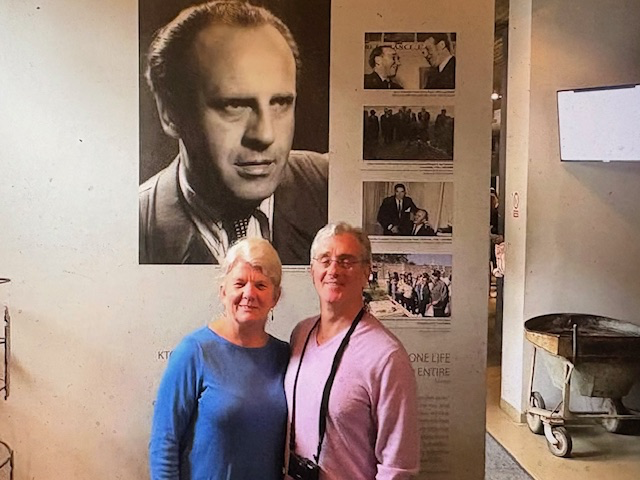
Oskar Schindler’s Museum
While visiting Krakow, we made our way to this powerful museum: Oskar Schindler’s Factory. Of course, his story had already been etched into public memory through the Oscar-winning film Schindler’s List, but standing in the actual factory where so much of that history unfolded brought a different weight to the story. The Oskar Schindler’s Museum […]
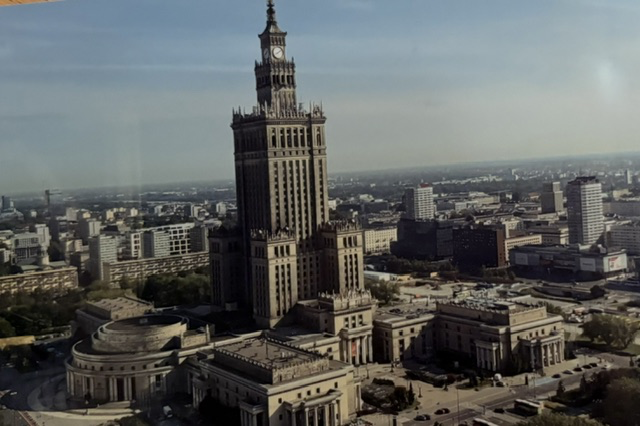
Palace of Culture and Science
Some buildings become symbols of pride. Others become symbols of history itself. The Palace of Culture and Science dominates the skyline of Warsaw, standing more than 750 feet above the city. It is impossible to ignore. Whether you admire it or dislike it, every road through central Warsaw seems to lead your eyes back to […]
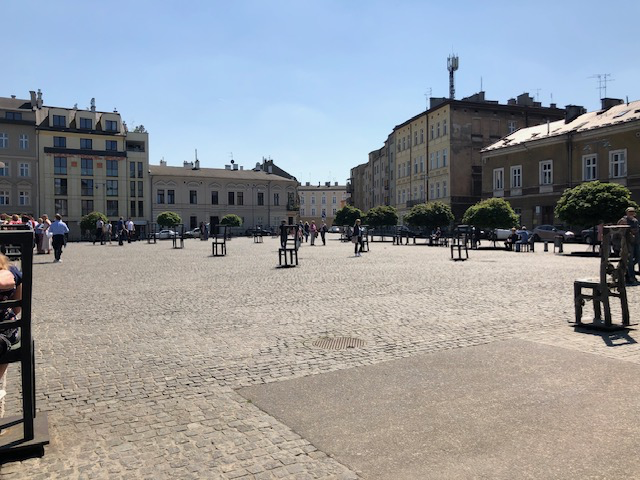
Ghetto Heroes Square
In 2019, we visited Ghetto Heroes Square in Krakow, a wide-open public square that today holds striking memorial installations. Scattered across the space are dozens of oversized bronze chairs: simple, empty, and haunting. The installation, created in 2005 by Lewicki and Latak, stands as a memorial to the Jewish residents of the Krakow Ghetto who once lived […]

