Belém Tower
While exploring Lisbon, we visited the Torre de Belém, standing along the Tagus River near the place from which many of Portugal’s great voyages of exploration began. Built between 1514 and 1519 during the reign of King Manuel I, the tower was originally part of Lisbon’s defensive system, positioned to help protect the entrance to the city from ships approaching from the Atlantic.
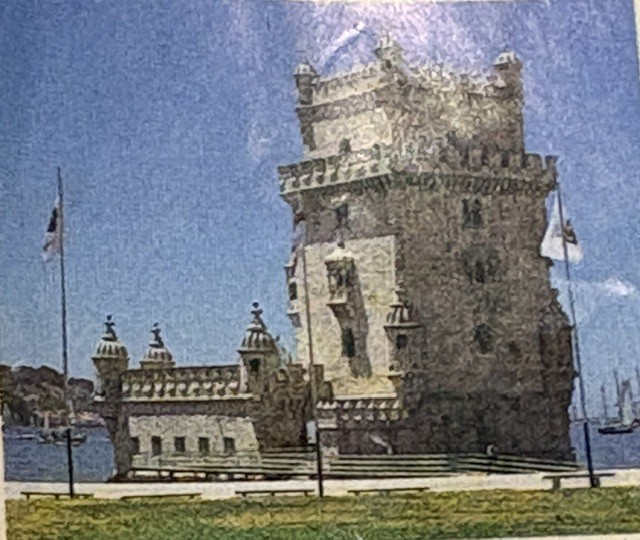
The tower is one of the finest surviving examples of Manueline architecture, the elaborate Portuguese style that developed during the country’s great period of maritime expansion. Look closely at the stonework and the connection with the sea becomes apparent. Carved ropes, knots, shields and other maritime and religious symbols decorate a military structure that was built during an era when Portugal’s wealth and influence were increasingly arriving by ship.
What I found especially interesting is that Belém Tower originally stood much more prominently within the waters of the Tagus. Over the centuries, changes to the shoreline through silting, reclamation and development brought the riverbank closer to the tower. What appears today to be a fortress sitting at the water’s edge was once surrounded by considerably more water.
Its location places it within the larger story of Portuguese exploration. From this part of Lisbon, ships sailed toward Africa and around the Cape of Good Hope into the Indian Ocean. Vasco da Gama departed from nearby Restelo in 1497 on the voyage that would establish a direct sea route between Europe and India. For generations of Portuguese sailors, the Tagus was quite literally their road to the world.
But those voyages also carried consequences far beyond Portugal. Exploration led to trade and cultural exchange, but also conquest, colonization, slavery and competition for control of distant lands and peoples. Belém represents both the remarkable navigational achievements of this period and the complicated global history that followed them.
There is another wonderful detail hidden in the tower itself. Among its elaborate carvings is the stone head of a rhinoceros, believed to have been inspired by a rhinoceros brought to Portugal from India in 1515. The animal caused a sensation in Europe, where a living rhinoceros had not been seen for centuries. Its appearance on the tower is a small reminder of just how dramatically Portuguese voyages were expanding Europeans’ knowledge of the wider world.
The tower is much more than an impressive old building. It marks a place where Lisbon met the Atlantic and where, five centuries ago, ships passed between the known world and journeys whose destinations must have seemed unimaginably distant.
Read More From Nancy
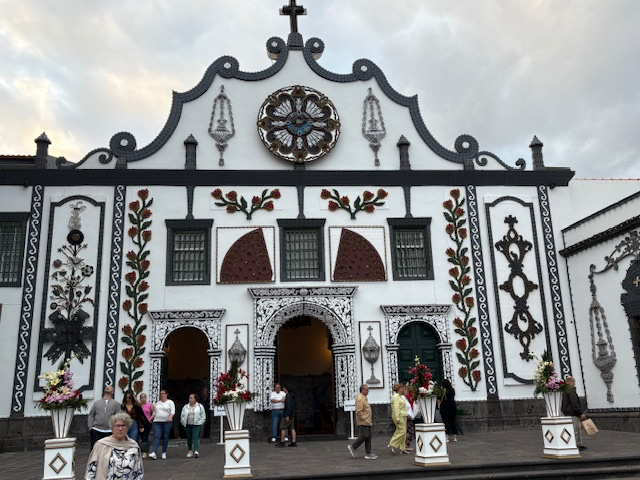
The Miracle of Santo Cristo dos Milagres
When we arrived in the Azores in May 2025, we had no idea we were stepping into one of the islands’ most sacred and remarkable celebrations. The streets of Ponta Delgada were closed to traffic, storefronts shuttered, and the city was blanketed in flowers. What we thought was an ordinary weekend turned out to be […]
Sanctuary of Fátima
On our travels through Portugal, I wanted to visit the Shrine of Fátima. Having grown up Catholic, I couldn’t be this close and not make the journey to a place I had heard about since childhood. Fátima is one of the most important Catholic pilgrimage destinations in the world, with millions of people traveling here […]
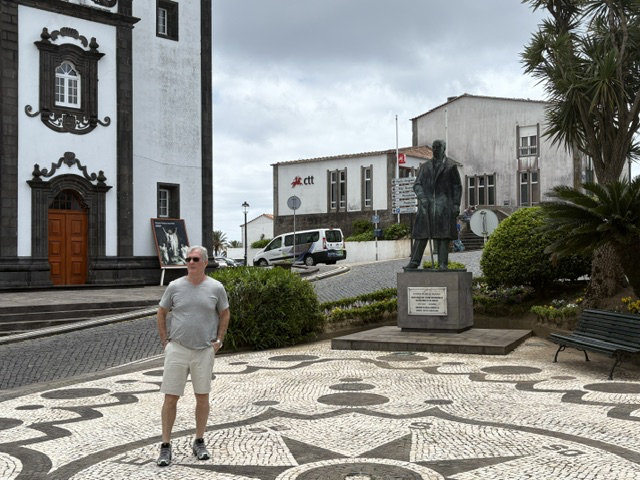
António Alves de Oliveira
One of the things I enjoy most when traveling is stopping to learn about the people honored in a town’s public squares. Every community chooses its monuments carefully. Some commemorate kings or military heroes, while others recognize the local citizens whose vision changed everyday life. I often find those stories to be the most meaningful. […]

