Alexander and Sarah Cockrell
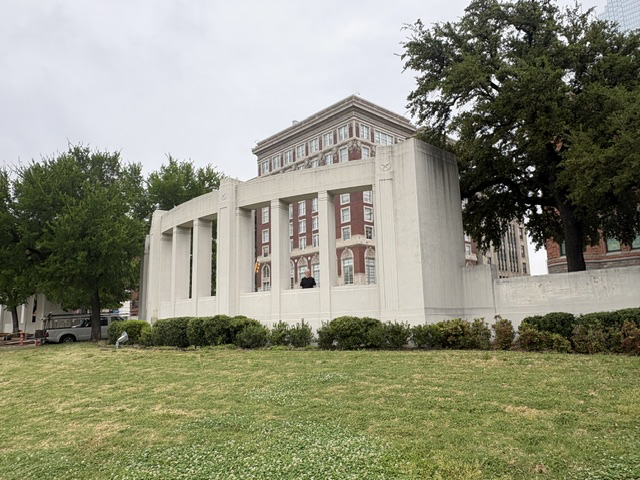
While walking through the historic landscape of downtown Dallas, I came across this Texas historical marker beside one of the large white colonnades. It commemorates Alexander and Sarah Horton Cockrell, a husband and wife whose story is closely connected with the transformation of Dallas from a small frontier settlement into an emerging commercial center.
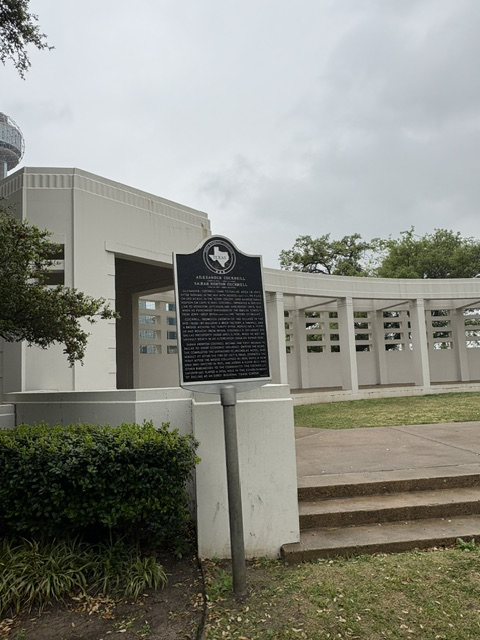
Alexander Cockrell arrived in the Dallas area in 1845. After serving in the Mexican American War, he claimed 640 acres in the Peters Colony and married Sarah Horton in 1847. He initially operated a freight business connecting the developing settlement with Houston, Jefferson and Shreveport—an important enterprise at a time when moving goods across Texas could be slow and difficult.
A major turning point came in 1852, when Cockrell purchased the remaining Dallas townsite from John Neely Bryan, the man generally recognized as the founder of Dallas. The $7,000 purchase included Bryan’s ferry concession on the Trinity River. Alexander and Sarah moved into Dallas the following year and began developing businesses that the growing community needed.
Alexander established a brick business, sawmill, lumberyard, gristmill and other enterprises. Perhaps most important was transportation. The first ferry across the Trinity at Dallas had been established by Bryan in 1842. In 1854, Cockrell replaced the ferry with the first wooden toll bridge across the river. That crossing made it easier for people, livestock, wagons and goods to move into and out of Dallas and helped strengthen the town’s position as a regional trading center.
But the Cockrell story becomes even more interesting with Sarah. Alexander could neither read nor write, and Sarah assisted him as the bookkeeper for their expanding enterprises. When Alexander was killed in 1858 during an altercation over an unpaid debt, Sarah was left with their children and the businesses they had created. Rather than abandoning them, she took control.
Sarah completed the unfinished St. Nicholas Hotel that Alexander had begun and rebuilt it after a devastating Dallas fire in 1860. After Alexander’s bridge collapsed in 1858, she operated the ferry until another bridge was constructed in 1872. She also added a flour mill and continued developing other business interests. The historical marker describes her as the first woman in Dallas to exert significant economic influence outside the home.
That makes the marker particularly interesting to me. At first, it appears to commemorate an early male pioneer, but it actually tells the story of a partnership and of a woman who continued that work for more than three decades after her husband’s death. Alexander helped establish some of the businesses and transportation links Dallas needed to grow; Sarah ensured that much of what they had begun continued.
There is another connection between the Cockrell family and this landscape. The land on which Dealey Plaza was eventually developed had been donated to the city by Sarah Horton Cockrell. Decades after Alexander’s death, her influence on Dallas could still be seen not only in the businesses she had operated but in the land she helped leave for the city’s future. Alexander’s life ended in 1858, but Sarah lived until 1892. She witnessed and participated in Dallas’s transformation from a frontier settlement into a rapidly growing Texas city.