Adin Ballou’s Desk
Among the many artifacts preserved at the Bancroft Memorial Library, none seems more fitting than Adin Ballou’s writing desk. Unlike a monument or a portrait, this was a place of daily work, a quiet space where ideas were transformed into words.
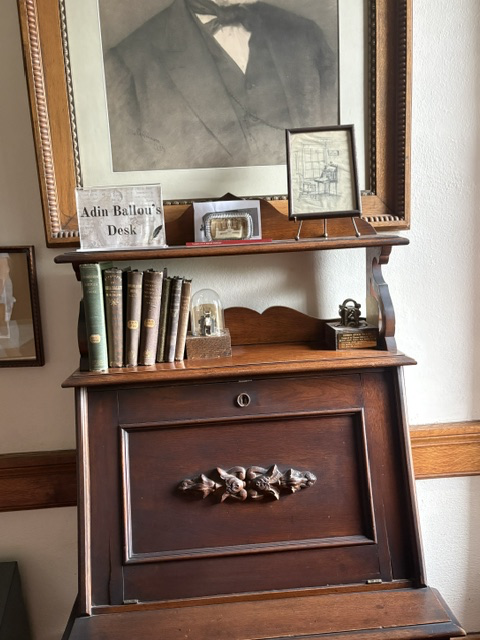
The desk itself is modest in both size and design. Built for function rather than display, it reflects the simple life Ballou chose to lead. There is no elaborate carving or ornate decoration, only a well-crafted piece of furniture designed for reading, writing, and careful thought. It perfectly suited a man who believed that one’s character was measured not by possessions, but by service to others.
From this desk came sermons that challenged his congregation to live according to Christian principles, articles for The Practical Christian, the newspaper of the Hopedale Community, and books and pamphlets that explored abolition, temperance, social reform, and Christian nonresistance.
Ballou was one of the nineteenth century’s most prolific religious writers. Through his books, essays, and correspondence, he reached readers far beyond the small community he founded in Hopedale. His writings on peace and nonviolence eventually found their way to the Russian author Leo Tolstoy, whose work later influenced Mahatma Gandhi. Gandhi’s philosophy of nonviolent resistance would, in turn, inspire Dr. Martin Luther King Jr. It is remarkable to consider that ideas developed at this modest desk eventually became part of movements that changed the course of history.
The desk also reminds us that Ballou was far more than the founder of a utopian community. He was a disciplined thinker who understood that lasting change often begins with careful reflection and the written word. While others-built factories or accumulated wealth, Ballou invested his time in shaping ideas that he hoped would improve society.
Today, the desk quietly preserves that legacy. It reminds us that history is not always made on battlefields or in halls of government. Sometimes it is made in the silence of a small room where one person sits down each day, determined to put ideas into words. More than a century after Adin Ballou’s death, this humble desk continues to tell the story of a man who believed that thoughtful writing could change both lives and communities.
Read More From Nancy
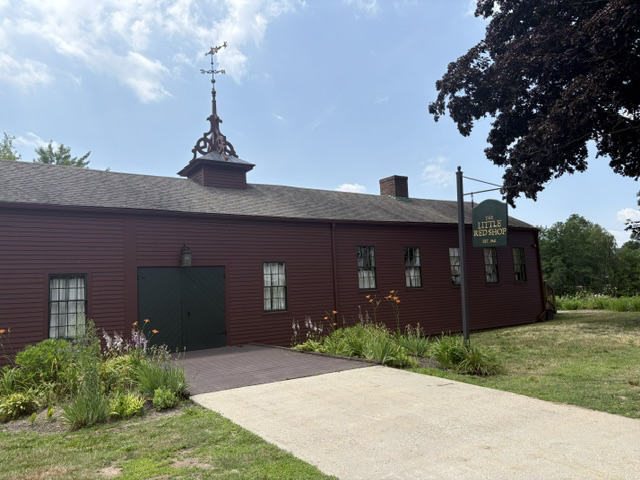
The Little Red Shop
Every great enterprise must begin somewhere. In Hopedale, one of America’s most successful industrial companies began in a simple wooden workshop known as the Little Red Shop. Built in 1841, this unassuming building became the first permanent home of the Draper business. At the time, Hopedale was still a young utopian community founded by Reverend […]
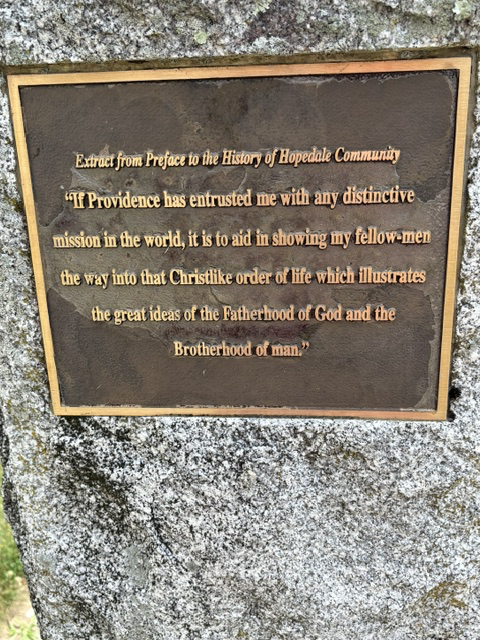
Ballou’s Mission
One of the most meaningful inscriptions on the monument comes from Ballou’s own writings. “If Providence has entrusted me with any distinctive mission in the world, it is to aid in showing my fellowmen the way into that Christlike order of life which illustrates the great ideas of the Fatherhood of God and the Brotherhood […]
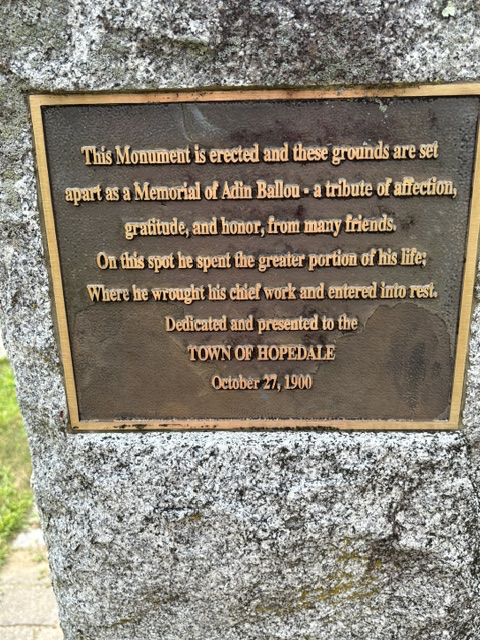
A tribute from those who knew him
Many monuments are erected decades or even centuries after a person’s death. This one was different. Dedicated to the Town of Hopedale on October 27, 1900, only ten years after Ballou’s death, it was presented not by government officials but by friends and admirers. The inscription describes it as “a tribute of affection, gratitude, and […]

