A Writing Table in the Lincoln Home
In the furnished interior of Abraham and Mary Lincoln’s Springfield home, a marble-topped octagonal table holds books, papers, and a portable wooden writing desk. Chairs drawn beside it suggest the overlapping uses of a household table: a place to read, write, converse, or attend to correspondence.
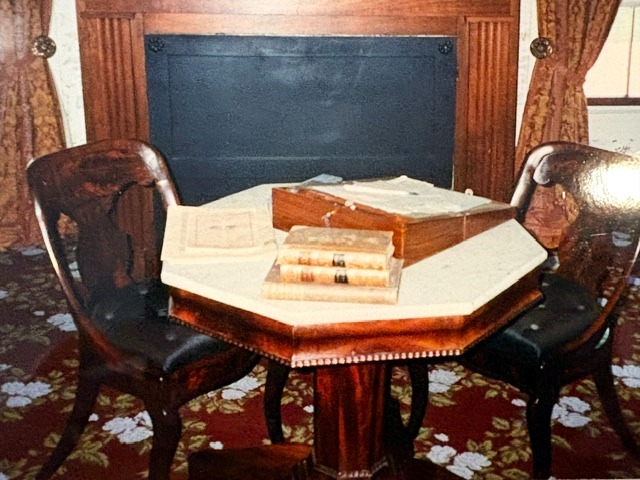
The portable desk is an especially revealing detail. Such desks provided a sloping writing surface and compartments for paper and writing supplies. They could be placed on a table when needed and closed afterward, allowing writing to take place without a separate study or permanent office desk.
For Lincoln, written language was central to both his legal practice and his political career. Preparing arguments, answering letters, and developing speeches required sustained attention to words. Household writing furniture places those activities within a familiar domestic setting, alongside upholstered chairs, curtains, and the fireplace.
Abraham and Mary lived in the house from 1844 until their departure for Washington in 1861. During those years, they raised their children while Lincoln’s professional and public responsibilities expanded. The home accommodated both family life and the demands that accompanied his growing reputation.
No particular speech needs to be assigned to this table for the setting to be meaningful. The books and writing materials offer a quieter connection to Lincoln’s world: the practical tools through which ideas were read, considered, revised, and put on paper.
Read More From Nancy
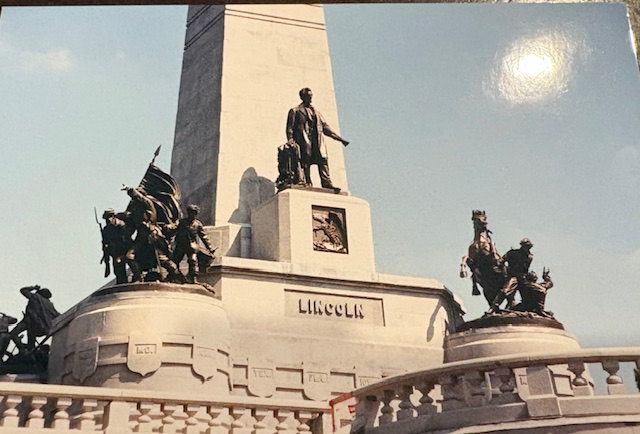
Abraham Lincoln’s Tomb
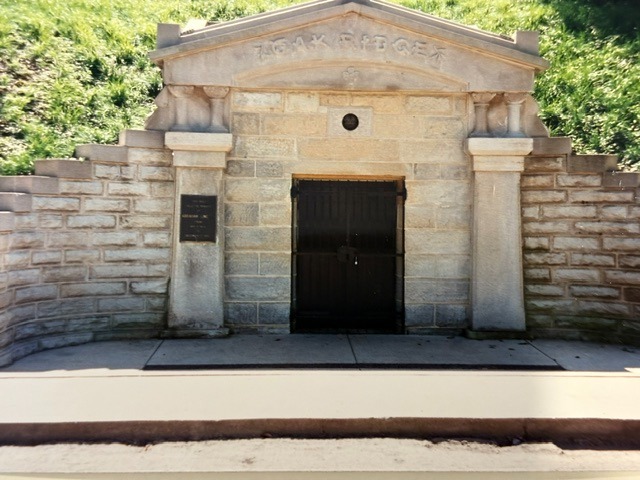
When we visited Abraham Lincoln’s Tomb in Oak Ridge Cemetery in Springfield, the monument itself was impressive, the 117-foot granite obelisk, the figure of Lincoln, and the great bronze groups representing the infantry, cavalry, artillery and navy of the Civil War. But there is another story here that I find even more fascinating: the extraordinary […]
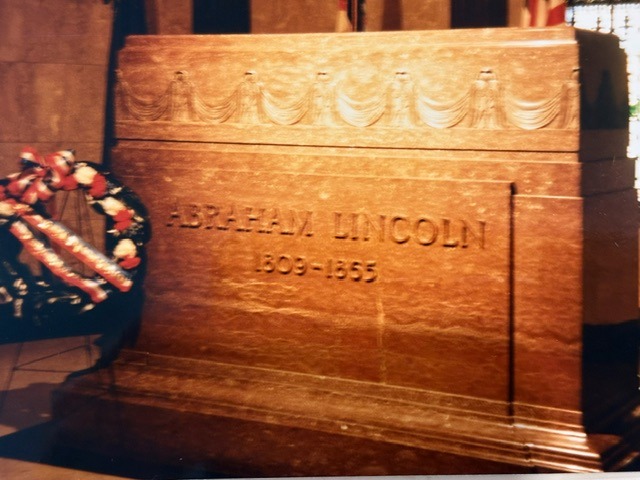
Lincoln’s Tomb
Inside Lincoln’s Tomb at Oak Ridge Cemetery, a red granite cenotaph bears the inscription “Abraham Lincoln, 1809–1865.” This monument marks his gravesite, but his coffin rests ten feet beneath the burial chamber’s marble floor. That separation reflects an extraordinary history of attempted theft and the determination to protect his remains. On November 7, 1876, a […]

