A Wartime Wedding
Among my mother’s papers was this simple wedding invitation, addressed to her by her maiden name, Miss Mary Hannigan. It immediately places the document before she met and married my father, making it a small but meaningful glimpse into her own life during World War II.
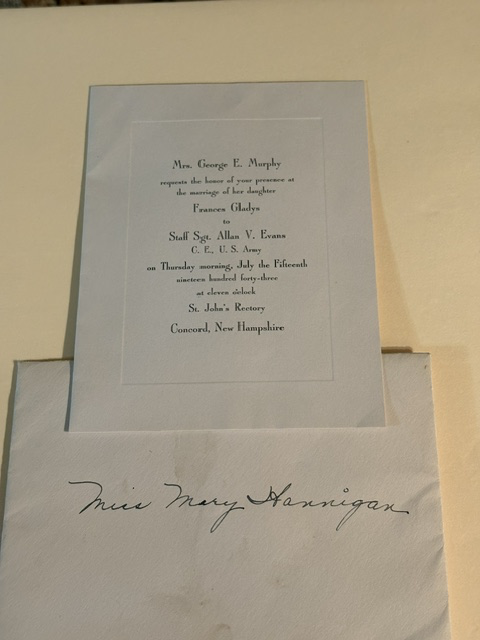
The invitation announces the marriage of Frances Gladys Murphy to Staff Sgt. Allan V. Evans, U.S. Army, on July 15, 1943, at St. John’s Rectory in Concord, New Hampshire. St. John’s was my mother’s parish, making it likely that she knew the bride, her family, or both. This was not simply an invitation that arrived in the mail. It represented a wedding within the Catholic community that had been part of my mother’s whole life.
One detail immediately caught my attention. The ceremony was held in the rectory rather than in the church itself. Today that might seem unusual, but during World War II it was not uncommon. Military leave was often brief, uncertain, and granted with little notice. Couples frequently married whenever the opportunity arose, sometimes in small ceremonies held in parish rectories or chapels rather than waiting to plan a larger wedding in the church. The priority was not the size of the celebration but simply being married before the serviceman returned to duty.
I do not know the circumstances surrounding Frances and Allan’s wedding, but the invitation reflects the realities faced by thousands of young couples during the war. They built their lives together in the small windows of time that military service allowed, never knowing when they might be separated again.
My mother saved this invitation for the rest of her life. That simple act makes me wonder what memories it held for her. Perhaps she remembered the wedding itself, the excitement of seeing a young soldier marry before returning to service, or the gathering of family and friends at St. John’s. Perhaps it reminded her of a community that found ways to celebrate hope even while so many young men were serving overseas.
As I sort through these papers, I realize they are telling the story of an entire generation. They reveal not only the battles that were fought overseas, but also the quieter moments at home. Moments when people continued to marry, worship, celebrate, and believe in the future despite the uncertainty surrounding them.
Preserved for more than eighty years, it reminds me that history is often found not only in great national events but also in the ordinary milestones of everyday life. Even during wartime, love found a way forward, and families gathered to witness the beginning of a new chapter.
Read More From Nancy
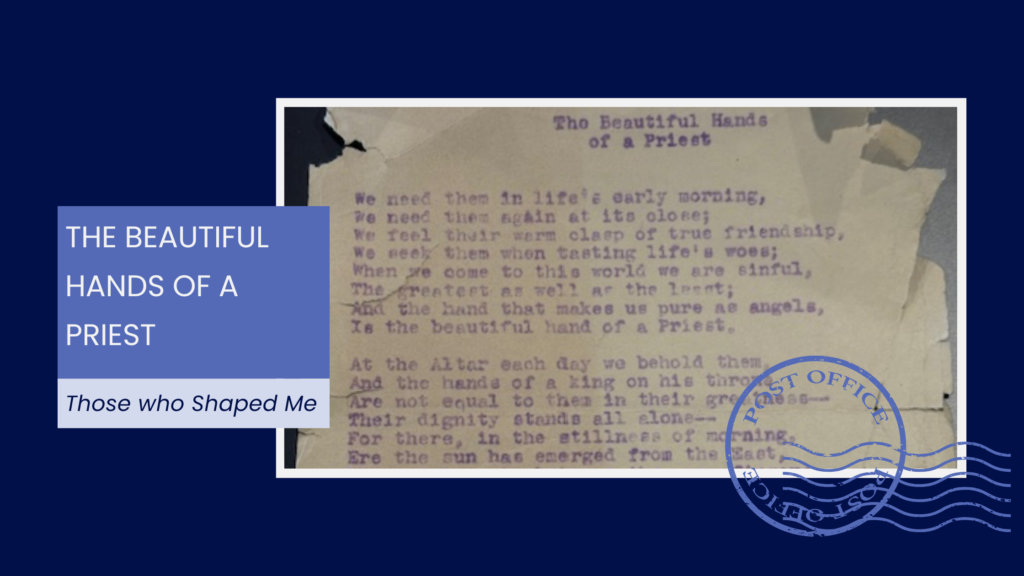
The Beautiful Hands of a Priest
This is the kind of paper that was never meant to be thrown away. Tucked among my mother’s things, it is worn, folded, and softened by time. At the top, typed simply, are the words: “The Beautiful Hands of a Priest.” There is no author, just the poem itself. The poem was passed down orally in Ireland, […]
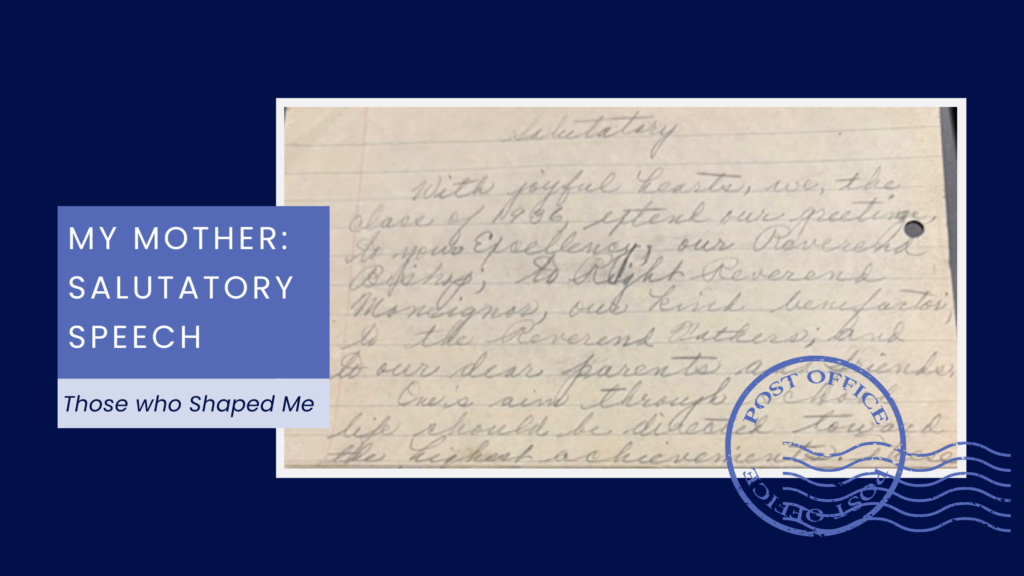
My Mother: Salutatory Speech
My mother graduated high school second in her class, earning the honor of delivering the salutatory address. She was just sixteen years old. As I explored the papers she left behind, I came across the beginning of that speech, written carefully in her own cursive, each word formed with intention, preserved across time on a page she once […]
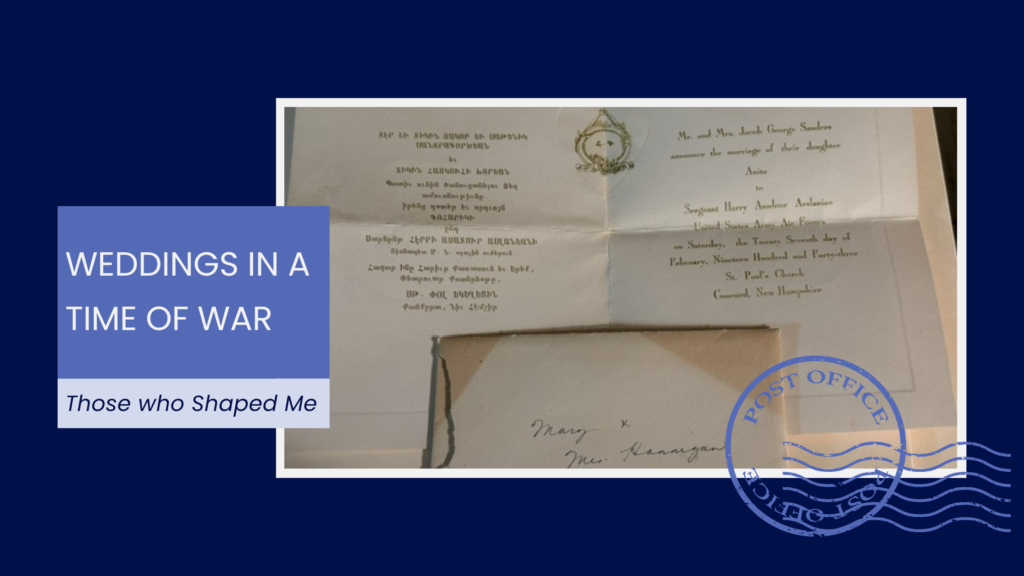
Weddings in a Time of War
Among my mother’s keepsakes is another wedding invitation from the years of World War II. This one is addressed not only to Mary Hannigan but also to Mrs. Hannigan, her mother. That small detail immediately paints a picture of my mother’s life in 1943. She was still living at home in Concord, New Hampshire, sharing […]

