Edison Stock Ticker
Among the historical objects preserved at the Bancroft Memorial Library is an Edison stock ticker, a reminder of the period when electricity and telegraphy began transforming the speed at which information traveled. Before machines like this became available, brokerage firms depended upon messengers to carry the latest prices from the trading floor. By the time the messenger arrived, however, the value of a stock might already have changed.
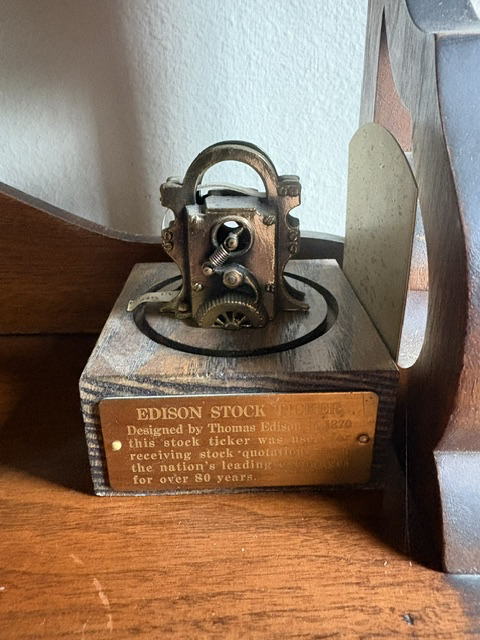
The first practical stock ticker was developed by Edward Calahan in 1867. A few years later, the young Thomas Edison improved the technology, making the machines faster, more reliable, and capable of remaining synchronized with a central transmitter. Electrical signals sent over telegraph wires caused the ticker to print abbreviated company names and current prices onto a narrow ribbon of paper. The clicking sound produced by the machine gave both the device and its paper record the name “ticker”.
Edison’s Universal Stock Printer became one of his earliest commercial successes. The money he earned from his work on stock tickers and other telegraphic equipment allowed him to establish a laboratory and manufacturing operation. These early achievements helped prepare the way for the inventions that would later make him one of the best-known figures of the electrical age.
Stock tickers remained in use in brokerage offices for decades. They allowed investors in different locations to receive current market information and helped create a more connected national financial system. Their paper ribbons also entered American popular culture through ticker-tape parades, when discarded strips were thrown from office windows during public celebrations.

Read More From Nancy
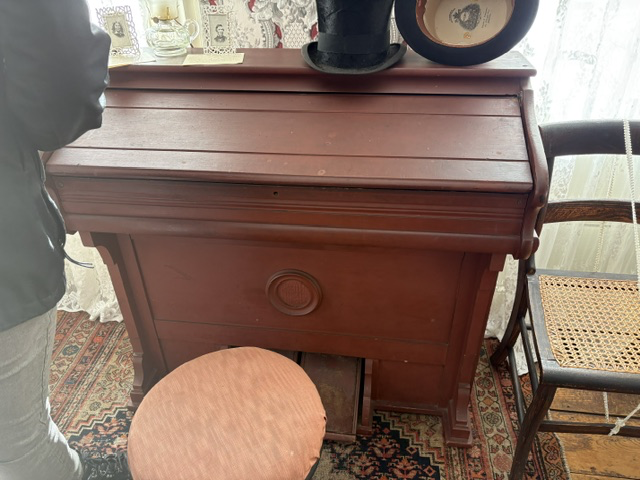
The Melodeon
I found this small wooden instrument in the Wayland History Museum. At first, it could easily be mistaken for a small upright piano, but it is actually a melodeon, or reed organ, made by Mason & Hamlin. The melodeon became a popular way of bringing keyboard music into American homes during the nineteenth century. Unlike […]
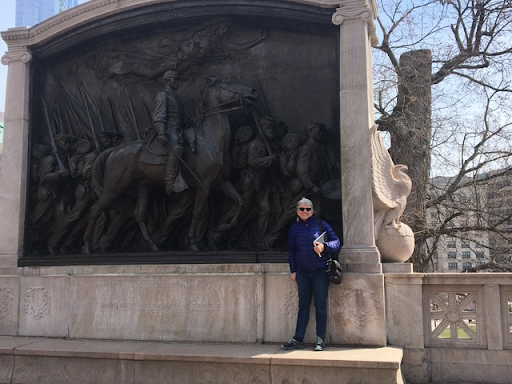
Shaw Memorial
Every time I visit Boston Common, I find myself stopping to admire this remarkable relief by Augustus Saint-Gaudens. Not only is it one of the finest works of public art in America, but it captures its subject with extraordinary power and dignity. Rather than glorifying war, the sculpture honors the courage, sacrifice, and determination of […]
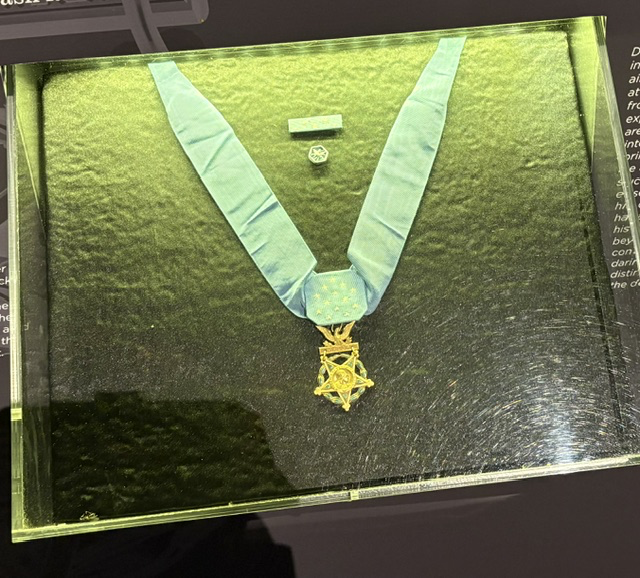
The Medal of Honor
Among all the artifacts displayed at the American Heritage Museum, few carry the emotional weight of the Medal of Honor. Unlike a tank, an aircraft, or a weapon, this small medal represents something that cannot be manufactured or engineered. It symbolizes extraordinary courage in the face of overwhelming danger. Established during the American Civil War […]

