The Bartlett–Russell–Hedge House
Standing prominently on Court Street, the Bartlett–Russell–Hedge House is one of Plymouth’s finest examples of Federal-style architecture. Its symmetrical façade, Palladian window, entrance balcony, and rooftop cupola distinguish it from the surrounding commercial buildings.
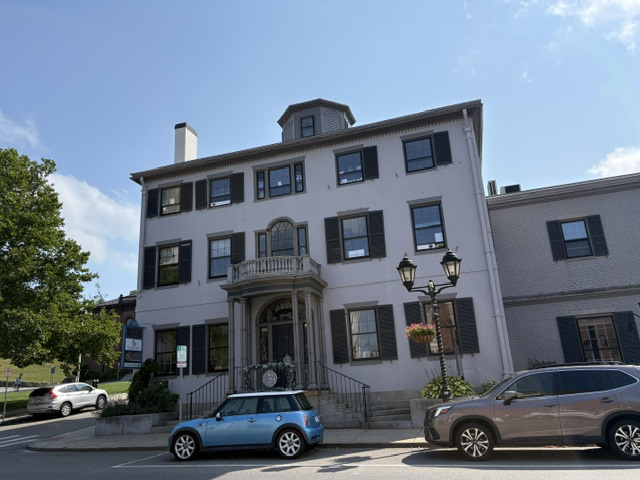
The house was constructed in 1803 for Joseph Bartlett, a Plymouth Sea captain. Its design has been attributed to Charles Bulfinch, the influential early American architect responsible for the Massachusetts State House and other prominent buildings. Although the attribution is not firmly documented, the house reflects the balance, proportion, and classical details associated with his work.
The War of 1812 disrupted American maritime commerce and caused financial difficulties for the Bartlett family. Joseph’s son William eventually assumed control of the property and converted the large residence into an inn.
William’s son John Bartlett spent part of his childhood here. He later became a bookseller and publisher and is remembered for compiling Familiar Quotations. First published in 1855, the reference book collected memorable passages from literature, speeches, and historical writings and became one of America’s most enduring reference works.
The property was later acquired by Nathaniel Russell, who was involved in Plymouth’s iron-manufacturing industry. Russell’s granddaughter married into the family of Barnabas Hedge, one of his business associates, and the house eventually passed to the Hedge family. These successive owners account for the name by which the building is now known.
In 1951, the Hedge family sold the property to a bank. Commercial additions were constructed behind the original residence, but many of the house’s architectural features survived. The Bartlett–Russell–Hedge House was added to the National Register of Historic Places in 1976 and continues to serve as office space.
The house has changed from a private residence to an inn, a family home, a bank, and an office building. Its preservation allows more than two centuries of Plymouth’s domestic, commercial, and architectural history to remain visible along Court Street.
Read More From Nancy
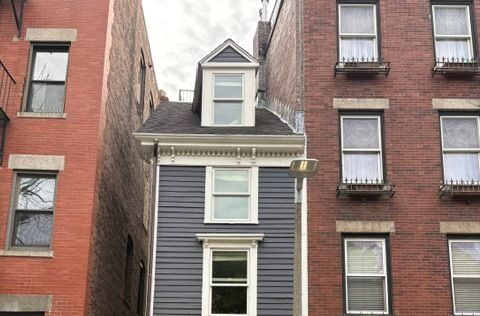
The Skinny House
Across from Copp’s Hill Burying Ground, a remarkably narrow wooden house stands among the larger brick buildings of Boston’s North End. At 44 Hull Street, the Skinny House rises four stories while measuring only about ten feet across its street-facing exterior. Its entrance is tucked into the alley beside it, allowing the slender front to […]
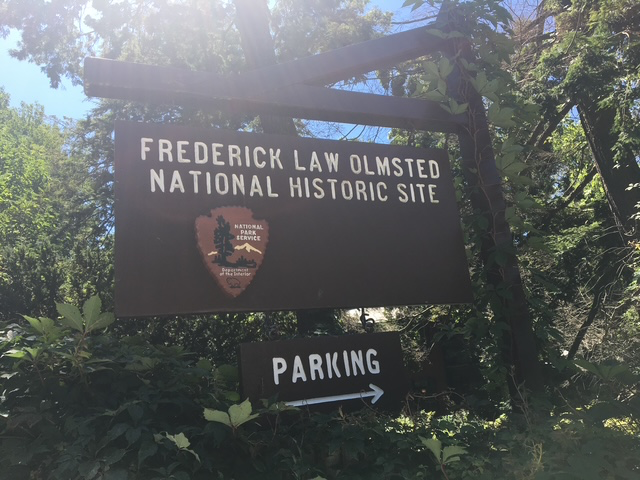
Frederick Law Olmsted National Historic Site
The first time I visited the Frederick Law Olmsted National Historic Site in Brookline, everything was new to me: his name, his work, even the realization that so many landscapes I had walked through carried the imprint of one mind. I did not grow up knowing who Frederick Law Olmsted was. I knew about parks. […]

Edward Gorey House
The Edward Gorey House is one of the more unusual places I have visited. This modest Cape Cod residence draws visitors into the eccentric world of one of America’s distinctive artists and writers. Located in Yarmouth Port, Massachusetts, the house was the home of author, illustrator, playwright and artist Edward Gorey from 1986 until his death in […]

