The Elbphilharmonie
We had the opportunity to explore some of Hamburg during the time we spent teaching there. Our work has taken us to cities around the world, and whenever our schedule allowed, we tried to experience something of the history and character of the place we were visiting. In Hamburg, one of the most striking sights was the Elbphilharmonie rising above the city’s historic waterfront.
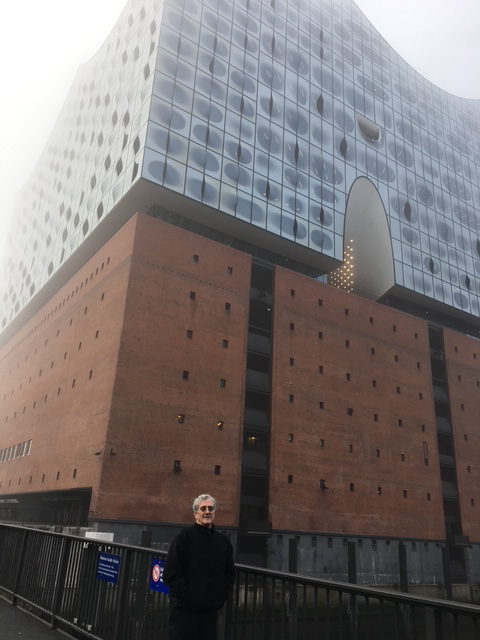
Standing beside the Elbphilharmonie, it was difficult to capture the enormous scale of the building in a single photograph. Its massive brick base resembles the warehouses that have long lined Hamburg’s harbor, while the glass structure rising above it appears to change shape with the light. Its curved roof has been compared to waves, sails, and an iceberg floating above the Elbe River.
The building rests upon Kaispeicher A, a warehouse completed in the 1960s on the site of an earlier waterfront storehouse. Coffee, cocoa, and other goods once passed through the building when Hamburg’s prosperity depended heavily upon its busy port. After container shipping transformed the harbor, the warehouse became obsolete and stood empty for many years.
Swiss architects Herzog & de Meuron incorporated the old warehouse into their plans for a new concert hall. Rather than demolishing the brick structure, they retained it as the foundation for the modern glass building. Between the two sections is a public plaza offering panoramic views of Hamburg, the river, and the surrounding harbor. The building also contains concert halls, a hotel, restaurants, and residences.
Construction began in 2007 and was originally expected to take only a few years. Engineering problems, disputes, delays, and rapidly increasing costs turned the project into one of Germany’s most controversial public building efforts. When the Elbphilharmonie finally opened on January 11, 2017, it quickly became a recognizable symbol of Hamburg.
Its location is particularly meaningful. The Elbphilharmonie stands in HafenCity, where former docks and industrial properties have been transformed into a new urban neighborhood. The preserved warehouse connects the building to Hamburg’s commercial past, while the glass concert hall represents the city’s cultural and architectural ambitions.
Our teaching brought us to Hamburg, but stepping away from the seminar allowed us to experience another part of the city’s story. The solid brick base of the Elbphilharmonie belongs to the working harbor that built Hamburg, while the glass structure above it reflects the light, water, and movement of the modern city. Together, they demonstrate how Hamburg has preserved its connection to the past while continuing to create something new.
Read More

Read More From Nancy
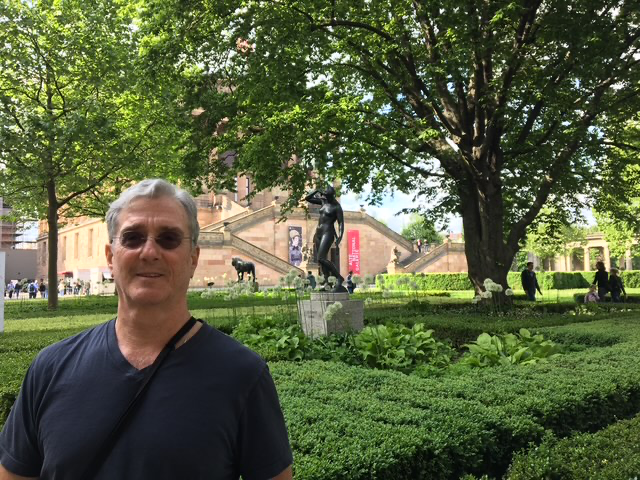
The Kolonnadenhof, Museum Island
On our trip to Berlin, we spent time exploring the museums on Museum Island. There was so much to see inside that it would have been easy to hurry from one collection to the next. Instead, we found ourselves lingering in the Kolonnadenhof, the garden shared by the Alte Nationalgalerie, the Neues Museum, and the Pergamon Museum. It gave […]
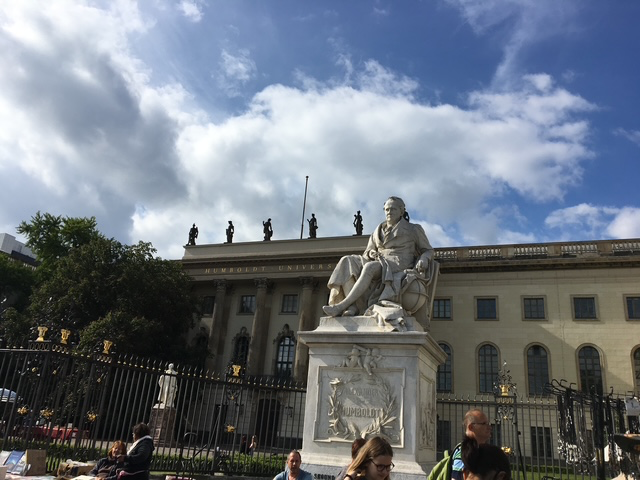
Alexander von Humboldt
While walking along Unter den Linden in Berlin, we came across this imposing statue in front of Humboldt University. It honors Alexander von Humboldt, one of the great scientists, explorers and thinkers of the 19th century. His name was familiar to me, but seeing his monument in front of the university that bears the Humboldt […]
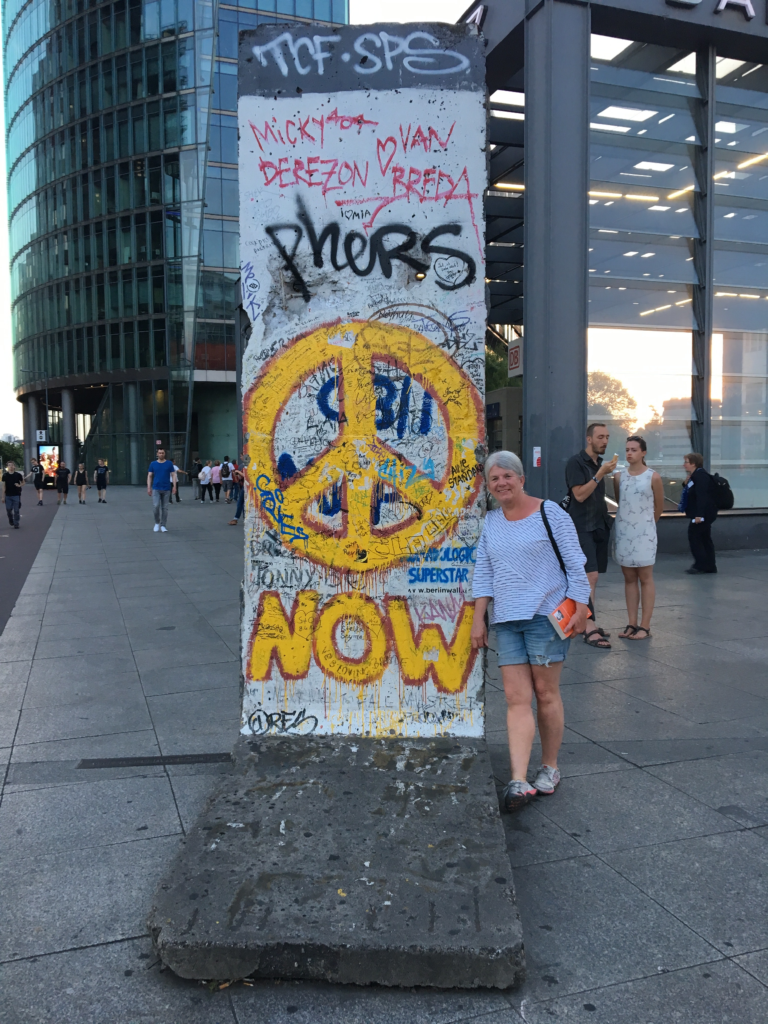
A Piece of the Berlin Wall
During our travels in Germany, I stopped for a photograph beside one of the surviving sections of the Berlin Wall. For nearly twenty-eight years, from 1961 until 1989, the Wall divided East and West Berlin and became one of the most powerful symbols of the Cold War. Families, friends, and neighbors were separated overnight, and […]

