Wadsworth Atheneum
Rising like a medieval castle in the center of Hartford, the Wadsworth Atheneum Museum of Art is the oldest continuously operating public art museum in the United States. Its towers, narrow Gothic windows, and heavy granite walls give the building an appearance unlike that of most American art museums. The architecture announces that visitors are entering a place created to preserve art, history, and knowledge.
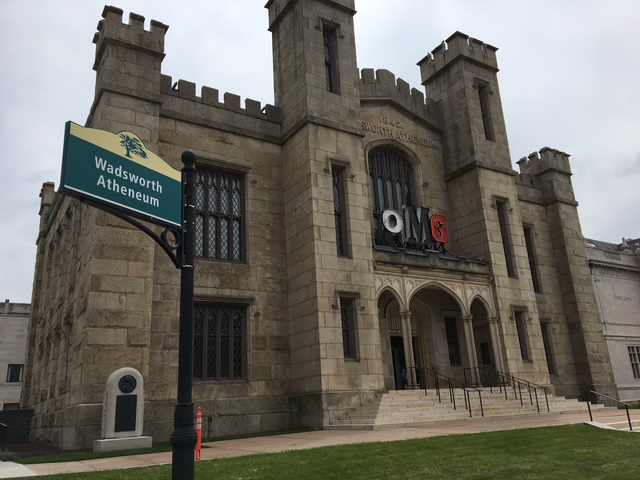
The museum began with Daniel Wadsworth, a Hartford native, artist, traveler, and one of the country’s earliest significant patrons of American art. In 1841, Wadsworth announced his intention to establish a public art gallery on the site of his family home. With the support of other Hartford citizens, the project grew into an athenaeum, a cultural institution bringing together art, literature, natural history, and historical study.
The Wadsworth Atheneum was founded in 1842 and opened to the public in 1844. The original Gothic Revival building was constructed from Connecticut granite. The castle-like design gave the new institution a sense of permanence and emphasized the importance its founders placed upon learning and culture.
The name “Atheneum” reflected its broader purpose. The original building housed not only an art gallery but also the Connecticut Historical Society, the Natural History Society, and the Young Men’s Institute, which later became the Hartford Public Library. These organizations shared the building because the founders understood art, history, science, and literature as related parts of public education.
One of the museum’s most influential periods began in 1927 with the arrival of director A. Everett “Chick” Austin Jr. Austin believed that a museum should introduce visitors to new and challenging ideas rather than simply preserve the established art of the past. Under his leadership, the Wadsworth organized the first major exhibition of Surrealism in the United States, presented an early American retrospective of Pablo Picasso, and acquired works by artists whose importance was not yet widely recognized.
The museum also became a center for theater, music, and dance. It supported George Balanchine’s arrival in the United States and hosted early performances by the company that eventually developed into the New York City Ballet. In 1934, the Wadsworth presented the premiere of Gertrude Stein and Virgil Thomson’s opera Four Saints in Three Acts. These programs continued the founders’ original vision of the Atheneum as a place where different forms of art and culture could come together.
Today, the Wadsworth’s collection contains nearly 50,000 works spanning approximately 5,000 years. Its holdings include ancient Egyptian, Greek, and Roman objects; European Renaissance and Baroque art; Hudson River School landscapes; French and American Impressionism; early American furniture and decorative arts; Surrealism; modernism; and contemporary art.

Read More From Nancy
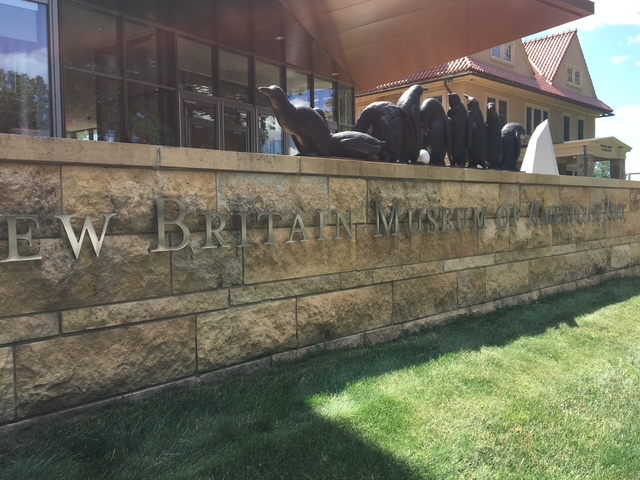
New Britain Museum of American Art
Over the years, I have driven to Connecticut numerous times to explore its remarkable collection of art museums and historic houses. Connecticut is particularly rich in places where art, architecture, and history come together, and these became trips I enjoyed making on my own. The New Britain Museum of American Art was one of those […]

Submarine Force Museum
When our daughters were growing up, travel did not always mean going somewhere far from home. Some of our best adventures were day trips around New England, looking for places where we could experience history rather than simply read about it. One of those trips took us to Groton, Connecticut, to visit the Submarine Force […]
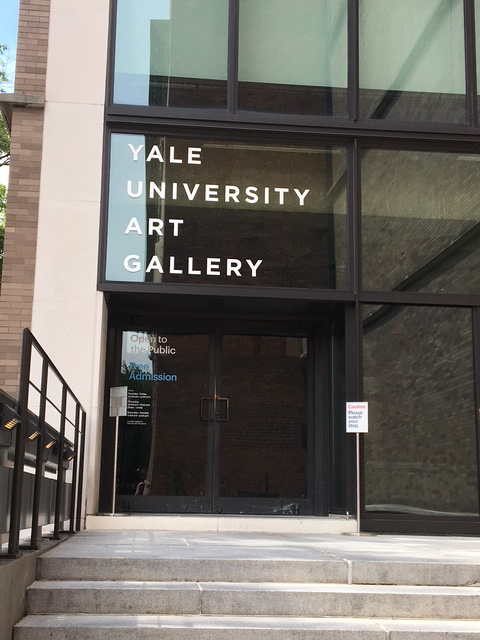
Yale University Art Gallery
The Connecticut Art Trail gave me a reason to travel throughout the state in search of art and history. Its participating locations included large museums, smaller galleries, artists’ studios, and historic houses. Each stop offered something different, turning the trail into more than a tour of art collections. It became a way to explore Connecticut […]

