The Melodeon
I found this small wooden instrument in the Wayland History Museum. At first, it could easily be mistaken for a small upright piano, but it is actually a melodeon, or reed organ, made by Mason & Hamlin.
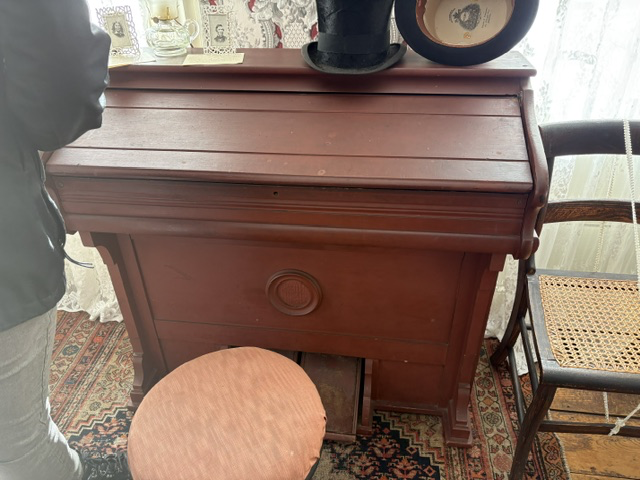
The melodeon became a popular way of bringing keyboard music into American homes during the nineteenth century. Unlike a piano, it has no strings and hammers. Instead, it produces sound by causing thin metal reeds to vibrate as air passes across them. The player operates the bellows with the foot pedals visible at the bottom of the instrument while playing the keyboard with the hands.
That made it quite different from a large pipe organ. It required no permanent installation, took up relatively little space, and was far less expensive. Melodeons and the reed organs that developed from them consequently found their way into homes, schools and small churches throughout America.
The maker of this instrument has an especially interesting Massachusetts connection. Mason & Hamlin was founded in Boston in 1854 by Henry Mason and Emmons Hamlin. Mason was the son of Lowell Mason, the influential composer and music educator associated with bringing music instruction into American public schools. Hamlin was a mechanic and inventor who developed new ways of shaping, or “voicing”, organ reeds to create richer and more varied tones.
Mason & Hamlin began as a maker of melodeons rather than pianos. The company continued experimenting with reed instruments and developed its organ-harmonium and eventually the American cabinet organ. By the early 1870s, Mason & Hamlin had become one of the country’s leading reed-organ manufacturers. The company did not begin developing the pianos for which it later became famous until the 1880.
The wooden cabinet is also part of the story. Instruments like this were pieces of household furniture as well as musical instruments. When closed, the keyboard was largely concealed and the melodeon could sit comfortably among the other furnishings of a Victorian parlor. Opening it transformed an otherwise quiet piece of furniture into the source of music for the household.
Before recorded music, radio or television, an instrument like this meant that music in the home had to be created by someone who was actually there. Hymns, popular songs and familiar melodies could accompany family gatherings or provide an evening’s entertainment.
Read More

Read More From Nancy
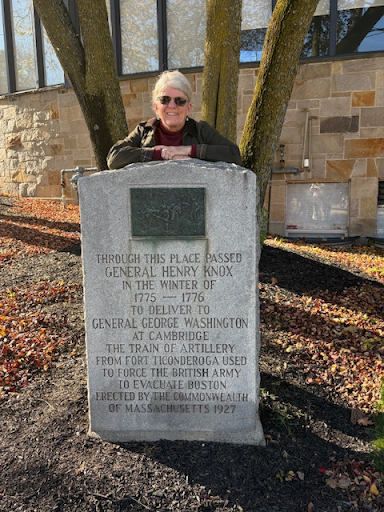
Henry Knox in Framingham
In Framingham, Massachusetts, there stands a granite block bearing an inscription that is easy to pass by without a second glance. Yet the words carved into this stone marks one of the most daring feats of the American Revolution: “Through this place passed Henry Knox in the winter of 1775–1776 to deliver to General George Washington […]
Washington Doll
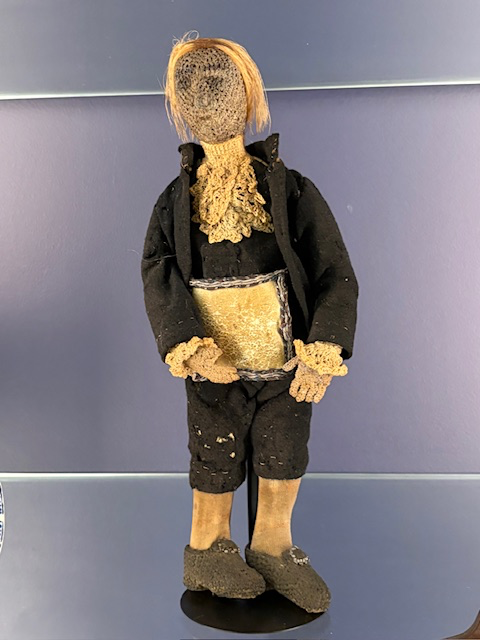
In the years immediately following the American Revolution, George Washington became a living symbol of a new nation. Across the young republic, admiration for him inspired countless small acts of devotion. This rare type of commemorative doll is an example of this admiration. It was crafted from wool in 1790. These were not toys but expressions of patriotism, Washington’s image […]
William T. G. Morton and the Ether Mask
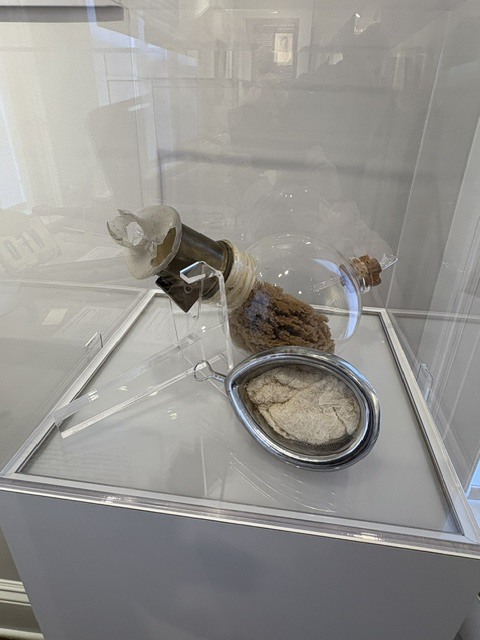
This exhibit at the Wellesley Historical Society tells a surprisingly important story in the history of medicine and connects that story directly to Wellesley. Dr. William T. G. Morton was a dentist who became one of the central figures in the introduction of ether anesthesia. Born in 1819, Morton studied dentistry and eventually established a […]

