Kykuit
Marty and I traveled to the Hudson River Valley specifically to tour Kykuit, the Rockefeller family home, and to learn more about the family whose name became so closely connected with American industry, philanthropy, politics, conservation and the arts. I knew the Rockefeller name, of course, but visiting their home offered an opportunity to understand more about the people behind that name and the extraordinary legacy they created.
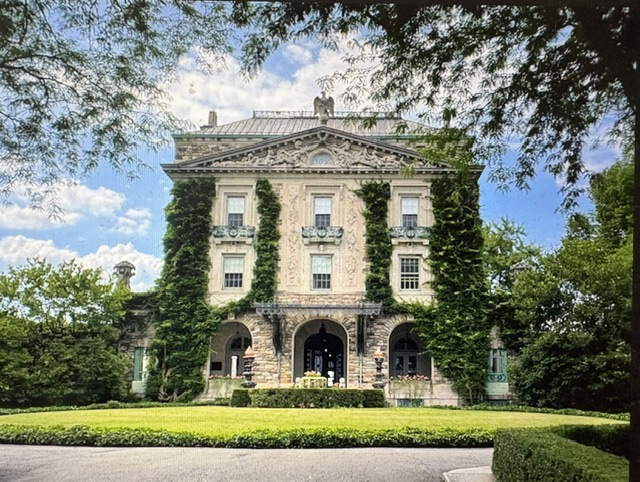
Kykuit sits high above the Hudson River at Pocantico Hills. The name comes from a Dutch word meaning “lookout”, and once you stand on the grounds, it is easy to understand why. The estate rises about 500 feet above the Hudson, with sweeping views across the river and the surrounding hills. John D. Rockefeller began acquiring property here in 1893, and over time the family estate grew to thousands of acres.
The house we see today was built between 1906 and 1913. Although John D. Rockefeller had become one of the wealthiest men in the world through Standard Oil, he did not want his country home to compete with the enormous Gilded Age palaces being constructed by other wealthy American families. Kykuit was certainly grand, but Rockefeller wanted a family estate rather than simply a monument to his fortune.
What began with John D. Rockefeller ultimately became home to four generations of Rockefellers. That is an important part of Kykuit’s story because each generation left something behind. John D. Rockefeller represented the creation of the family’s extraordinary industrial fortune. His son, John D. Rockefeller Jr., increasingly devoted the family’s wealth and influence to philanthropy, historic preservation, conservation and public projects. His grandson Nelson Rockefeller, who became governor of New York and later vice president of the United States, brought another dimension to Kykuit through his enthusiasm for modern art.
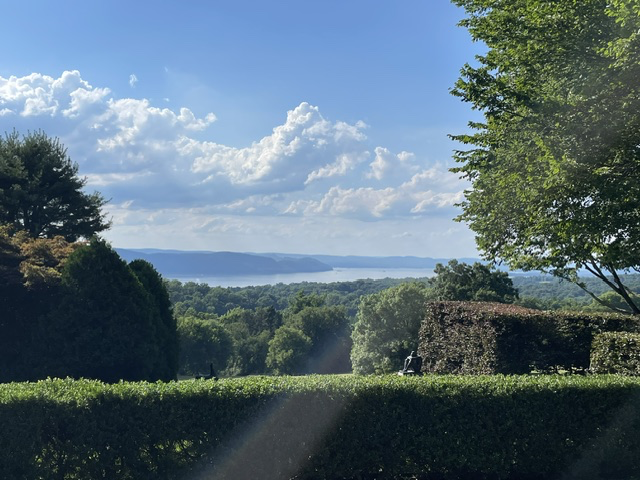
The grounds were as interesting to us as the house. Formal gardens, terraces, fountains and carefully placed sculpture are set against the much larger landscape of the Hudson Valley. The property eventually became an extraordinary outdoor art collection. Nelson Rockefeller assembled dozens of modern sculptures and thought carefully about where each should be positioned in relation to the house, gardens and landscape.
Inside the house, the story continues through the family’s furnishings and art. Kykuit is a six-story stone house with approximately 40 rooms, but the estate’s collections extend well beyond traditional furnishings. Nelson Rockefeller’s modern art collection includes works displayed both in galleries and throughout the grounds, making Kykuit as much a story about 20th-century collecting as it is about Gilded Age wealth.
But learning about the Rockefellers also means confronting the enormous scale of the fortune that made all of this possible. John D. Rockefeller built Standard Oil into an industrial empire and became the richest American of his era. His business practices helped define the power of the great corporations of the Gilded Age and also contributed to the national debate over monopolies and corporate power. At the same time, he began giving away extraordinary sums of money. By his death in 1937, he had given away more than half of his fortune through philanthropic efforts.
The generations that followed expanded that tradition. The Rockefeller name became connected with universities, medical research, museums, conservation, historic preservation and national parks. John D. Rockefeller Jr. devoted much of his life to philanthropy and preservation. Historic Hudson Valley, which has cared for and interpreted important sites throughout this region, began in 1951 as Sleepy Hollow Restorations under his leadership.
That is what made our visit to Kykuit about much more than touring another beautiful mansion. The house allowed us to follow the evolution of one American family across generations, from the creation of an immense industrial fortune to philanthropy, public service, conservation and the arts.
We came to the Hudson River Valley to see the Rockefeller home. We left understanding much more about the complicated and consequential family that lived within it and why the Rockefeller name remains woven into so many parts of American history.
Read More From Nancy

Schuyler Mansion
After seeing Hamilton on Broadway, exploring the real-life connections from the play became a fun pastime. One stop was the Schuyler Mansion in Albany. This was the home of General Philip Schuyler and his three daughters: Angelica, Eliza and Peggy. General Schuyler was a decorated leader during the American Revolutionary War, serving as a major general […]
Sagamore Hill
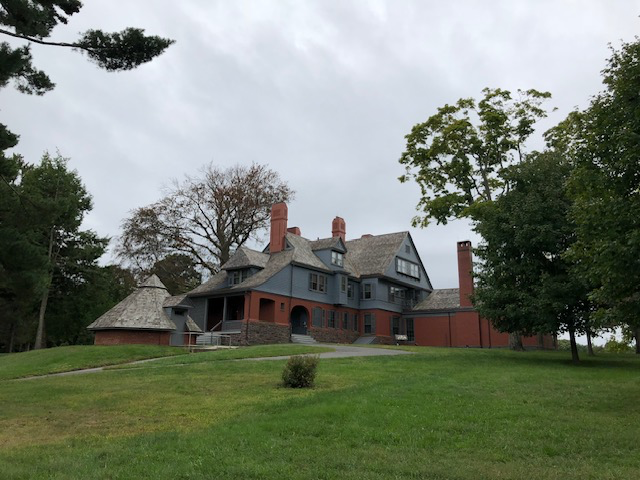
Sagamore Hill National Historic Site is a remarkable home and a lasting testament to the giant of a man, Theodore Roosevelt. Much has been written about this extraordinary figure who rose to the presidency at the young age of 42. Often regarded as one of the most intelligent and dynamic presidents. Roosevelt left an indelible mark with […]
Eleanor Roosevelt National Historic Site
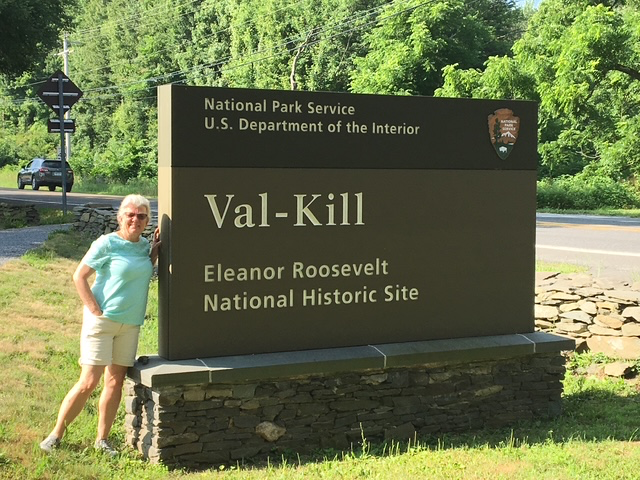
Visiting Val-Kill in Hyde Park is special to me. Eleanor Roosevelt is a woman I admire, for her courage and for how she grew into the role she eventually played on the world’s stage. Val-Kill was not created as a grand residence. In the 1920, it began as a small furniture workshop, part of Eleanor’s effort to […]

