A 1777 Child’s Primer in Revolutionary
Inside Buckman Tavern in Lexington, I came across this remarkably small book. It is a children’s primer dating from 1777, only two years after the fighting at Lexington and Concord and just one year after the Declaration of Independence.
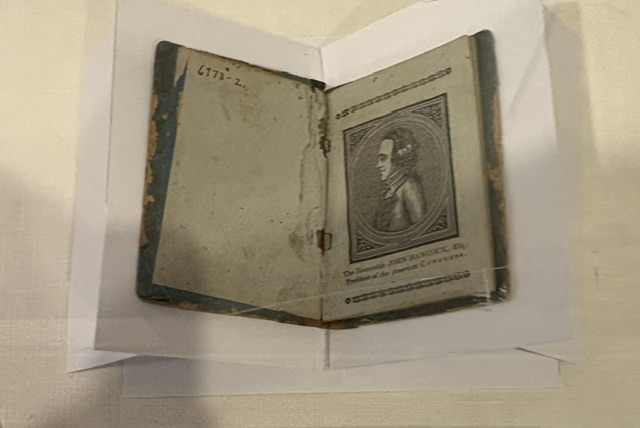
On the first page, John Hancock is identified as a leader of the new nation. That small detail places this children’s book squarely within the enormous political changes taking place around the people who would have read it.
Primers were among the basic tools used to teach children to read. They combined the alphabet, spelling and reading lessons with religious and moral instruction. But this particular primer appeared at an extraordinary moment. Children who only a few years earlier had been growing up as British colonists were now being introduced to the leaders and identity of a new country
And in 1777, there was no guarantee that the country would survive. The Revolutionary War was still being fought, George Washington and the Continental Army faced enormous challenges, and independence remained something Americans were attempting to secure rather than an established fact. Yet here was a book intended for children already presenting the leadership of the emerging United States.
Seeing it at Buckman Tavern makes the object even more meaningful. The tavern had been a gathering place for members of the Lexington militia on the morning of April 19, 1775, as they awaited news of the approaching British regulars. The confrontation that followed on Lexington Green became one of the opening events of the American Revolution.
Only two years separate that morning from the publication of this primer. Revolutions change ordinary life. They change what people talk about around their tables, what they believe about themselves—and eventually what they teach their children.
Read More From Nancy
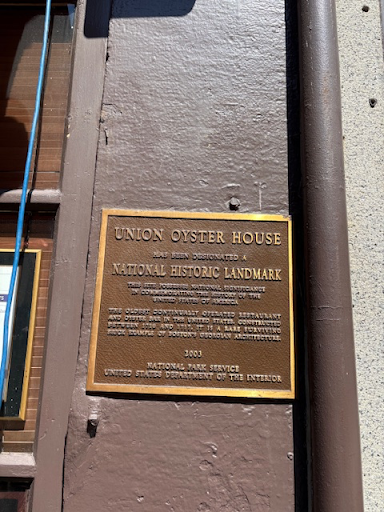
Union Oyster House
Walking along the Freedom Trail in Boston, it is easy to miss the plaque outside the Union Oyster House. But if you pass it by, you are missing not only a good meal, but an extraordinary chapter in American history. The Union Oyster House is the oldest continuously operating restaurant in the United States, serving diners […]

Massachusetts Veterans War Memorial Tower
Last year we camped near Mount Greylock, and although we have spent so much of our lives exploring New England, this was the first time we made our way to the summit. It was another reminder to me that exploration never really ends. No matter how many places we have visited, there is always another […]
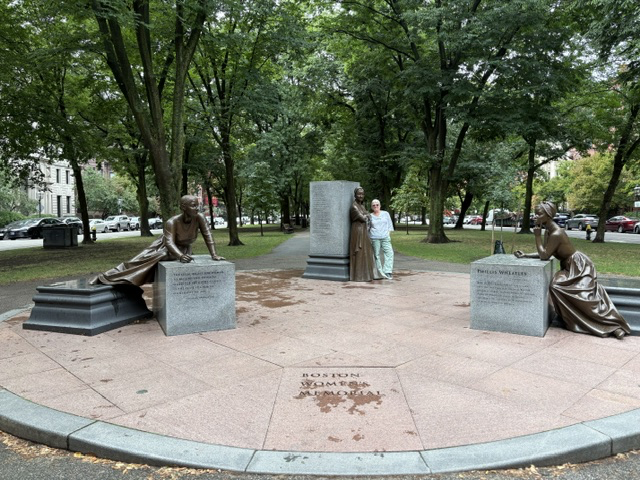
Boston Women’s Memorial
Located on the Commonwealth Avenue Mall, the Boston Women’s Memorial honors Abigail Adams, Lucy Stone and Phillis Wheatley, three women whose words challenged the political, social and intellectual boundaries of their times. Created by sculptor Meredith Bergmann, the bronze-and-granite memorial was dedicated by the City of Boston on October 25, 2003. The idea for the […]

