A Wedding Reception at Home
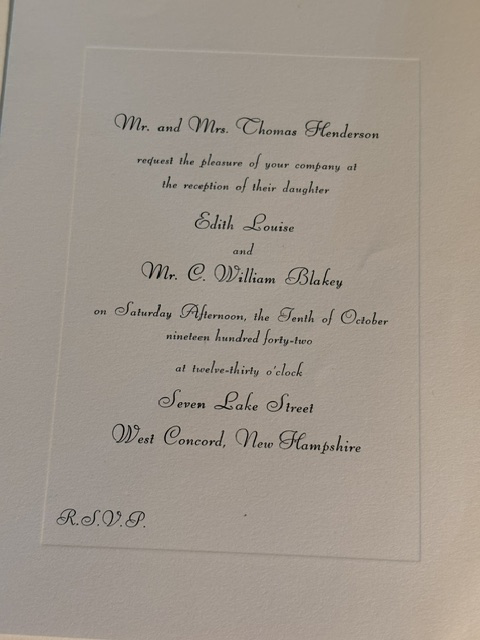
Another invitation my mother saved takes us to October 10, 1942, when Mr. and Mrs. Thomas Henderson invited guests to the wedding reception of their daughter, Edith Louise, and Mr. C. William Blakey. The reception was to begin at 12:30 in the afternoon at the Henderson family home at Seven Lake Street in West Concord, New Hampshire.
Once again, the date immediately places this wedding within the first year of America’s involvement in World War II. By October 1942, young men were being drafted or volunteering for military service, families were adjusting to wartime shortages, and the routines of everyday life were increasingly influenced by the war. Yet weddings continued, and this invitation gives us another glimpse of how families celebrated them.
What particularly interests me about this one is the location. Rather than a hotel, restaurant, or large reception hall, the newly married couple was being received at the bride’s family home. Guests were invited to “the reception of their daughter,” suggesting that the wedding ceremony itself may have taken place elsewhere and that family and friends were then welcomed to the Henderson home to celebrate the marriage.
The afternoon hour and home setting suggest a relatively simple gathering. That would not have been unusual in 1942. Wartime weddings could be planned quickly, particularly when military schedules were involved, while rationing and shortages increasingly affected what families could purchase and serve. We should be careful, however, not to assume that this wedding was hurried or that the groom was serving in the military—the invitation gives us no evidence of either.
What it does tell us is something about my mother’s world. She was receiving invitations to weddings and receptions as people within her circle began their married lives. Some celebrations were held in churches, some in rectories, some involved servicemen, and this one brought guests to a family home in West Concord.
Individually, these invitations record someone else’s wedding. Together, the fact that my mother saved them creates something more personal: a small record of the community around her during the war years, when marriages, friendships, family gatherings, and ordinary celebrations continued even as life beyond Concord was being profoundly changed.
Read More From Nancy
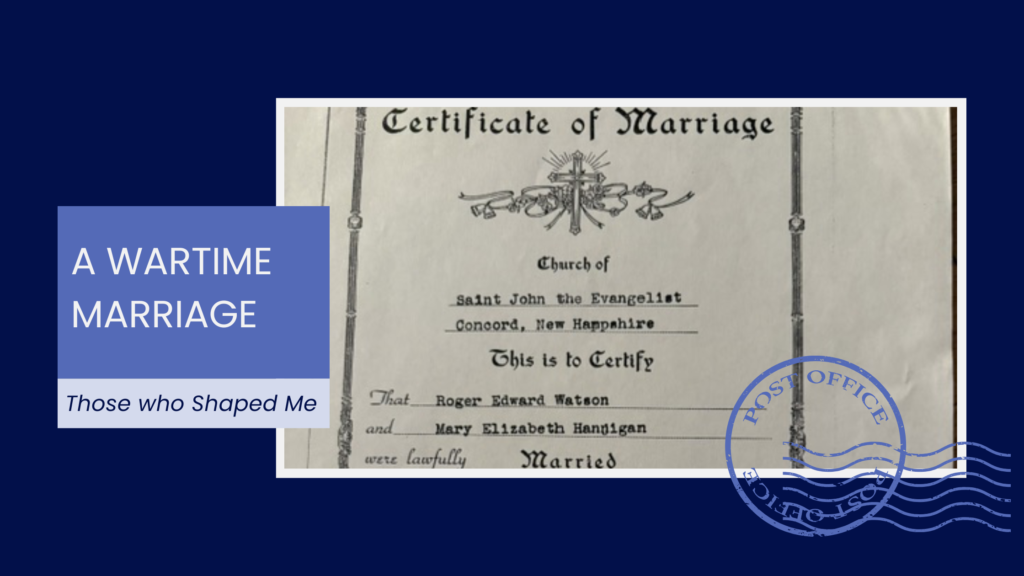
A Wartime Marriage
This is the marriage certificate of my parents, Roger Edward Watson and Mary Elizabeth Hannigan. They were married on May 3, 1944, at Saint John the Evangelist Church in Concord, New Hampshire, while my father was home on leave during World War II. My father came from West Virginia, while my mother had grown up […]
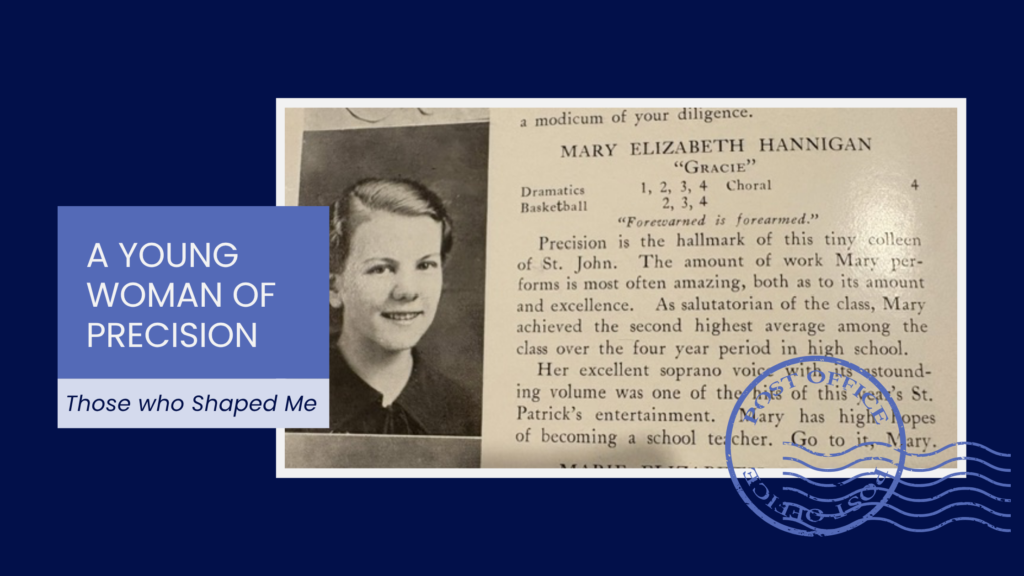
A Young Woman of Precision
My mother, Mary Elizabeth Hannigan, was only sixteen years old when she graduated from high school as salutatorian, the student with the second-highest academic average in her class. Even at that young age, the description in her yearbook captured the qualities that would continue to define her throughout her life. Her classmates knew her as […]
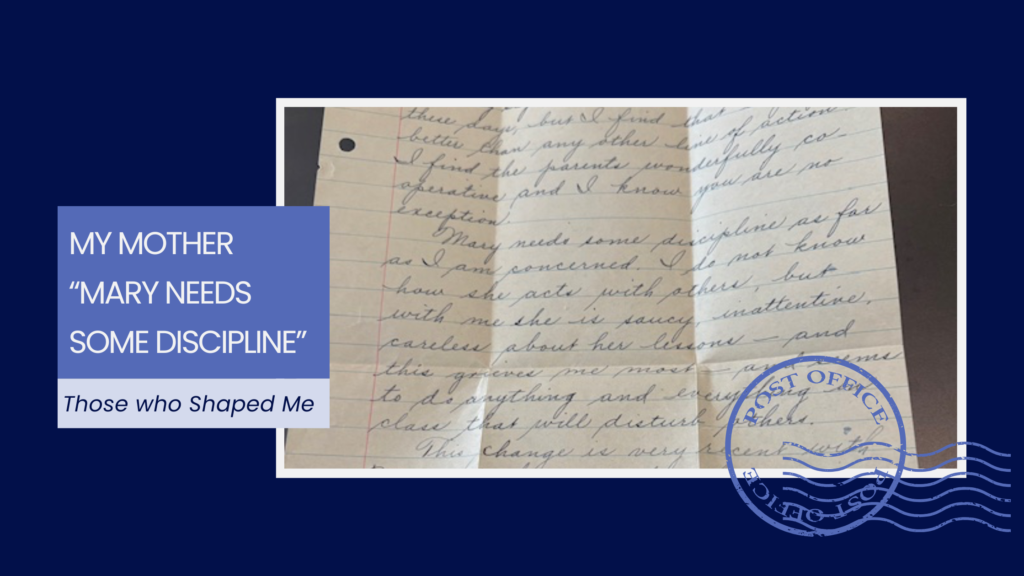
My Mother “Mary Needs Some Discipline”
This was a surprising discovery. Tucked among my parents’ papers was a handwritten note from Sister Mary Maurice, given to my grandmother: Mrs. Hannigan, my mother’s mother. The cursive is careful and perfect, the kind of handwriting that reflects discipline. The note is not addressed, which suggests it was likely handed directly to my grandmother. A […]

