Pvt Paul Fowler is Killed on Biak
March 22, 1945Dearest Reader,
Among my parents’ papers is this newspaper clipping announcing the death of Pvt. Paul Donald Fowler, a young man from Martinsburg, West Virginia, who was killed on Biak Island in the Pacific during World War II.
The headline is stark: “Pvt. Paul Fowler Is Killed on Biak.” Fowler was 25 years old and serving with an Army Air Corps ground forces unit when he was killed in action on March 22, 1945. His wife had previously been notified that he was missing in action, making the later confirmation of his death an especially painful finality.
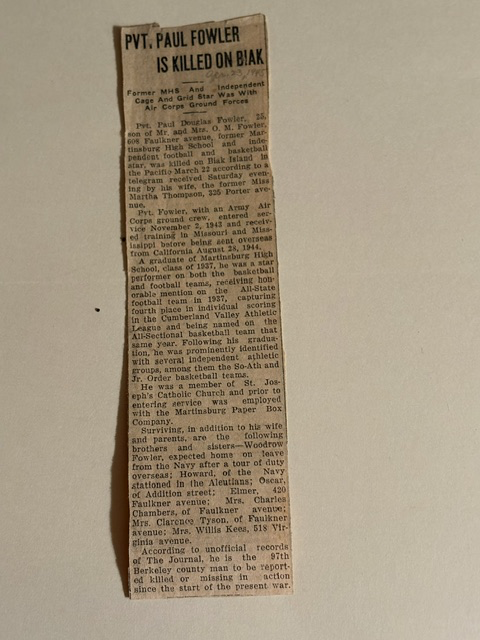
The clipping gives us a picture of the young man Martinsburg had known before the war. Fowler was a graduate of Martianus School, where he had been a standout athlete. He played football, baseball, and basketball, later continuing in semi-professional football. Before entering the service, he worked for the Martinsburg Paper Box Company. He was not simply another name in a casualty report; he was part of the everyday life of the community.
Biak Island, off the coast of New Guinea, had become strategically important because of its airfields. American forces captured the island in 1944, and it continued to serve as a base for Allied operations in the Pacific. Fowler was killed there in March 1945, only a few months before the war ended.
The article also notes that he was among dozens of Berkeley County men who had been reported killed or missing since the beginning of the war. For a community like Martinsburg, those losses would have been deeply felt. Each new newspaper notice represented another family, another workplace, another school, another neighborhood affected by the war.
What makes this clipping important to me is its connection to Martinsburg, my father’s hometown. He would have known the same streets, the same community, and the same wartime atmosphere in which young men disappeared into military service and their names later appeared in notices like this one.
I do not know whether my father knew Paul Fowler personally, but he saved this clipping. That alone makes it part of the story of the world he came from, a hometown watching its young men leave for war and, too often, learning through a telegram or newspaper column that they would not return.
Dr. Nancy Watson
Washington
Read More From Nancy
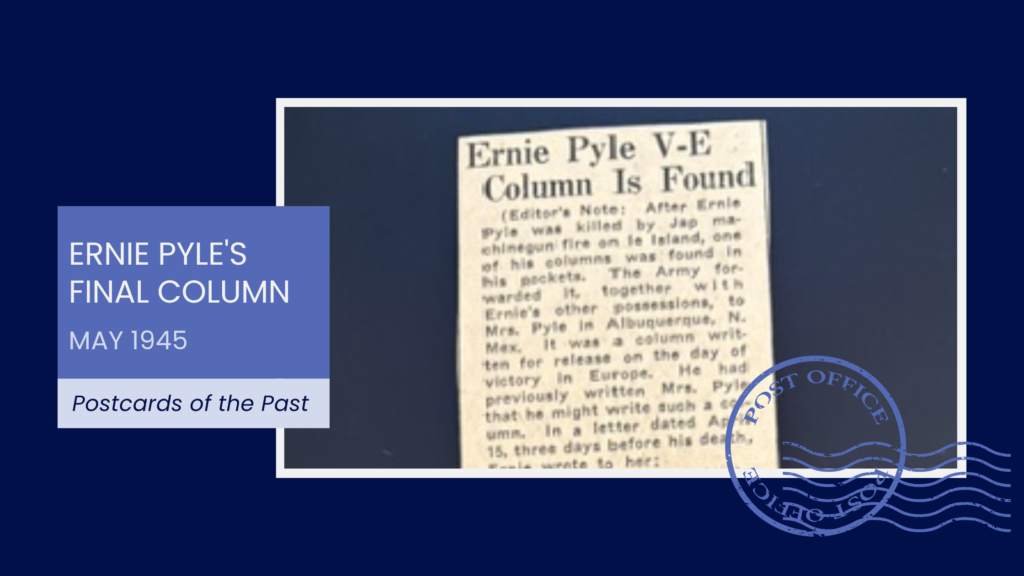
Ernie Pyle’s Final Column
Among my parents’ papers was this newspaper clipping titled “Ernie Pyle V-E Column Is Found,“ with the handwritten date of May 11, 1945. I do not know why they chose to save it, but its preservation suggests that it held some significance for them during the closing days of World War II. The article reports the publication […]
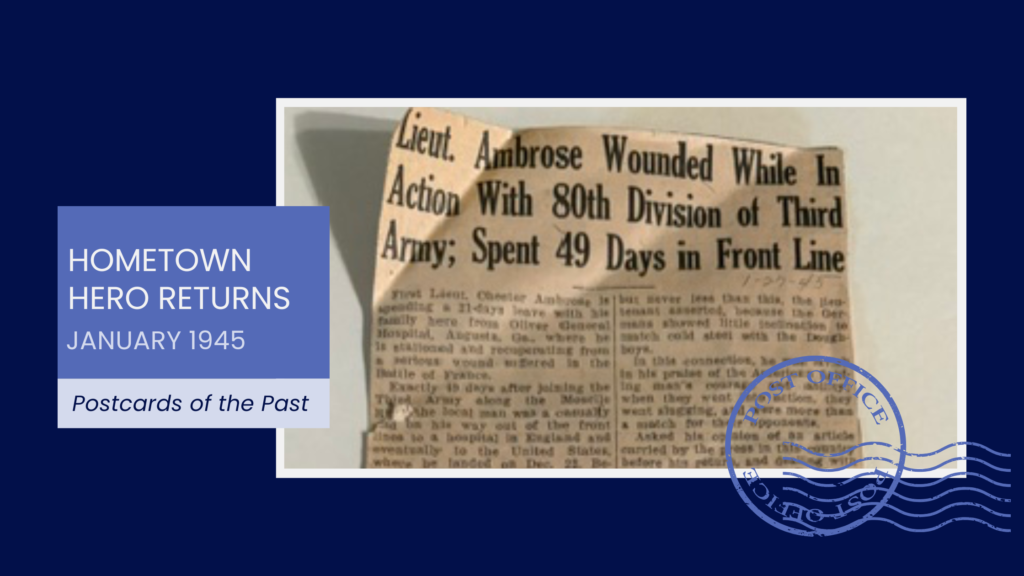
Hometown Hero Returns
Among the newspaper clippings my parents saved was this story of Lieutenant Chester Ambrose of Martinsburg, West Virginia. Unlike so many wartime headlines that announced another life lost, this article tells of a young officer who survived some of the fiercest fighting of the Second World War and was able to return home. Lieutenant Ambrose […]

Father of 10 Will Go into Service
Among my mother’s papers that have survived all these years, it the newspaper clipping about Chester J. Barrett and his family of ten children. The Barrett family lived directly across the street from my mother in Concord, New Hampshire. I remember her speaking about the Barrett twins. In fact, the Barrett twins can be seen in photographs […]

