Nordeste
One of the greatest joys of travel is discovering places that were never on your list but become unforgettable once you arrive. For Marty and me, Nordeste was one of those places. Beyond its beautiful setting lies a remarkable story of perseverance, vision, and a community that refused to let isolation define its future.
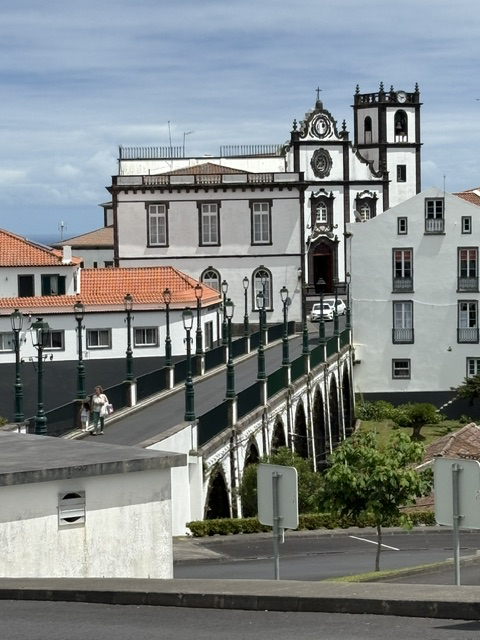
Reaching Nordeste is part of the experience. The road winds through deep green valleys, forests, waterfalls, and dramatic coastal cliffs before arriving at a town that seems untouched by the hurried pace of modern life. Settled during the fifteenth century and officially established as a municipality in 1514 by King Manuel I, Nordeste remained isolated for centuries. Rugged mountains, deep ravines, and dense forests separated it from the rest of São Miguel, making travel slow and often difficult. Yet despite its isolation, the community endured, developing its own traditions and a strong sense of identity.
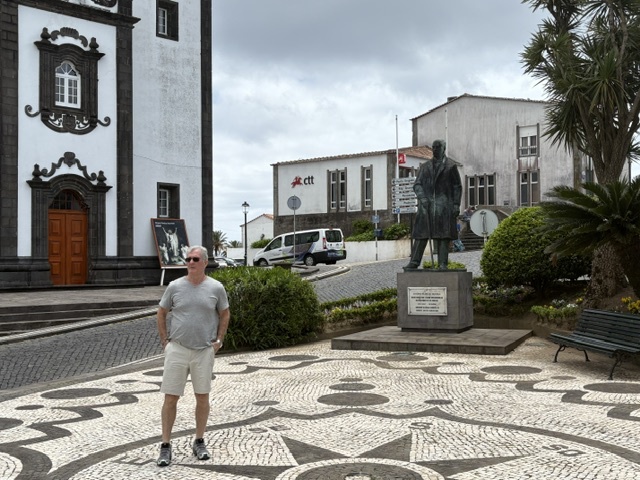
That isolation eventually became the catalyst for one of the town’s most remarkable periods of growth. During the late nineteenth century, much of Nordeste’s transformation was led by António Alves de Oliveira, whose statue stands proudly in the town square. Under his leadership, roads were built across the mountains, bridges connected once-isolated valleys, the harbor was improved, public services expanded, and the Farol da Ponta do Arnel—the first lighthouse in the Azores—began guiding ships safely along this rugged coastline. His vision helped transform one of the island’s most remote communities into one that was finally connected with the rest of São Miguel.
The first thing that caught my attention was the town square. Like so many communities in Portugal, it is centered around the parish church, where history and everyday life naturally come together. The Church of São Jorge rises above the square, while carefully maintained gardens, volcanic stone walkways, and public monuments invite visitors to slow down rather than simply pass through. It is the kind of town where people still greet one another, where flowers seem to bloom around every corner, and where there is time to sit on a bench and simply enjoy the surroundings. Nordeste is often called the “most flowery municipality” in the Azores, and it quickly becomes obvious why.
Although the town itself is modest in size, it serves as the gateway to some of the most spectacular scenery on São Miguel. From here, roads lead to breathtaking viewpoints overlooking the Atlantic, cascading waterfalls, lush forests, and the historic Farol da Ponta do Arnel. The famous Ponte dos Sete Arcos and the beautiful Parque Natural da Ribeira dos Caldeirões are reminders that the natural beauty of this region has always shaped the lives of the people who call it home.
As Marty and I wandered through the streets, we enjoyed watching the rhythm of daily life unfold around us. It struck me that Nordeste’s greatest story is not found in a single monument or building. It is found in the determination of a community that refused to let geography define its future. Rather than abandoning this remote corner of the island, generations of residents-built roads across mountains, bridges over ravines, and a lighthouse that became a beacon for sailors crossing the Atlantic.
Perhaps that is why Nordeste remains a favorite memory of the Azores. Its beauty is undeniable, but it is the story behind the beauty that stays with me. Knowing how generations of people overcame isolation to build this thriving community gave every bridge, every church, every garden, and every overlook a deeper meaning. It reminded me that the character of a town is shaped not only by its landscape, but by the people who choose to call it home.
Read More From Nancy
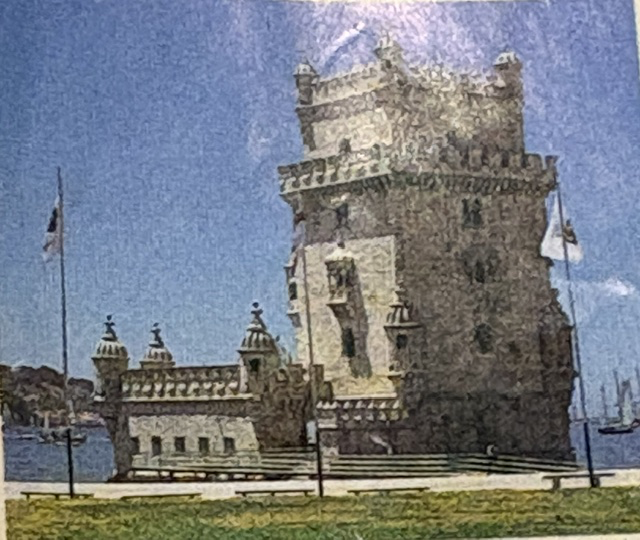
Belém Tower
While exploring Lisbon, we visited the Torre de Belém, standing along the Tagus River near the place from which many of Portugal’s great voyages of exploration began. Built between 1514 and 1519 during the reign of King Manuel I, the tower was originally part of Lisbon’s defensive system, positioned to help protect the entrance to […]
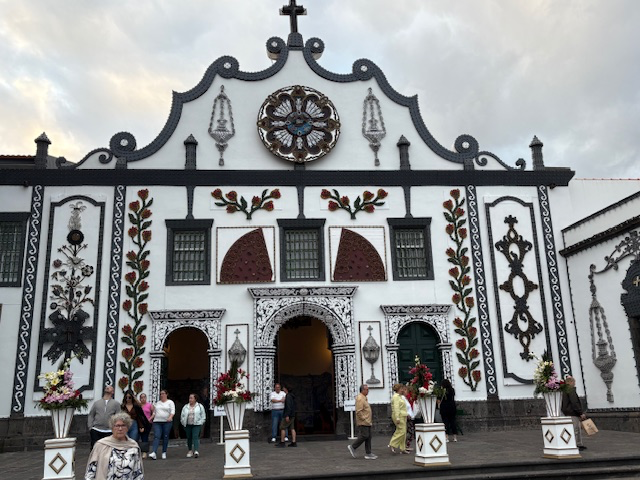
The Miracle of Santo Cristo dos Milagres
When we arrived in the Azores in May 2025, we had no idea we were stepping into one of the islands’ most sacred and remarkable celebrations. The streets of Ponta Delgada were closed to traffic, storefronts shuttered, and the city was blanketed in flowers. What we thought was an ordinary weekend turned out to be […]
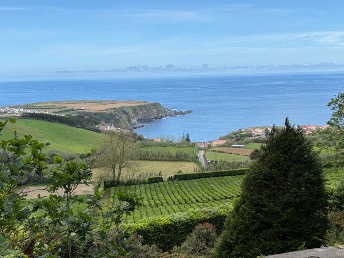
Gorreana Tea Plantation
After a challenging month, we were looking for a place to go to rest and rejuvenate. A non-stop flight was essential. A place where we could decompress with no responsibilities. We chose the Azores. Not knowing more about these islands other than everyone we had ever met from there were genuine people An easy flight, quick check […]

