Edgar Allen Poe Statue
This is a statue of Edgar Allan Poe on the sidewalk along Boylston Street in Boston. He is caught in mid-stride, coat swirling with a raven perched atop a stack of books at his feet. The placement of this statue is intentional and rooted in Poe’s relationship with the city where his life began.
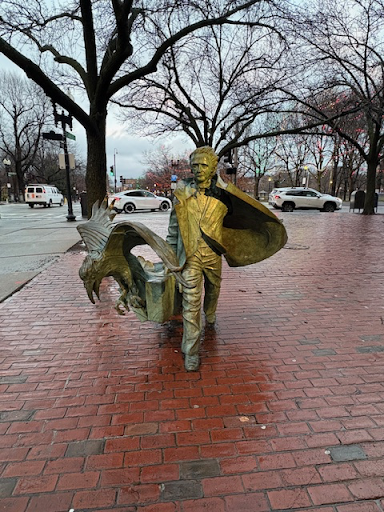
Poe was born in Boston on January 19, 1809, near what is now Downtown Crossing. This area was packed with theatres, boarding houses and narrow streets. His parents were both actors and part of the theatrical world.
Although Poe often criticized Boston’s literary elite, calling them “Frogpondians”, he was nevertheless shaped by the city’s intellectual tradition. He was educated in both England and the United States and briefly at the Military Academy at West Point. Despite these varied experiences, Boston remained the city most closely tied to his origins and literary beginnings.
This statue marks a moment in Poe’s life. In 1849. Poe departed Boston for what would be the final journey of his life. He left the city from this very area, traveling to New York and then Baltimore, where he was found delirious and died under mysterious circumstances. This sculpture captures that moment of departure.
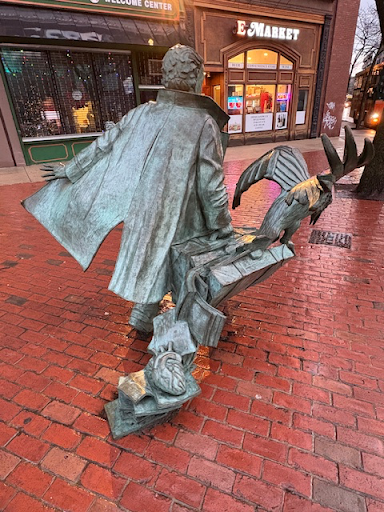
Placing the statue at street level rather than in a park was deliberate. He stands among passersby, just another figure moving through the city as he did in life. Installed in 2014 and often referred to as “Poe Returning to Boston”, the sculpture reflects Poe’s connection to the city.
Read More From Nancy
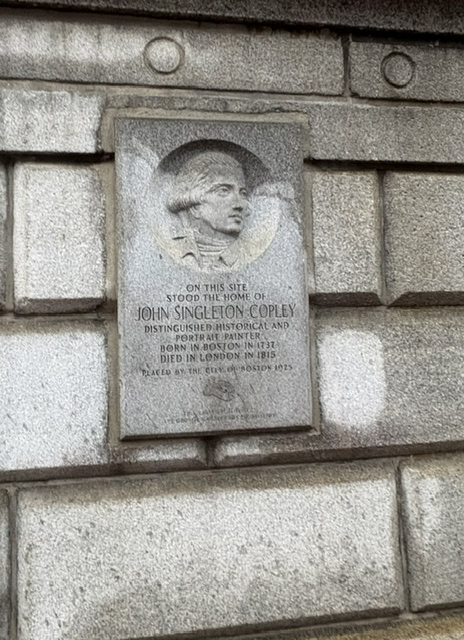
John Singleton Copley
Walking through Boston, I came across this plaque marking the site where the home of John Singleton Copley once stood. The house itself is gone, but the plaque preserves the connection between this location and one of the most important artists of colonial America. Copley was born in Boston in 1738, although the plaque gives […]
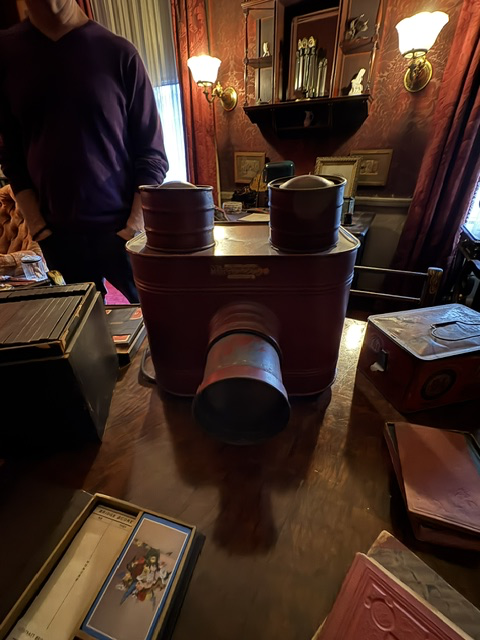
The Mirroscope
Among the objects that caught my attention while visiting the Gibson House Museum in Boston was this unusual piece of photographic equipment. At first glance, with its large projecting lens and boxlike body, I assumed it was an early camera. Looking more closely, however, I discovered that it worked in exactly the opposite direction. It […]
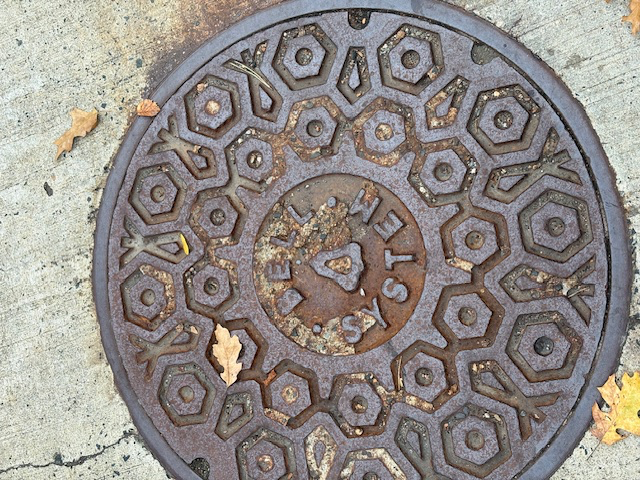
Bell System Icon
Walking through Wellesley, with my eyes turned to the ground, I took a moment to notice the iron cover in the sidewalk labeled: “Bell System”, this little iron circle tells a story of a different kind of infrastructure, one that once revolutionized the world. The Bell System was more than just a telephone company it was a […]

