Bell System Icon
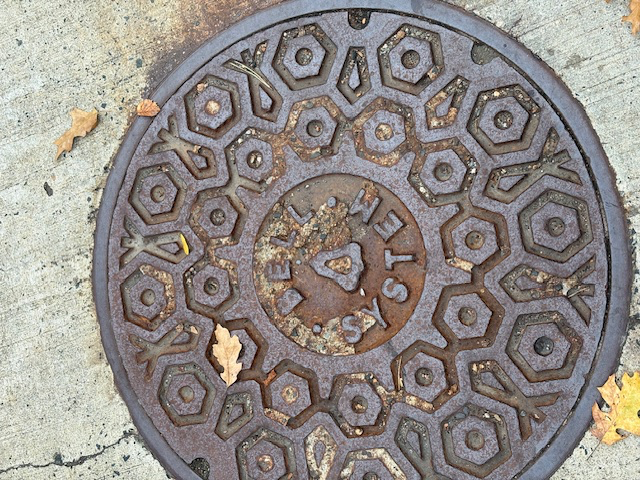
Walking through Wellesley, with my eyes turned to the ground, I took a moment to notice the iron cover in the sidewalk labeled: “Bell System”, this little iron circle tells a story of a different kind of infrastructure, one that once revolutionized the world.
The Bell System was more than just a telephone company it was a nationwide web of human and technological connections that brought voices across distances once unimaginable. From the late 1800s through most of the 20th century, they built one of the most intricate communication networks in the world.
This round cover is one of the thousands placed around the country to mark the gateways to the system. Beneath this cover is America’s underground telephone remains, a corridor with wires that carried conversations between communities. This cover protected access points where technicians couched and adjusted circuits in order to ensure that the voices could reach anywhere the Bell system stretched.
These covers, cast in heavy iron and meant to last, still sit exactly where they were placed decades ago. Their endurance mirrors the ambition of the company that installed them and become the lifeblood of connection.
Read More From Nancy
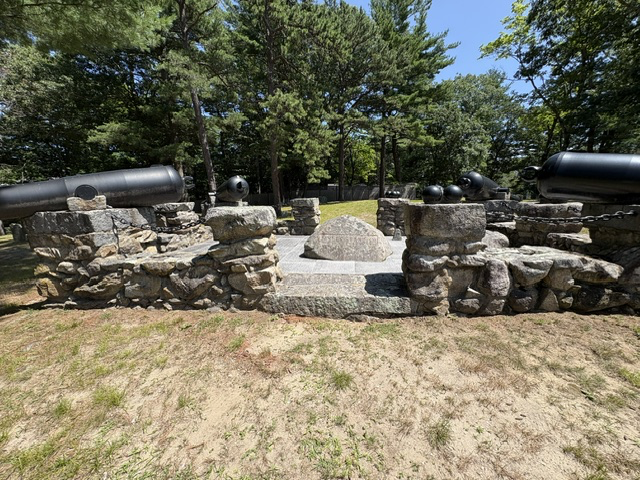
The Gravesite of Myles Standish
After visiting the site of Myles Standish’s homestead, we continued following his story in Duxbury to the place where he was laid to rest. Standish died here on October 3, 1656, more than three decades after arriving aboard the Mayflower and after spending much of his later life helping establish the community of Duxbury. There […]
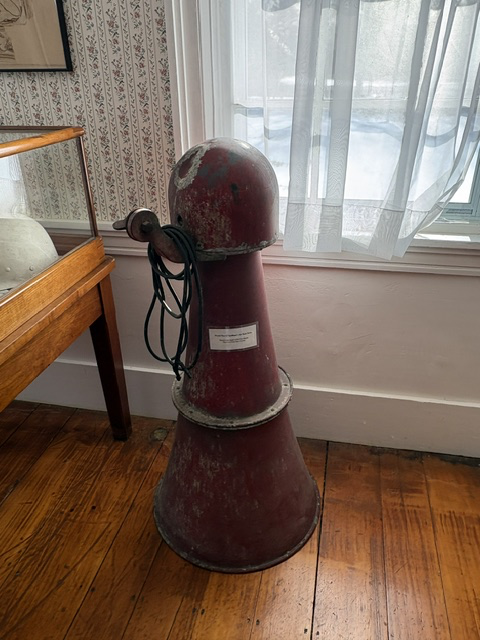
World War II Air Raid Siren
While visiting the Needham History Center and Museum, one artifact caught my attention. Standing quietly in the corner was a World War II air raid siren that once occupied the steeple of the First Baptist Church on Great Plain Avenue. It is not a large or ornate object, yet it represents a time when communities […]
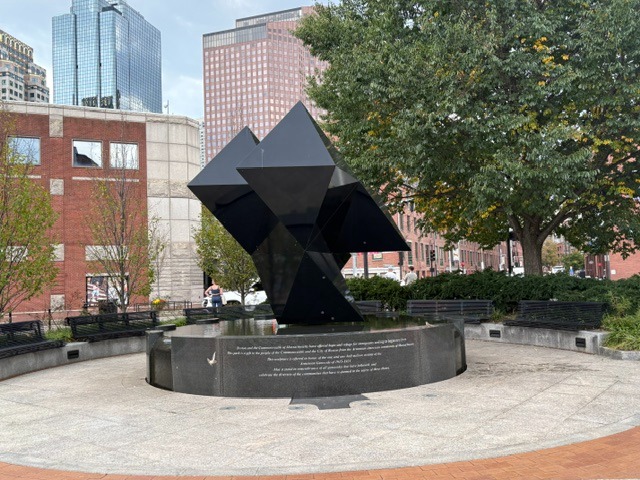
Armenian Heritage Park
During our walk around Boston, we stopped at Armenian Heritage Park on the Rose Kennedy Greenway. Its angular sculpture offers a different kind of memorial: one whose form changes while its purpose remains rooted in remembrance. The sculpture honors the lives lost during the Armenian Genocide of 1915–1923 and the genocides that followed. The park […]

