Watkins Glen State Park
Although the gorge stretches less than two miles, Watkins Glen State Park contains one of the most extraordinary examples of nature’s ability to shape the landscape over immense periods of time.

Established as New York’s first state park in 1906, Watkins Glen had already become a popular destination decades earlier. Visitors arrived by train, stagecoach, and steamboat to experience a place unlike anything they had ever seen. Long before boardwalks and stone stairways were constructed, adventurous travelers climbed through the narrow gorge to marvel at its waterfalls, towering cliffs, and winding stream.

The story of Watkins Glen began hundreds of millions of years ago when this region lay beneath an ancient inland sea. Layer upon layer of shale, sandstone, and limestone accumulated on the sea floor, eventually forming the rock that makes up the cliffs today. Much later, as glaciers retreated at the end of the last Ice Age, streams flowing toward Seneca Lake began cutting through these rock layers. Glen Creek slowly carved a deep, narrow gorge, creating nineteen waterfalls, countless cascades, plunge pools, and the dramatic passageways that make Watkins Glen one of the most photographed parks in the Northeast.
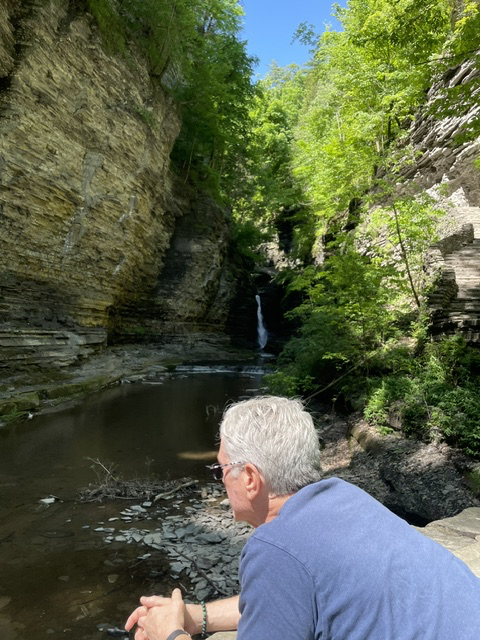
As Marty and I walked the Gorge Trail, it was easy to understand why generations of visitors have been captivated by this place. Stone bridges cross the stream at just the right locations, stairways disappear behind waterfalls, and narrow pathways hug the canyon walls as water tumbles into crystal-clear pools below. Around every bend, another view appears that seems even more beautiful than the last.
Read More From Nancy
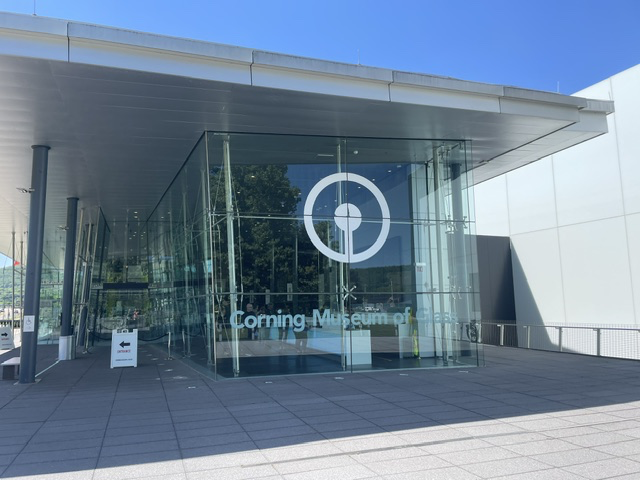
The Corning Museum of Glass
During our camping trip in upstate New York, we visited the Corning Museum of Glass, and once again found ourselves amazed by how one material can tell the story of human civilization. Founded in 1951 by Corning Glass Works to celebrate the company’s centennial, the Corning Museum of Glass has grown into the world’s premier museum […]
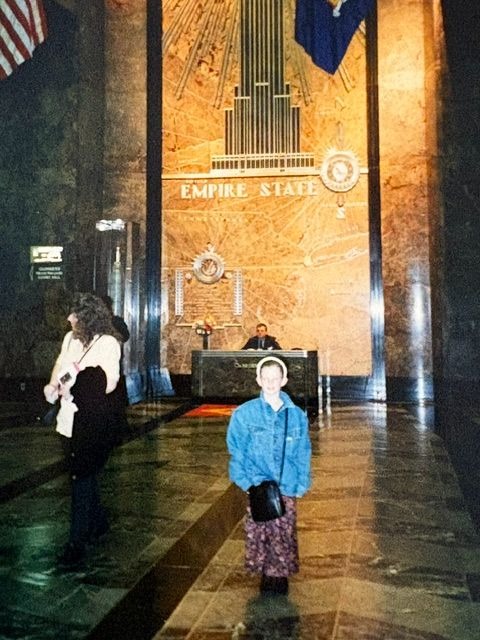
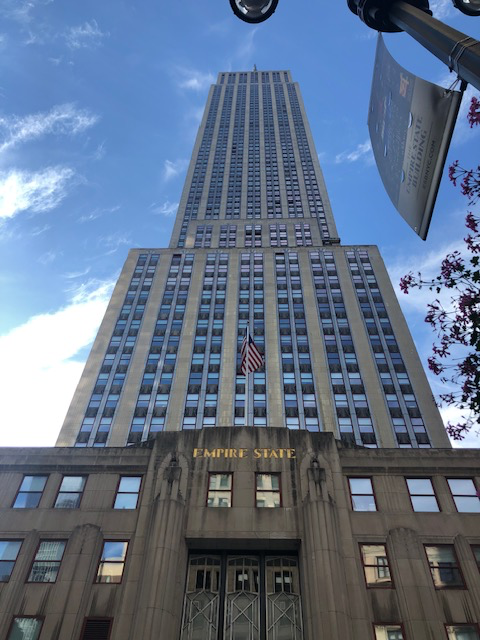
The Empire State Building Lobby
The Empire State Building’s architectural story begins at street level. Inside its Fifth Avenue entrance, polished marble, decorative metalwork, and strong geometric lines create a lobby designed to introduce visitors to one of New York’s most ambitious skyscrapers. Opened on May 1, 1931, the building reflected an era fascinated by height, speed, and technological progress. […]

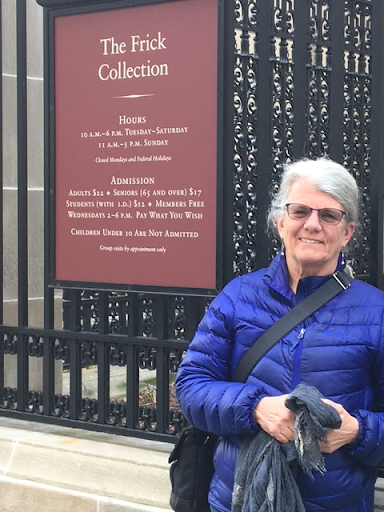
The Metropolitan Museum of Art
The Metropolitan Museum of Art has been part of many of our visits to New York City over the years. Sometimes we have gone for a particular exhibition we wanted to see, while other visits have simply been opportunities to wander through the galleries and see where they would take us. With a museum as […]

