The Empire State Building
Some buildings become so familiar that we almost stop thinking about the remarkable stories behind them. The Empire State Building is one of those places. We have visited it many times over the years and have gone to the top more than once, but each time I stand at its base and look upward, its scale still seems extraordinary.
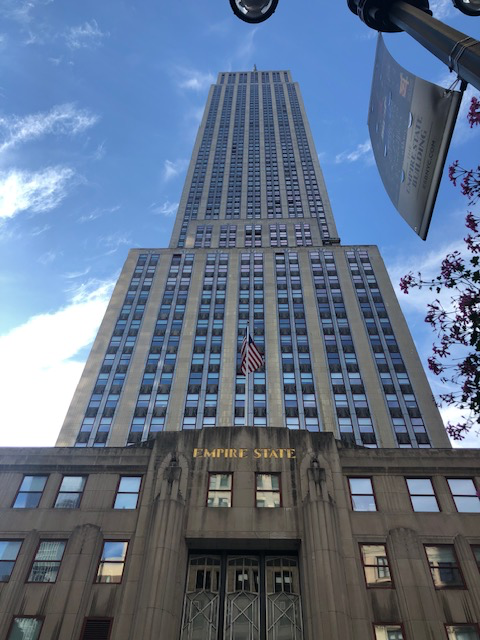
The story began in the late 1920s, during an intense competition to build the tallest skyscraper in the world. The site at Fifth Avenue and 34th Street had previously been occupied by the original Waldorf-Astoria Hotel. After the hotel was demolished, plans moved forward for an enormous new office tower designed by the architectural firm Shreve, Lamb & Harmon.
Construction began in 1930, and what followed remains one of the great construction achievements in American history. Thousands of workers participated in erecting its steel skeleton, sometimes adding more than four stories in a single week. From the beginning of construction to the building’s opening on May 1, 1931, the project took only about 13 months.
The finished building rose 1,250 feet to the roof of its tower and contained 102 stories. It surpassed the recently completed Chrysler Building to become the tallest building in the world, a title it would retain for nearly four decades.
Its architecture was equally important. The Empire State Building is one of America’s great examples of Art Deco design. The setbacks that give the skyscraper its familiar stepped silhouette were influenced by New York City’s 1916 zoning regulations, which required tall buildings to narrow as they rose so that sunlight could continue reaching the streets below. Instead of treating those restrictions simply as limitations, the architects made them an essential part of the design.
Even the top of the building has a fascinating story. Its mast was originally promoted as a docking station for dirigibles. The vision was almost futuristic: passengers aboard great airships would arrive high above Manhattan and enter the building near its summit. Wind conditions around the tower made the idea impractical, and it never became the transportation terminal its promoters imagined.
The timing of the building’s completion could hardly have been worse economically. It opened during the Great Depression, when businesses were failing and demand for office space had fallen dramatically. So much of the building initially remained empty that it acquired the joking nickname the “Empty State Building”. Yet the observation decks attracted visitors almost immediately and became an important source of revenue.
Over time, the Empire State Building became something its original developers could never have completely planned: a symbol of New York itself. It appeared in photographs, advertisements and countless movies, most famously King Kong in 1933. Generations of visitors came to stand on its observation decks and look across Manhattan.
Going to the top is still what makes the building particularly special to me. At street level, New York can feel enormous, crowded and almost impossible to comprehend. From the observation deck, the city suddenly reveals itself differently. Streets become patterns, buildings that seemed enormous from below become part of a larger skyline, and Manhattan’s relationship to the rivers and surrounding boroughs becomes much clearer.
We have made that trip upward many times, and perhaps that is part of what makes the Empire State Building different from many of the historic places we visit. It isn’t a building we saw once and checked off a list. We have returned to it over the years.
More than 90 years after it opened, the Empire State Building still accomplishes what its creators intended. It makes you look up. And after riding to the top, it gives you the opportunity to look back down and see New York from an entirely different perspective.
Read More From Nancy
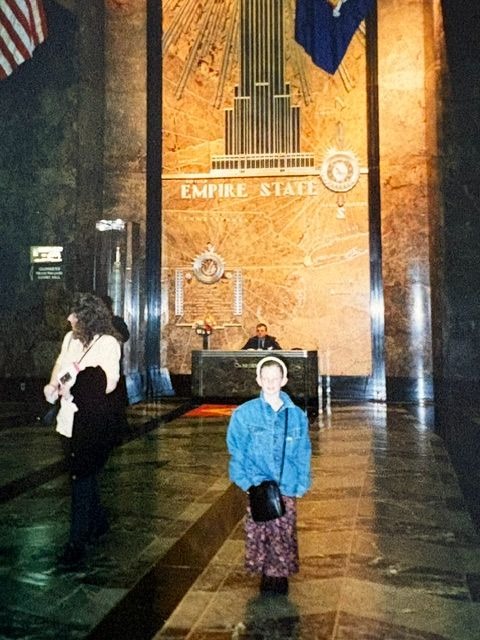
The Empire State Building Lobby
The Empire State Building’s architectural story begins at street level. Inside its Fifth Avenue entrance, polished marble, decorative metalwork, and strong geometric lines create a lobby designed to introduce visitors to one of New York’s most ambitious skyscrapers. Opened on May 1, 1931, the building reflected an era fascinated by height, speed, and technological progress. […]

Watkins Glen State Park
Although the gorge stretches less than two miles, Watkins Glen State Park contains one of the most extraordinary examples of nature’s ability to shape the landscape over immense periods of time. Established as New York’s first state park in 1906, Watkins Glen had already become a popular destination decades earlier. Visitors arrived by train, stagecoach, and […]
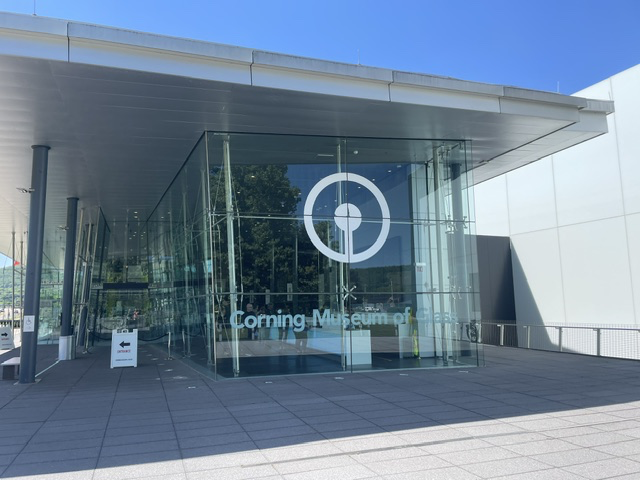
The Corning Museum of Glass
During our camping trip in upstate New York, we visited the Corning Museum of Glass, and once again found ourselves amazed by how one material can tell the story of human civilization. Founded in 1951 by Corning Glass Works to celebrate the company’s centennial, the Corning Museum of Glass has grown into the world’s premier museum […]

