The Metropolitan Museum of Art
The Metropolitan Museum of Art has been part of many of our visits to New York City over the years. Sometimes we have gone for a particular exhibition we wanted to see, while other visits have simply been opportunities to wander through the galleries and see where they would take us. With a museum as large and varied as the Met, there is always something we have never noticed before.

The museum itself has a remarkable history. The Metropolitan Museum of Art was founded in 1870 by a group of American citizens that included businessmen, artists and thinkers who believed that New York should have a great institution devoted to art and art education. The museum first opened to the public in 1872 in a building on Fifth Avenue, but its collection quickly outgrew its early homes.

In 1880, the Met moved to its permanent location along Fifth Avenue in Central Park. The building visitors see today is the result of generations of expansion. Its monumental Beaux-Arts Fifth Avenue façade and Great Hall, designed by architect Richard Morris Hunt, opened in 1902 and gave the museum much of the imposing presence we associate with it today.
Behind that façade is an enormous complex of galleries representing approximately 5,000 years of human creativity. The collections range from ancient Egypt, Greece and Rome to European paintings and sculpture, American art, Asian art, Islamic art, African art, musical instruments, arms and armor, photographs, costumes and decorative arts. The museum holds more than a million objects, although only a portion can be displayed at any one time.
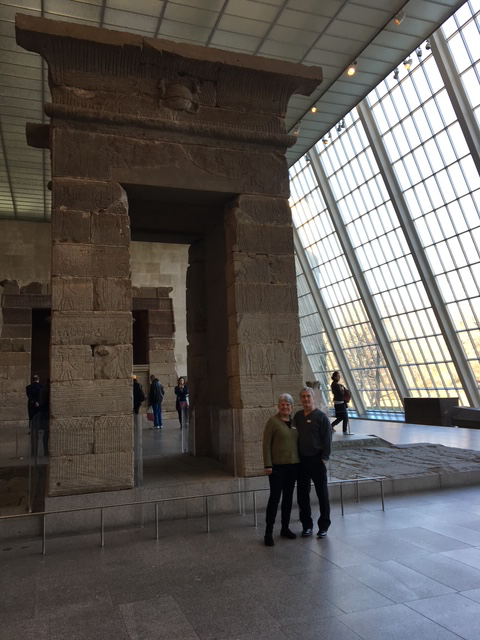
That enormous scope is one of the things that makes visiting the Met so different from visiting a museum devoted to a single artist, period or subject. Walking through it can feel almost like moving through civilizations. Within a relatively short distance, it is possible to encounter an ancient Egyptian temple, a medieval suit of armor, a Renaissance painting, an American period room and a work created in the modern era.
This visit was for one of my birthdays, and we decided to experience the museum a little differently. Rather than simply moving from gallery to gallery, we did a scavenger hunt. It turned the visit into a search for details, encouraging us to slow down, study individual objects and notice things we might otherwise have walked past.
Some of our time was spent in the Met’s extraordinary Egyptian galleries. The museum’s Egyptian collection is particularly extensive, encompassing objects representing thousands of years of ancient Egyptian history. But its most dramatic presence is unquestionably the Temple of Dendur.
The Temple of Dendur was constructed in Nubia around 15 B.C. during the reign of the Roman emperor Augustus. Although Egypt had become part of the Roman Empire, the temple was built in the traditional Egyptian style and dedicated to the goddess Isis and to two deified brothers, Pedesi and Pihor. Its journey from the banks of the Nile to New York is nearly as remarkable as the temple itself.
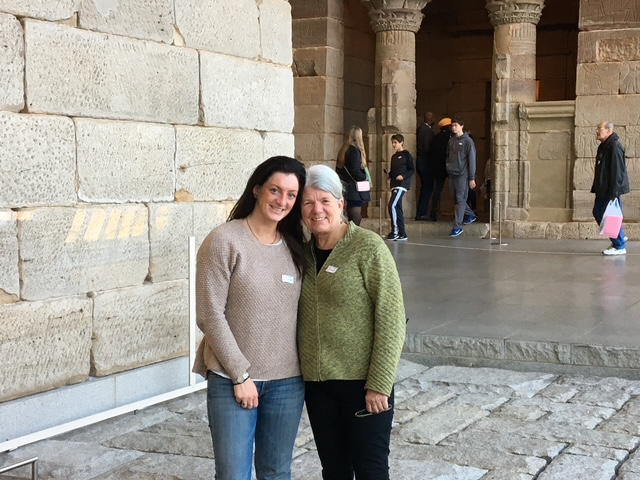
Construction of the Aswan High Dam in the twentieth century threatened ancient monuments throughout Nubia with inundation. Beginning in 1960, UNESCO coordinated an extraordinary international effort to document, dismantle and relocate endangered temples and archaeological sites. The United States participated in that campaign. In recognition of that assistance, Egypt presented the Temple of Dendur to the United States in 1965. Several American institutions competed for the opportunity to house it, and President Lyndon B. Johnson ultimately awarded the temple to the Metropolitan Museum of Art in 1967.
The temple was reconstructed inside a specially designed wing overlooking Central Park and opened to the public in 1978. The enormous glass wall allows natural light to surround the ancient stone, while a reflecting pool suggests the temple’s original relationship with the Nile. Standing beside those massive stone walls gives a very different sense of the temple than simply seeing it in a photograph. The scale of the blocks, the carved surfaces, the doorways and the relationship between the different spaces become much more apparent. We could walk through a structure created more than two thousand years ago on another continent. That is part of what makes the Met such an unusual place.
It is not simply a building filled with paintings hanging on walls. Entire architectural spaces have been incorporated into the museum. Period rooms recreate domestic interiors from different centuries. Monumental sculptures stand in enormous galleries. Architectural elements allow visitors to experience something of the scale and surroundings for which works of art were originally created.
Museums can sometimes become overwhelming. There is so much to see that it is easy to move from one important object to another without really seeing any of them. Having something specific to search for made us stop, look more carefully and pay attention to the small details that help tell a much larger story. More than 150 years after its founding, the original idea behind the Metropolitan Museum of Art remains very much alive: bringing people face to face with art and objects created across thousands of years of human history.
Read More From Nancy
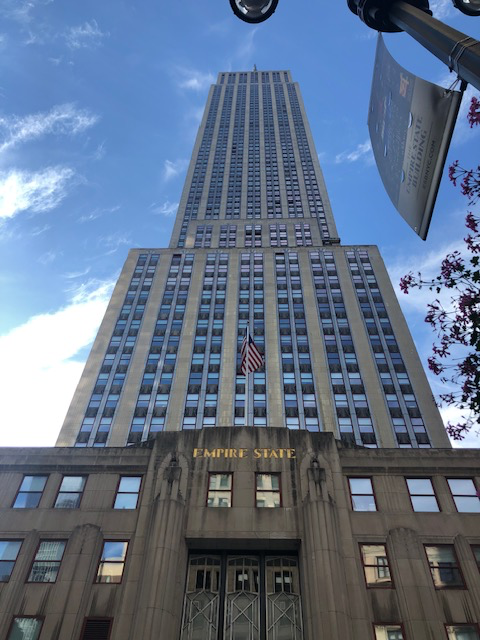
The Empire State Building
Some buildings become so familiar that we almost stop thinking about the remarkable stories behind them. The Empire State Building is one of those places. We have visited it many times over the years and have gone to the top more than once, but each time I stand at its base and look upward, its […]
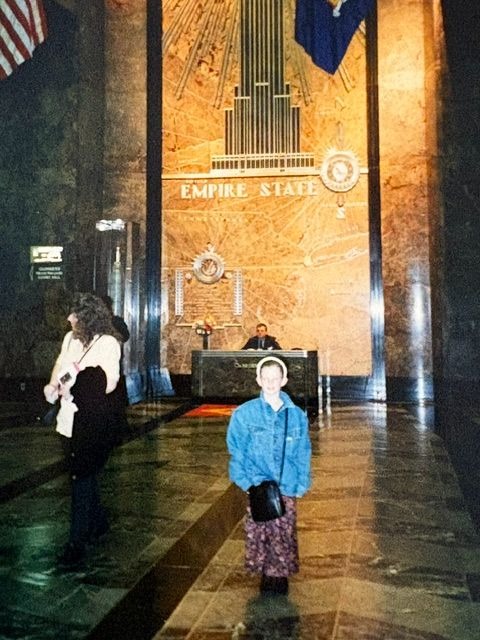
The Empire State Building Lobby
The Empire State Building’s architectural story begins at street level. Inside its Fifth Avenue entrance, polished marble, decorative metalwork, and strong geometric lines create a lobby designed to introduce visitors to one of New York’s most ambitious skyscrapers. Opened on May 1, 1931, the building reflected an era fascinated by height, speed, and technological progress. […]

Watkins Glen State Park
Although the gorge stretches less than two miles, Watkins Glen State Park contains one of the most extraordinary examples of nature’s ability to shape the landscape over immense periods of time. Established as New York’s first state park in 1906, Watkins Glen had already become a popular destination decades earlier. Visitors arrived by train, stagecoach, and […]

