Bus 2857 Henry Ford Museum
I enjoyed visiting the Henry Ford Museum because it reflects Henry Ford’s vision that history should be preserved through the objects that shaped everyday life. While automobiles are naturally an important part of the collection, the museum reaches far beyond transportation. Its galleries include inventions, machinery, presidential artifacts, and objects connected to defining moments in American history. During our visit, one exhibit stood out to me: the Montgomery city bus on which Rosa Parks took her historic stand.
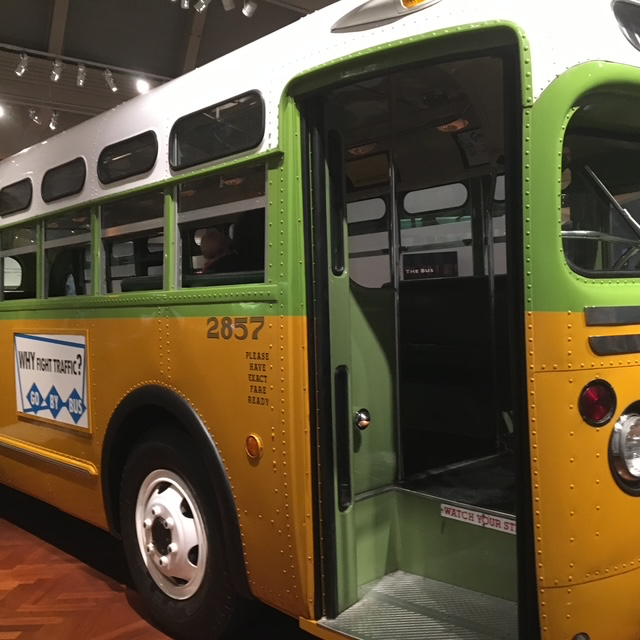
At first glance, it is simply a city bus. The worn seats, narrow aisle, and simple interior are much like thousands of buses that carried passengers through American cities during the 1950s. Yet it was inside this bus that Rosa Parks, a forty-two-year-old seamstress and longtime civil rights activist, quietly refused the driver’s order to give up her seat to a white passenger.
Her arrest led to the Montgomery Bus Boycott, a 381-day protest during which thousands of African Americans chose to walk rather than ride the city’s segregated buses. The boycott brought national attention to the Civil Rights Movement, introduced many Americans to the leadership of the Reverend Martin Luther King Jr., and ultimately contributed to the United States Supreme Court’s decision ending segregation on Montgomery’s public buses.
Sitting inside the bus, I noticed how confined the space felt. It made the events of that December evening seem much more personal than they ever had while reading about them in a history book. Rather than imagining a distant historical event, I found myself looking down the aisle and wondering what it must have felt like for everyone on board as that quiet act of resistance unfolded.
Rosa Parks had been involved in the Civil Rights Movement long before December 1, 1955. As an active member of the Montgomery NAACP, she understood the injustice of segregation and the importance of challenging it. Community leaders had been searching for the right legal case to contest the city’s bus laws, and Parks’ arrest provided that opportunity. The boycott that followed was not an improvised response but a carefully organized protest that lasted 381 days, introduced many Americans to the leadership of the Reverend Martin Luther King Jr., and helped change the course of the Civil Rights Movement.
As I walked through the Henry Ford Museum, I appreciated Henry Ford’s vision of preserving the actual objects connected with America’s past. Reading about the Montgomery Bus Boycott is one thing; standing inside the very bus where the movement began is another. Seeing it in person brought that history into sharper focus and deepened my appreciation for the courage, determination, and collective effort that made lasting change possible.