Hitsville
Years ago, while teaching in Michigan, Marty and I decided we had to make a pilgrimage to Hitsville U.S.A. We had grown up with Motown music, and we wanted to see where it all began. What surprised us most was how ordinary it looked.
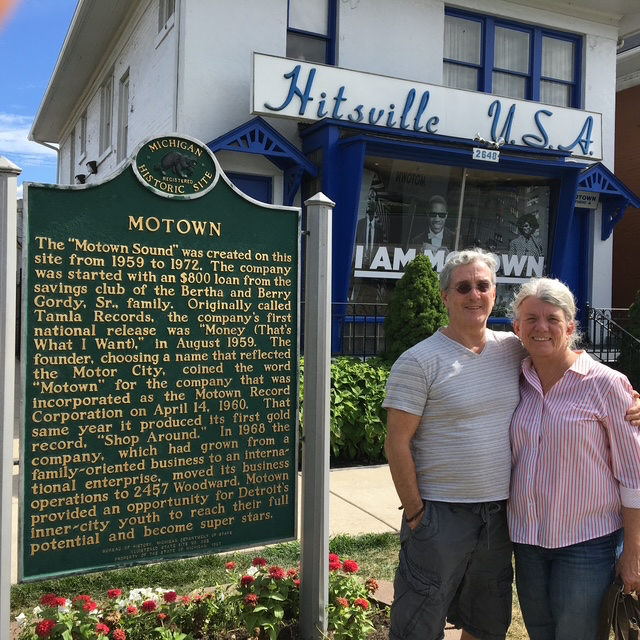
There were no grand recording complexes or elaborate buildings. Just a simple house on West Grand Boulevard in a Detroit neighborhood. Yet behind that modest storefront, one of the greatest musical stories in American history was unfolding.
Walking through the museum, you quickly realize that Motown was never just about recording songs. It was about people, family, and community. Berry Gordy didn’t simply build a record company—he created an environment where young musicians, writers, producers, and performers worked together every day, encouraging one another and refining their craft. The neighborhood itself became part of the story, with homes and buildings gradually transformed into offices, rehearsal spaces, and recording studios as Motown continued to grow.
The highlight of the visit was stepping into the original Studio A, where so many legendary recordings were made. The room has been carefully preserved, and standing there you can almost imagine the voices of Diana Ross, Smokey Robinson, Marvin Gaye, Stevie Wonder, The Temptations, The Four Tops, Martha and the Vandellas, and so many others filling the space. It is remarkable to think that songs which would become part of the soundtrack of our lives were recorded in such a small room.
What makes the story even more remarkable is how it all began. In 1959, Berry Gordy Jr. borrowed just $800 from his family’s savings club to start Tamla Records. Its first national hit, “Money (That’s What I Want),” launched a company that Gordy soon renamed Motown, a tribute to Detroit’s identity as the Motor City. By 1960, Motown had produced its first gold record, “Shop Around,” and within a few short years it had grown from a small family business into an international recording company.
Perhaps Motown’s greatest legacy wasn’t simply the music it produced but the opportunities it created. Berry Gordy believed in the talent of Detroit’s young people and built a company that gave many of them a chance to succeed beyond anything they had imagined. The artists who emerged from this neighborhood didn’t just become superstars. They changed American music and helped bring people together during a challenging period in our nation’s history. Standing outside Hitsville U.S.A., it’s remarkable to think that a modest house, an $800 loan, and one man’s vision would leave such an enduring mark on the world.