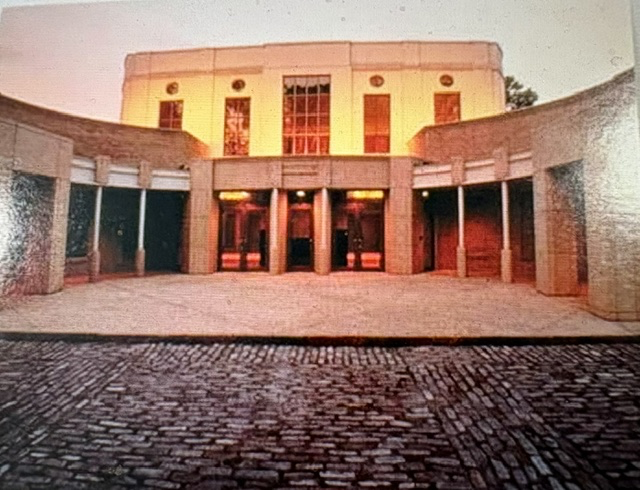
Atlanta Botanical Garden
When we lived in Atlanta, I wasn’t even aware of the Atlanta Botanical Garden. It is funny how we can live near a place for years without discovering it. It wasn’t until Erin later lived in the area that she introduced us to this remarkable garden.
Erin became a member, and I could understand why. For her, the Garden became a place she could escape to whenever she wanted—a beautiful retreat in the middle of the city. When Marty and I visited her, we began going with her, and before long, we became fans as well.
The Atlanta Botanical Garden has its own relatively recent history. It was incorporated in 1976, created by a group of Atlantans who wanted to establish a permanent botanical garden in the city. What began on a relatively small piece of land adjoining Piedmont Park has grown into a major horticultural institution, combining plant collections, conservation, education, art and imaginative garden design.
One of the things that made our visits so interesting was that this wasn’t simply a place to look at flowers. Art became part of the landscape, sometimes on an enormous scale.
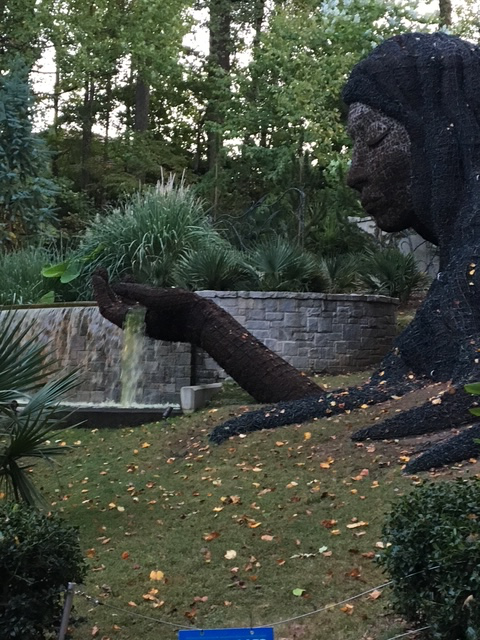
The figure I remember most is the tremendous woman emerging from the earth, her hand extended as water pours from it. She is the Earth Goddess, a massive living sculpture that originally appeared during the Garden’s 2013 exhibition, “Imaginary Worlds: Plants Larger Than Life.” Created using the horticultural art of mosaiculture, her form is constructed from a steel framework filled with soil and covered with thousands of living plants. She became so popular that she remained at the Garden and has become one of its signature sights.
There is something especially fitting about her presence in a botanical garden. Rather than being a sculpture simply placed among plants, the plants are part of the sculpture itself. Her hair and clothing seem to grow directly from the landscape, while the water flowing from her hand connects her visually with the garden surrounding her.
The Atlanta Botanical Garden has had a particularly important relationship with the work of glass artist Dale Chihuly. His first major exhibition there was presented in 2004, bringing his brilliantly colored glass forms into the landscape. Chihuly returned for another major exhibition in 2016, when his sculptures were again placed throughout the gardens.
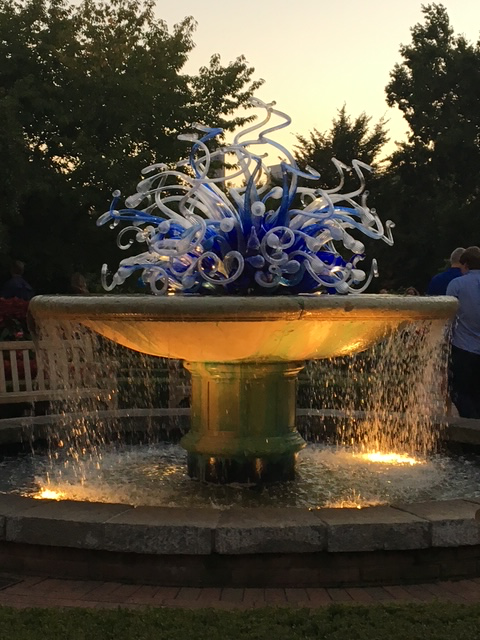
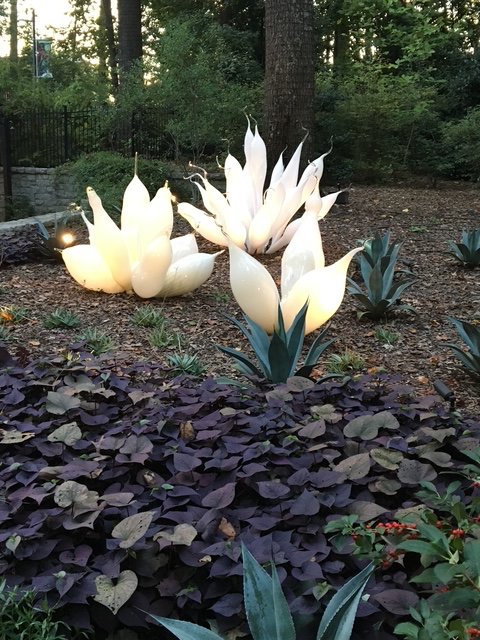
Some of that work became a permanent part of the Garden. The photograph of the fountain captures one of those extraordinary combinations of glass, water and light. Chihuly’s twisting forms seem almost alive, particularly as daylight fades and illumination transforms the glass. Nearby, other glass sculptures resemble enormous flowers emerging from the plantings, blurring the distinction between something created by nature and something created by an artist.
That combination of horticulture and art was part of what made our visits so enjoyable. We could wander through familiar areas and still encounter something unexpected, a sculpture among the trees, an enormous living figure rising from the landscape, or glass flowers glowing as evening approached.
Atlanta had once been our home, yet this was a part of the city we had somehow missed. Years later, it was Erin who brought us back and showed us something that had been there waiting to be discovered.