The Atlanta History Museum
This photograph takes me back to the Atlanta History Museum, a place we visited while exploring Atlanta. The museum building was relatively new at the time, but the organization behind it had already been preserving Atlanta’s history for decades.
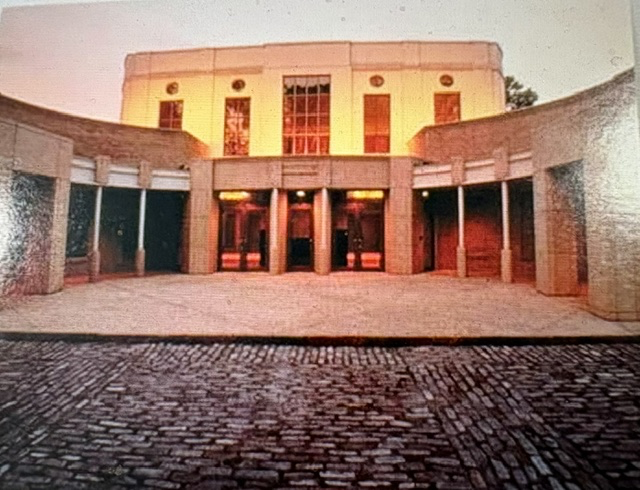
The Atlanta Historical Society was founded in 1926 by a small group of Atlantans who wanted to collect and preserve the documents, photographs and stories of their rapidly changing city. Over the years its collections and mission expanded, and in 1990 the organization became the Atlanta History Center. The Atlanta History Museum, shown in my photograph, opened in 1993 as part of its growing campus in Atlanta’s Buckhead neighborhood.
The museum was designed to tell a much broader story than simply the history of one city. Its exhibits explored the Civil War, Southern life and culture, African American history, sports, transportation and the many people and events that shaped Atlanta and the surrounding region. I don’t remember all the individual exhibits we saw that day, but I do remember one story very clearly of the rebuilding of Atlanta after the Civil War. That was the part of the museum that stayed with me.
Atlanta had grown rapidly before the war largely because of the railroads. Several important rail lines converged there, transforming what had begun as a railroad settlement into a major transportation, manufacturing and commercial center. During the Civil War, those same railroads made Atlanta strategically vital to the Confederacy. Supplies, weapons and troops moved through the city, making its capture an important Union objective.
In 1864, General William T. Sherman’s armies fought their way toward Atlanta during a campaign that lasted throughout the summer. Confederate forces evacuated the city on September 1, destroying military supplies and facilities they could not take with them. Union troops entered the following day. Two months later, as Sherman’s army prepared to begin its March to the Sea, additional railroad, industrial and military facilities were destroyed. Atlanta had been devastated, but that was not the end of the story.
That was what I remember learning more about at the museum. Residents returned and began rebuilding. Railroads were repaired, businesses reopened and new industries appeared. The transportation network that had helped make Atlanta such an important target during the war now became one of the foundations of its recovery.
The transformation happened remarkably quickly. In 1868, Atlanta replaced Milledgeville as the capital of Georgia. Its population grew, rail connections expanded and business leaders increasingly promoted Atlanta as the center of a “New South”—a region they hoped would become more urban, industrial and commercially connected with the rest of the country.
But rebuilding Atlanta involved much more than replacing buildings and railroad tracks. Emancipation fundamentally changed Southern society. African Americans established churches, schools, businesses and communities and participated in political life during Reconstruction. Those advances were later confronted by segregation, disenfranchisement and Jim Crow. Atlanta’s emergence as a major Southern city therefore included both extraordinary growth and profound inequality.
By the end of the 19th century, the city that had been devastated during the Civil War had become one of the South’s most important commercial and transportation centers. That ability to rebuild and reinvent itself would become a recurring theme throughout Atlanta’s history.
I had always known the familiar Civil War story of Sherman and the destruction of Atlanta. The museum helped carry that story beyond 1864. Atlanta did not remain a ruined city. People returned, rebuilt the railroads and businesses, created new institutions and transformed Atlanta into a major American city.
Sometimes what remains from a museum visit isn’t a particular artifact or exhibit. It is an idea that changes the way we understand a place. For me, that was the story I carried away from the Atlanta History Museum: not simply how Atlanta was destroyed, but how it began again.