The Carbon County Courthouse
Standing prominently at the corner of Broadway in Jim Thorpe, the Carbon County Courthouse is one of the buildings that immediately draws your eye. Its massive stone walls and tall clock tower seem perfectly suited to the narrow valley and steep mountains surrounding the town.
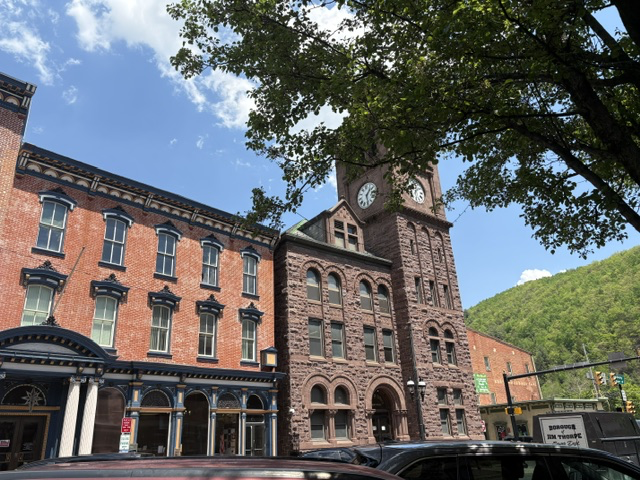
The courthouse we see today is the third to occupy this site. Carbon County was created in 1843, with Mauch Chunk selected as the county seat. The first courthouse was adapted from an existing Lehigh Coal & Navigation Company building, but only six years later, in 1849, a devastating fire swept through the business district and destroyed both the courthouse and jail. Remarkably, the county’s court records survived.
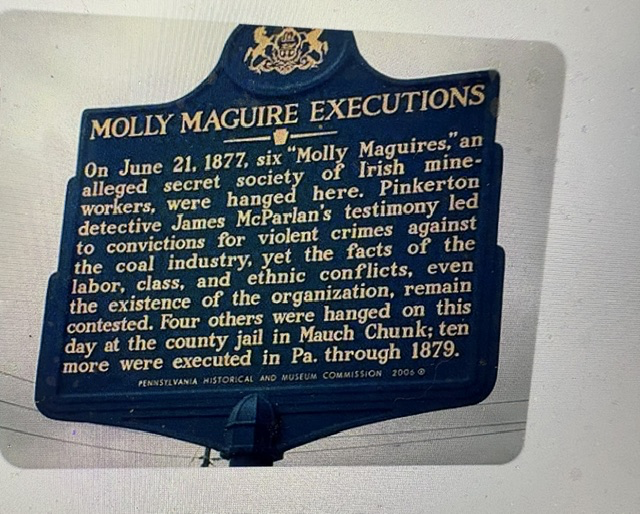
A second courthouse was completed in 1850. It was inside that earlier building that some of Carbon County’s most famous—and controversial—legal proceedings took place: the Molly Maguire trials of the 1870s. By the end of the nineteenth century, however, booming population and court business had overwhelmed the building.
In 1893, construction began on the courthouse we photographed. Designed by Allentown architect L. S. Jacoby, it was intended to resemble a medieval castle, with its Romanesque Revival stonework, vaulted spaces, turrets and commanding tower. The sandstone used for the exterior was quarried within Carbon County. Completed in 1894, the courthouse ultimately cost approximately $125,000.
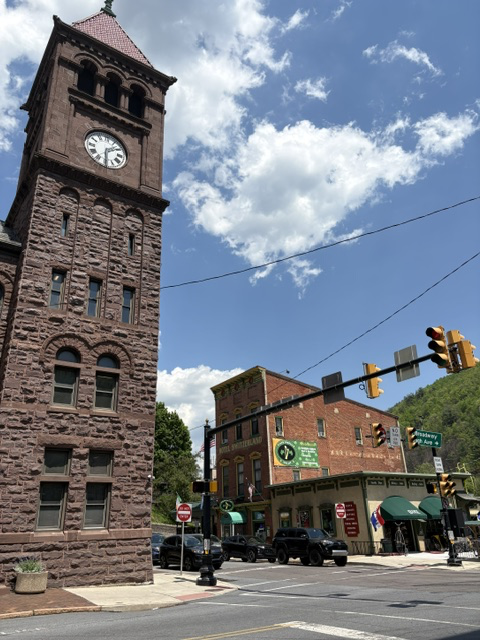
But my favorite story is hidden inside the clock tower. A 2,122-pound bell was installed there, and it once communicated with the entire town. It struck the hours, but it also announced what was happening inside the courthouse. Twelve peals told townspeople that the court was opening. And thirteen rings had a much more ominous meaning. Thirteen strokes of the bell announced that a jury was about to return a verdict in a murder trial. People throughout Mauch Chunk could hear that something important was about to happen inside the courthouse. The bell continued to be used until the early 1940s. The Carbon County Courthouse remains in active use today.
Read More From Nancy
The Dolon House
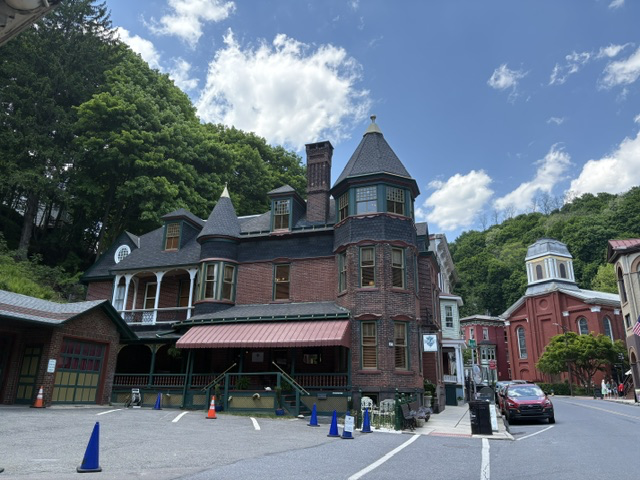
Walking along Broadway in Jim Thorpe, the Dolon House immediately stands out. Its turret, elaborate roofline, porches and decorative brickwork make it easy to imagine this street during the prosperous years when the town was still known as Mauch Chunk. The house was completed around 1888 for John C. Dolon, a prominent local businessman who […]
The Asa Packer Mansion
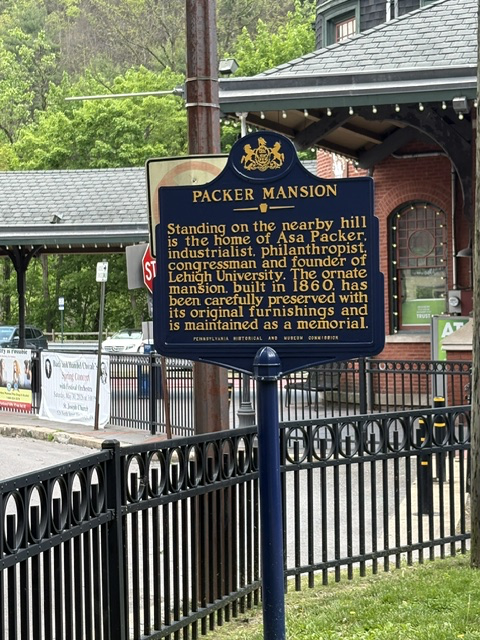
As we explored Jim Thorpe, one name seemed to appear repeatedly: Asa Packer. His story is inseparable from the development of Mauch Chunk, and the mansion overlooking the town provides perhaps the clearest picture of just how successful and influential he became. Packer’s beginnings were far more modest. Born in Connecticut in 1805, he worked […]
Carbon County Emergency Services Memorial
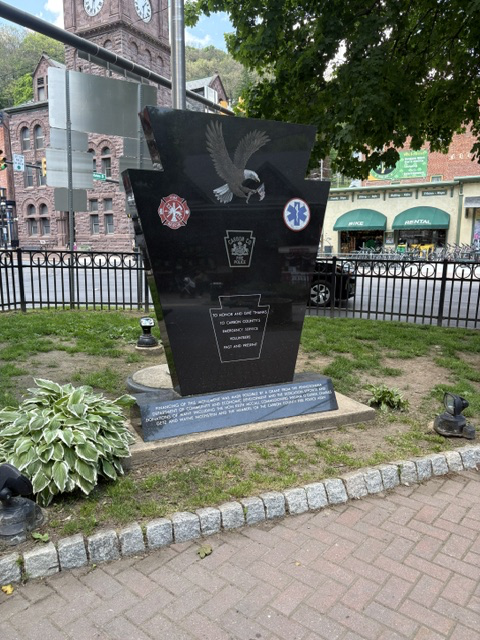
While so much of Jim Thorpe tells the story of coal, railroads, industrialists and nineteenth-century Mauch Chunk, this memorial brought us into a much more recent chapter of the community’s history. Standing in the small park across from the Carbon County Courthouse is a polished black granite monument dedicated to the men and women who […]

