Psychoneurosis Letter
July 1944Dearest Reader,
Reading my grandmother’s words, it is clear how complicated and emotionally charged the term psychoneurosis was in 1944, She writes:
“You will note that Dr. Link, a noted psychologist, does not believe in the use of that term, that to call a man a ‘psychoneurotic’ is to go a long way towards making him one. A psychoneurotic is someone who thinks there is something wrong with them when in reality there is not… someone who is always worrying about themselves. In other words, someone whose thinking is all wrong.”
Her explanation reflects the public understanding of the time. There is a mixture of confusion, stigma and
oversimplification of a diagnosis that was quietly shaping the lives of thousands of soldiers and their families.
During WWII, psychoneurosis was one of the most common psychiatric diagnoses used by the U.S military. It was a broad term meant to capture everything from anxiety to panic attacks to what we now recognize as Post Traumatic Stress Disorder (PTSD). But because the diagnosis was so broad and poorly defined, it carried enormous social weight. To many civilians, it suggested weakness and to the soldiers, it often added shame and suffering.
At the beginning of the war, the Army worked hard to avoid public discussion of the problem. Many psychiatrists were overwhelmed with men suffering from “combat fatigue” but newspapers were discouraged from covering the issue. The War Department feared that acknowledging widespread mental strain would hurt morale or be interpreted as unmanliness. For the first years of the war, there was essentially a blackout in public reporting on psychiatric casualties.
By mid-1944, the time of my grandmother’s letter, the silence had begun to break. Articles about “war neuroses”, “nervous strain” and “psychoneurosis” started appearing in local papers, often with the message that echoed my grandmother’s, that worry itself could cause illness. This condition was seen as rooted in “wrong thinking” and that men should calm themselves and try not to dwell on their symptoms. These explanations were meant to destigmatize, but they also may have dismissed the real psychological injuries soldiers were experiencing.
During World War II, the U.S. Army discharged nearly 389.000 men for neuropsychiatric reasons. Of those, about 270.000 soldiers were labeled as psychoneurotic. It was one of the most common reasons for medical discharge and accounted for nearly 44% of all disability separations. Behind the scenes, military psychiatrists were overwhelmed. Historians estimate that over one million American service members experienced some form of mental breakdown, severe anxiety or combat stress reaction.
The term psychoneurosis began to fade after the war. In 1952, with the first edition of the Diagnostic and Statistical Manual of Mental Disorders, psychiatry began adopting more specific categories: “anxiety reaction,” “compulsive reaction” and eventually, “post-traumatic stress disorder, which was formally recognized in 1980. As the field evolved, psychoneurosis became recognized as too vague, too stigmatizing and too rooted in outdated ideas.
By the late 20th century, the word had virtually disappeared from professional use. It remains today mostly an historical reminder of the limits of medical understanding of the stigma soldiers faced through the language available to them.
Through my grandmother’s letters, I can see how one complicated and misunderstood word traveled through the news and doctors’ offices and was a part of my family’s story.
Dr. Nancy Watson
Washington
Read More From Nancy
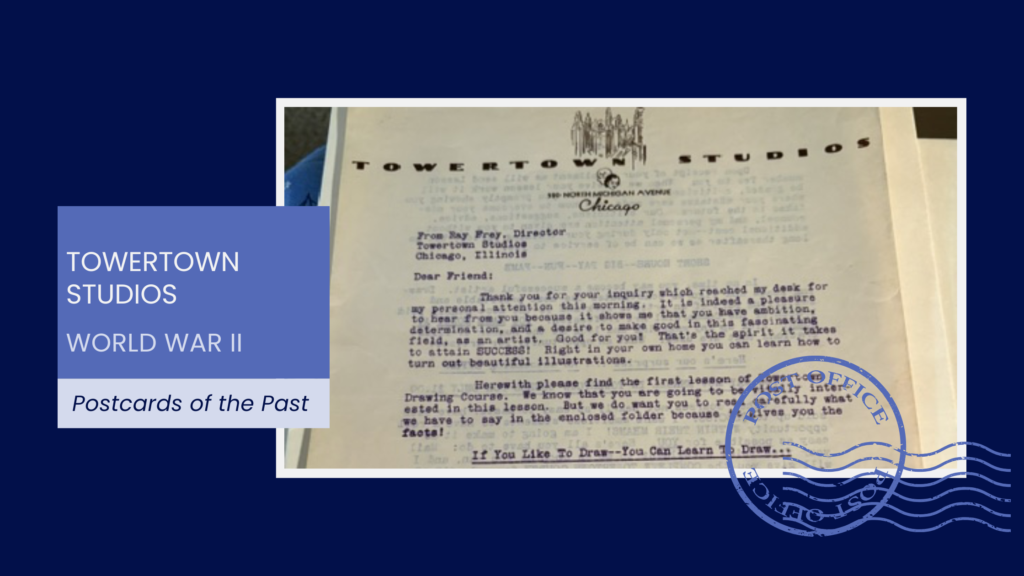
Towertown Studios
Among my father’s papers is this letter from Towertown Studios in Chicago promoting a correspondence course in drawing. By itself, it might seem like nothing more than an old piece of advertising mail. But knowing when my father received it gives it a much more personal meaning. This was part of the mail arriving while […]
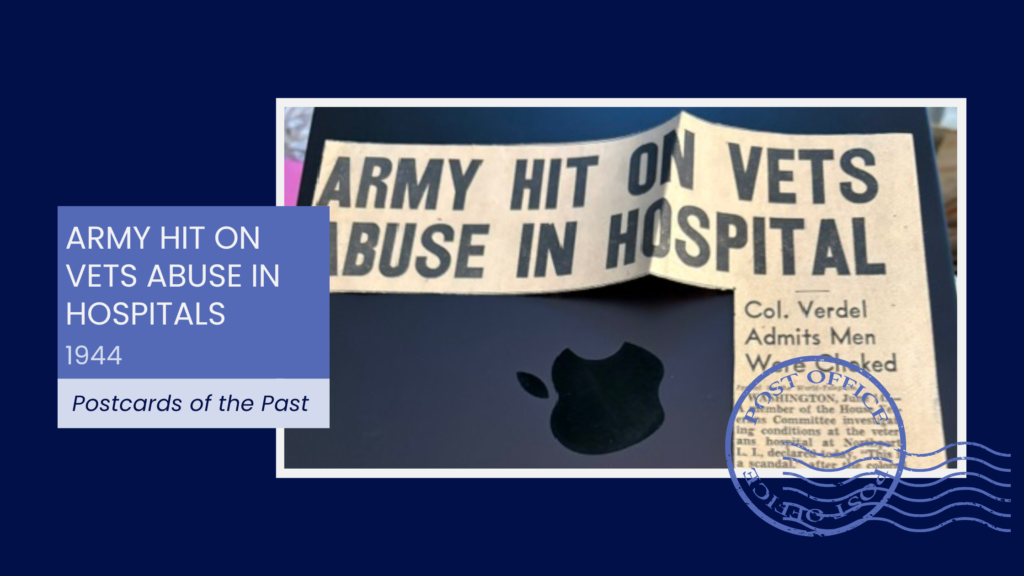
Army Hit on Vets Abuse in Hospitals
Among the newspaper clippings preserved by my mother is this article concerning allegations of mistreatment at a military veteran’s hospital during World War II. I have no direct evidence connecting the article to my family, butcannot help wondering why it was saved. At the time the article appeared, my father was serving in the Army and was spending part of 1944 in Washington […]
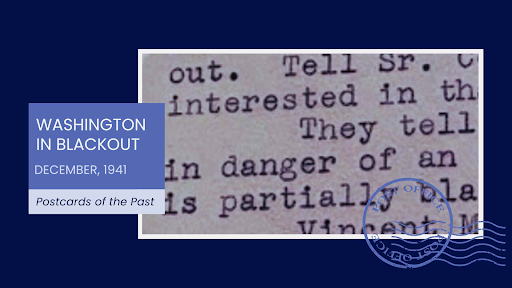
Washington in Blackout
In the December 13, 1941, letter, my grandmother described another unsettling reality of those first days after Pearl Harbor, the fear that the war might reach the American mainland. Information was fragmentary, rumors circulated freely, and no one yet knew what form the conflict would take. She wrote simply and without drama: “They tell us […]

