The Asa Packer Mansion
As we explored Jim Thorpe, one name seemed to appear repeatedly: Asa Packer. His story is inseparable from the development of Mauch Chunk, and the mansion overlooking the town provides perhaps the clearest picture of just how successful and influential he became.
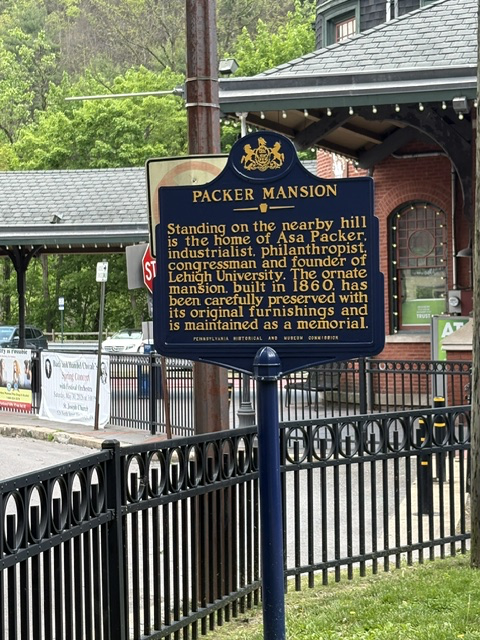
Packer’s beginnings were far more modest. Born in Connecticut in 1805, he worked as a carpenter and farmer before becoming involved in Pennsylvania’s canal business. He eventually owned canal boats and then turned his attention to railroads. In the 1850s, he financed and developed the Lehigh Valley Railroad, creating an efficient way to transport anthracite coal from northeastern Pennsylvania to growing markets. The railroad made Packer one of the wealthiest and most powerful men in the region. He also entered public life, serving as a Carbon County judge, a Pennsylvania legislator and two terms in the United States House of Representatives
In 1861, Packer built this mansion on the hillside above Mauch Chunk for his wife, Sarah, and their family. Philadelphia architect Samuel Sloan designed the three-story Italianate mansion, which took about two years to complete and cost approximately $14,000. With 18 rooms and roughly 11,000 square feet of living space, it was an extraordinary house for its time. Its red roof, central cupola and commanding position above the town made it a very visible expression of the fortune Packer had created.
But Asa Packer’s legacy extends well beyond this house and the railroad that made him wealthy.
In 1865, he donated land and $500,000 to establish Lehigh University in Bethlehem. At the time, his gift was the largest single endowment ever made to an American educational institution. Packer envisioned a school that would combine practical scientific and engineering education with the liberal arts. The first classes began in 1866 with just 39 underclassmen and one upperclassman.
What makes this house particularly important to the story of Jim Thorpe is the view from its hillside. Below it was the town whose fortunes were tied to anthracite coal, transportation and the railroad Packer helped build. From this house, he could literally look out over the community in which he had built his fortune.
Yet perhaps his most enduring investment was not the mansion or even the railroad. In Bethlehem, the university he founded in 1865 still bears the imprint of his name through its Asa Packer Campus and continues the educational mission he established more than 160 years ago.
The mansion on the hill therefore tells more than the story of a wealthy nineteenth-century industrialist. It connects many of the threads we were discovering throughout Jim Thorpe, anthracite coal, railroads, extraordinary wealth, Victorian architecture and philanthropy, and helps explain how the little mountain town of Mauch Chunk became such an important place in nineteenth-century Pennsylvania.
Read More From Nancy
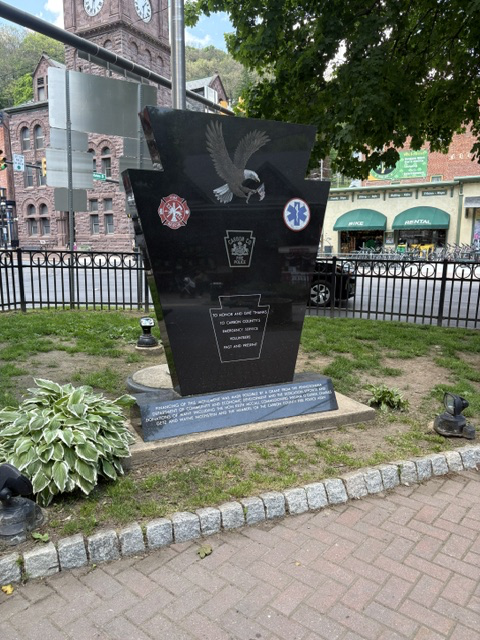
Carbon County Emergency Services Memorial
While so much of Jim Thorpe tells the story of coal, railroads, industrialists and nineteenth-century Mauch Chunk, this memorial brought us into a much more recent chapter of the community’s history. Standing in the small park across from the Carbon County Courthouse is a polished black granite monument dedicated to the men and women who […]
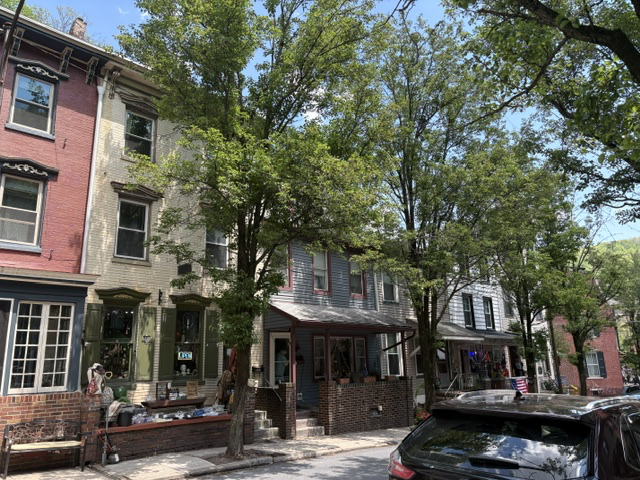
Living Along Race Street
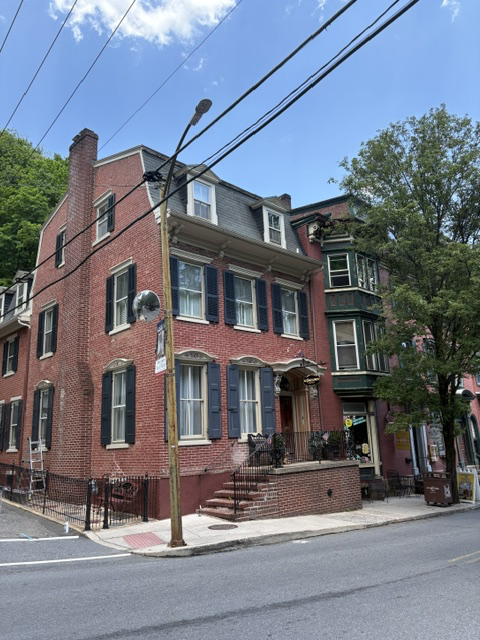
Not every building in Jim Thorpe needs to have been the home of someone famous to tell us something about old Mauch Chunk. Walking along Race Street, I was just as interested in the ordinary houses and storefronts that have survived alongside the town’s better-known landmarks. Here, tall brick houses with decorative window surrounds stand […]
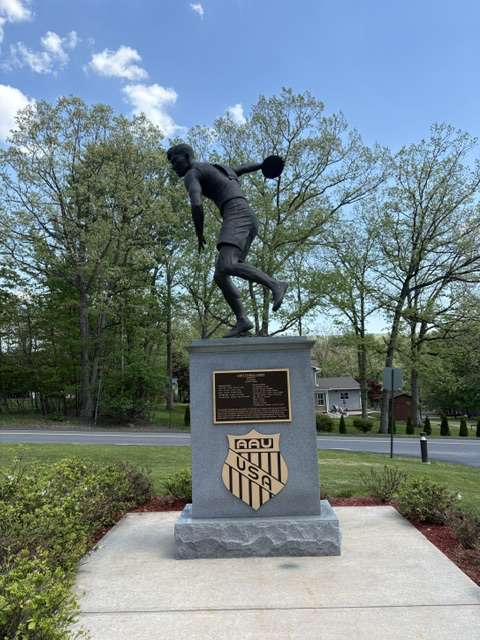
Two Sculptures of Jim Thorpe
At the Jim Thorpe Memorial, two larger-than-life bronze sculptures capture the extraordinary athletic range of the man for whom the town is named. One depicts Thorpe running with a football tucked beneath his arm; the other shows him in the act of throwing the discus. Together, they represent two very different sides of his remarkable […]

