Anthracite — The Rock That Built Mauch Chunk
It is almost impossible to understand the story of Jim Thorpe without understanding anthracite coal. This enormous piece of anthracite displayed in town is a reminder that the community once known as Mauch Chunk grew because of the rich deposits of hard coal buried beneath the mountains of northeastern Pennsylvania.
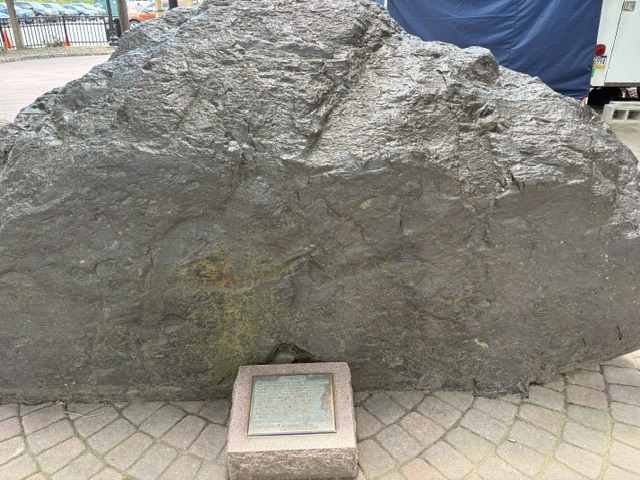
Anthracite is different from the softer bituminous coal found in many other parts of the country. It contains a particularly high percentage of carbon and burns hotter and cleaner, with relatively little smoke. During the nineteenth century, those qualities made it highly desirable for heating homes and fueling industry. Northeastern Pennsylvania contained the nation’s greatest anthracite deposits, and extracting and transporting that coal transformed the region.
Mauch Chunk became an important part of that story. The Lehigh Coal & Navigation Company developed a transportation system to carry anthracite from the mines around Summit Hill down to the Lehigh River at Mauch Chunk. Coal was then shipped along the Lehigh Canal toward markets in Philadelphia and beyond.
Getting the coal down the mountain produced one of Mauch Chunk’s most interesting innovations. In 1827, the company constructed the Mauch Chunk Switchback Gravity Railroad. Loaded coal cars descended largely by gravity from the mines to Mauch Chunk, while mules originally rode in special cars and hauled the empty cars back to the mines. Later, steam-powered inclined planes helped return the cars uphill. The railroad eventually became a tourist attraction and is often cited among the early predecessors of the modern roller coaster.
Coal brought extraordinary prosperity to Mauch Chunk. Railroads, canals, hotels, businesses, churches and the impressive homes along Broadway all grew within an economy shaped by anthracite. It also brought thousands of miners and laborers, including large numbers of Irish immigrants, whose dangerous working conditions and struggles with the coal companies became another important part of the region’s history.
Anthracite was more than something taken from the surrounding mountains. It created jobs and fortunes, brought immigrants and industry, inspired new forms of transportation, and helped build the town we were now walking through. Many of the beautiful buildings that survive from old Mauch Chunk ultimately trace their stories back to this rock.
Read More From Nancy
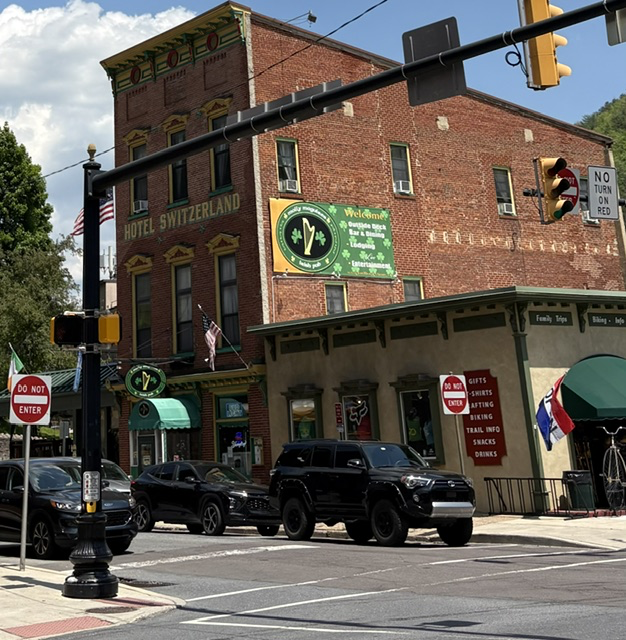
Hotel Switzerland
At the foot of Broadway, where the historic town opens toward the railroad and the Lehigh River, stands the Hotel Switzerland. The name painted across its brick façade immediately caught my attention, but the building has been part of this community far longer than the name Jim Thorpe itself. Established in 1830, the Hotel Switzerland […]
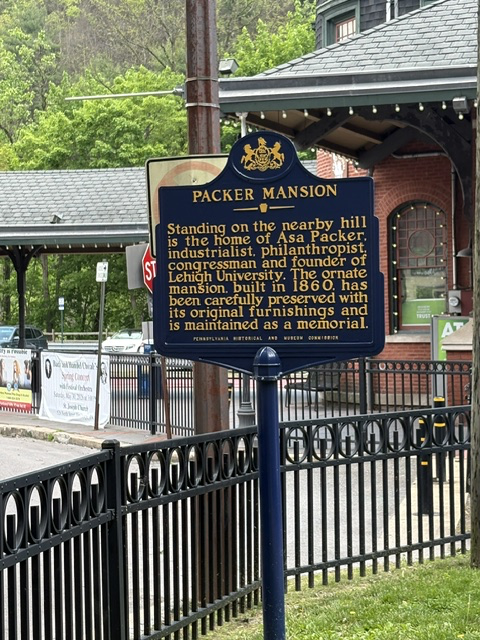
The Asa Packer Mansion
As we explored Jim Thorpe, one name seemed to appear repeatedly: Asa Packer. His story is inseparable from the development of Mauch Chunk, and the mansion overlooking the town provides perhaps the clearest picture of just how successful and influential he became. Packer’s beginnings were far more modest. Born in Connecticut in 1805, he worked […]
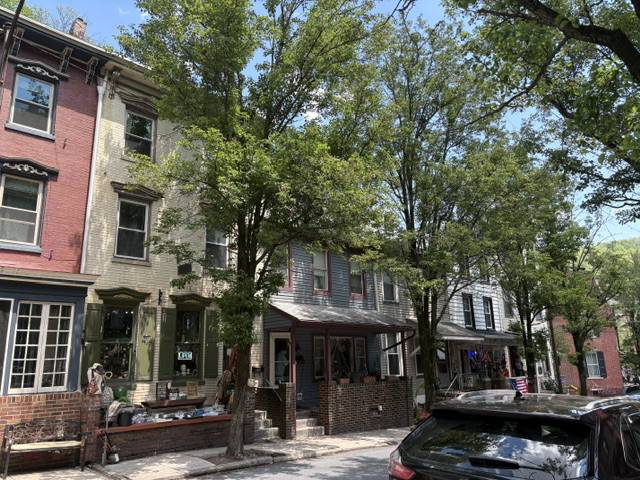
Living Along Race Street
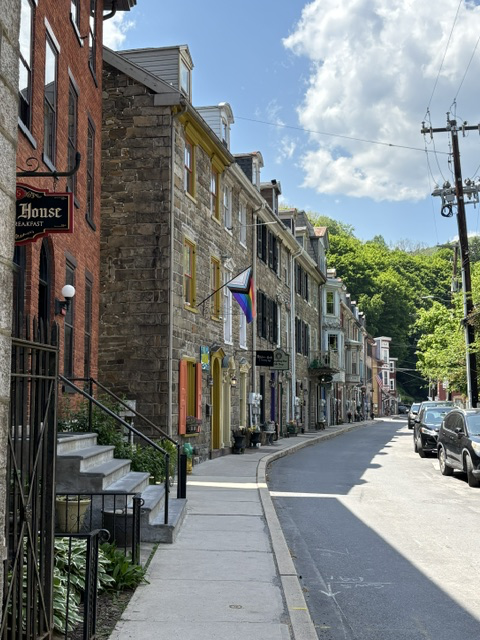
Not every building in Jim Thorpe needs to have been the home of someone famous to tell us something about old Mauch Chunk. Walking along Race Street, I was just as interested in the ordinary houses and storefronts that have survived alongside the town’s better-known landmarks. Here, tall brick houses with decorative window surrounds stand […]

