The Mauch Chunk Opera House
Walking through Jim Thorpe, the Mauch Chunk Opera House immediately caught my attention. Its name alone is a reminder that this town was once Mauch Chunk, a prosperous nineteenth-century community built around coal, railroads and industry.
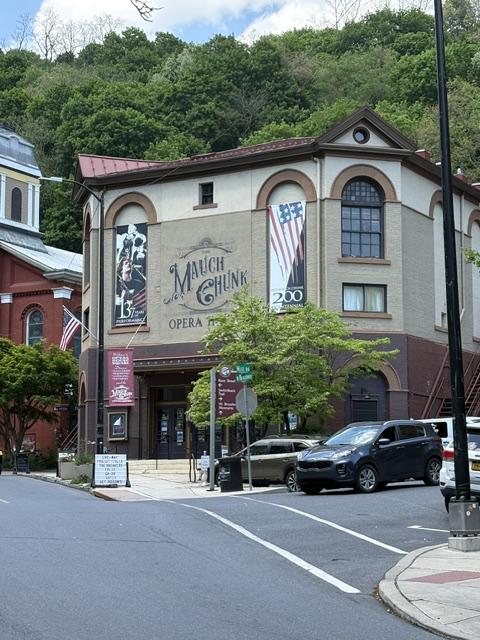
The Opera House was built in 1881, during the height of that prosperity. Designed by Philadelphia architect Addison Hutton, it was much more ambitious than I would have expected for a relatively small mountain town. The original concert hall could accommodate more than 900 people, while downstairs was a farmers’ market where local residents could purchase food and goods.
The theater became part of the vaudeville touring circuit, bringing nationally known entertainers to town. Over the years, names associated with its stage included Mae West, Al Jolson, John Philip Sousa, Eddie Foy and Charlie Chaplin. Imagine those performers arriving in this little town tucked between the Pennsylvania mountains and taking the stage in this building.
As entertainment changed, so did the Opera House. Movies arrived, and by the late 1920s the building had been converted into the Capitol Theater. Eventually the theater closed, and in one of those strange turns that historic buildings sometimes take, this once-elegant entertainment hall became a warehouse for a purse factory.
In the 1970s, the Mauch Chunk Historical Society acquired the building and began the long process of bringing it back to life. The theater eventually reopened, and today it once again welcomes audiences for concerts and performances.
That survival may be my favorite part of its story. The town around it changed names, coal fortunes faded, vaudeville disappeared, motion pictures transformed entertainment, and the building itself nearly became expendable. Yet more than 140 years after it was built, people are still walking through these doors to see a performance.
Read More From Nancy
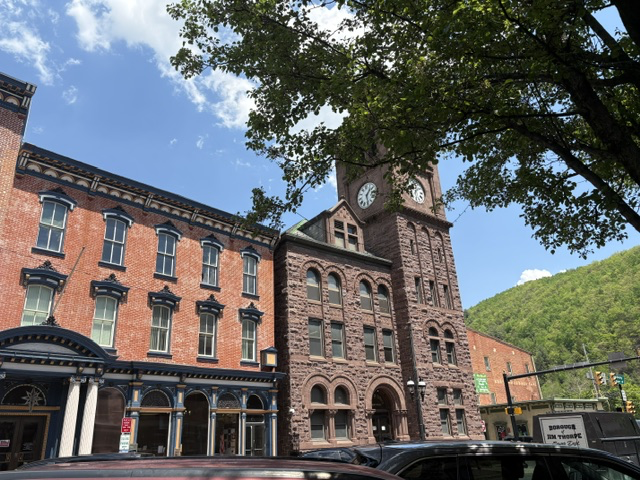
The Carbon County Courthouse
Standing prominently at the corner of Broadway in Jim Thorpe, the Carbon County Courthouse is one of the buildings that immediately draws your eye. Its massive stone walls and tall clock tower seem perfectly suited to the narrow valley and steep mountains surrounding the town. The courthouse we see today is the third to occupy […]
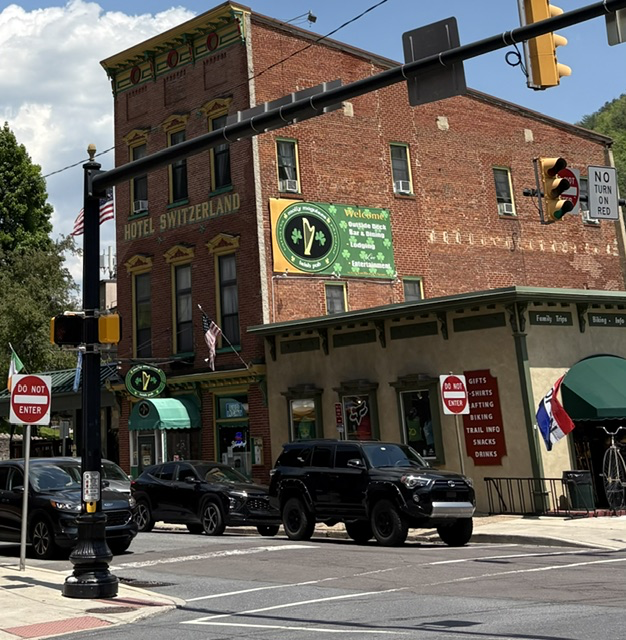
Hotel Switzerland
At the foot of Broadway, where the historic town opens toward the railroad and the Lehigh River, stands the Hotel Switzerland. The name painted across its brick façade immediately caught my attention, but the building has been part of this community far longer than the name Jim Thorpe itself. Established in 1830, the Hotel Switzerland […]
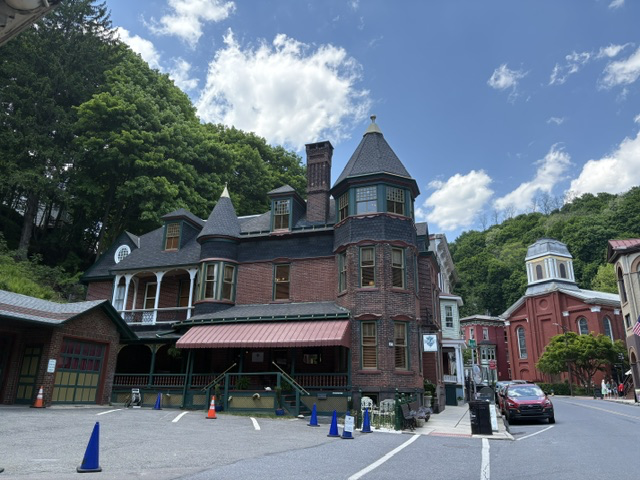
The Dolon House
Walking along Broadway in Jim Thorpe, the Dolon House immediately stands out. Its turret, elaborate roofline, porches and decorative brickwork make it easy to imagine this street during the prosperous years when the town was still known as Mauch Chunk. The house was completed around 1888 for John C. Dolon, a prominent local businessman who […]

