Casa Grande Ruins National Monument
In the heart of the Sonoran Desert, Casa Grande Ruins National Monument preserves one of the most remarkable archaeological sites in the American Southwest. Long before Europeans arrived, this region was home to a sophisticated farming society that transformed the desert into productive agricultural land through an extensive system of irrigation canals.
For more than a thousand years, the ancestors of today’s O’odham peoples, often referred to by archaeologists as the Hohokam, lived throughout much of what is now central and southern Arizona. Using water from the Gila and Salt Rivers, they constructed hundreds of miles of canals, allowing them to grow corn, beans, squash, cotton, and other crops in an otherwise arid landscape. Their engineering skills created one of the largest prehistoric irrigation systems in North America.
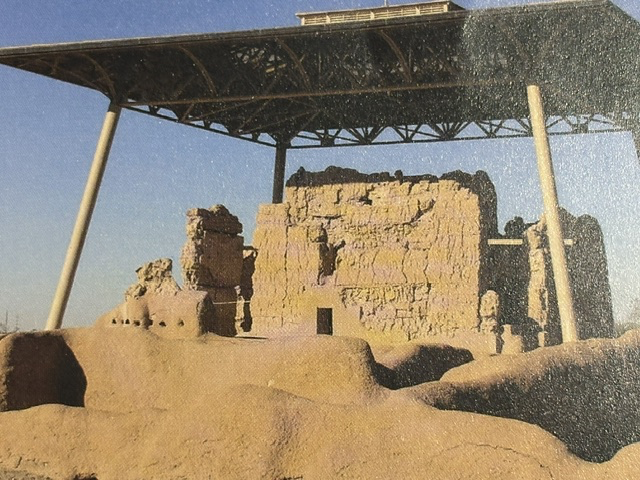
The centerpiece of the monument is the Casa Grande, or “Great House,” a remarkable four-story earthen structure built during the early 1200s. Constructed from caliche, a naturally occurring desert soil, the building has survived for more than 700 years. Although its exact purpose remains uncertain, it may have served as an important gathering place and may also have been used for astronomical observations.
The Great House was part of a much larger community. Homes, courtyards, agricultural fields, and an elaborate network of canals once surrounded it. The people who lived here also participated in extensive trade networks connecting communities throughout the Southwest and beyond.
By the mid-1400s, the large settlements of this region had changed dramatically, and the Great House was no longer occupied. When Europeans later entered the region, they encountered the remains of villages, irrigation canals, and artifacts left by the people who had lived and farmed here for generations.
Casa Grande also holds an important place in the history of preservation in the United States. In 1892, President Benjamin Harrison established the Casa Grande Ruin Reservation, making it the nation’s first federally protected prehistoric and cultural site. President Woodrow Wilson proclaimed it Casa Grande Ruins National Monument in 1918.
The enormous protective roof visible in my photograph has become part of the appearance of the site itself. The present steel shelter was completed in 1932 to protect the fragile earthen walls from the desert’s sun and rain while leaving the ancient structure visible.
Standing before the Great House, it was interesting to imagine this desert landscape when it was part of a thriving agricultural community.

Read More From Nancy
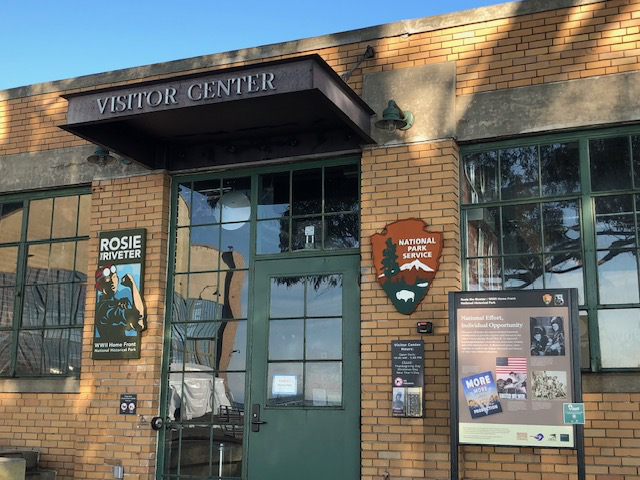
The Rosie the Riveter/WWII Home Front National Historical Park
Rosie the Riveter National Historical Park was another place I visited during our time teaching in California. This one I did on my own, getting there early when it first opened. Located in Richmond, California, along the San Francisco Bay, the park captures the extraordinary war mobilization that transformed this shipbuilding town almost overnight during […]
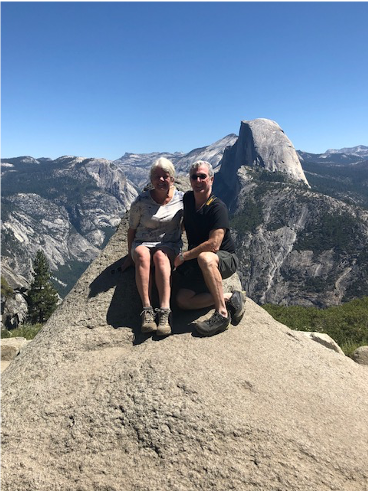
Yosemite National Park
August 2019 was the last time, but not the first time, I visited Yosemite National Park. When people think of our National Parks, many envision vast, majestic landscapes and Yosemite is the very definition of that. The first time I drove into Yosemite Valley, I remember a moment of pure speechlessness. Countless writers and explorers have […]
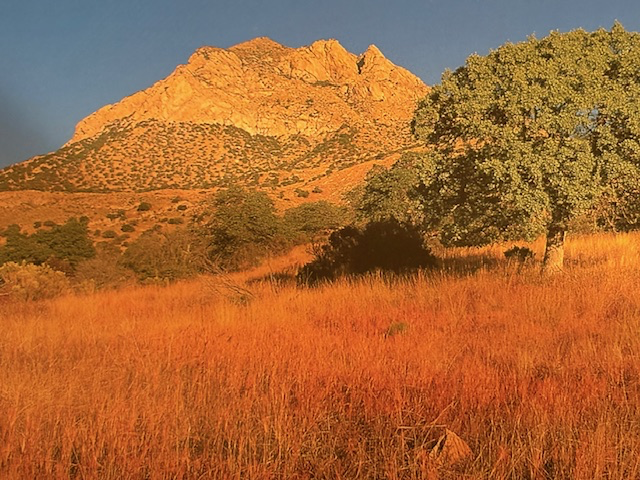
Coronado National Memorial
Coronado National Memorial commemorates the first major Spanish exploration into what is now the American Southwest, led by Francisco Vazquez de Coronado in 1540. Exploring this area, it is easy to imagine what those early explorers encountered: vast grasslands, rugged mountains and an unfamiliar land stretching far beyond what they knew. Coronado set out in search […]

